- Place
- Plateliai, Plungė District Municipality
- Region
- Samogitia
- Type
- ethnographic Užgavėnės mask exhibition in manor stables
- Address
- Didžioji g. 24, Plateliai, Plungė District
- Coordinates
- 56.03820, 21.81310
Užgavėnės Mask Museum, Plateliai Manor Stables
Užgavėnės Mask Exhibition in Plateliai
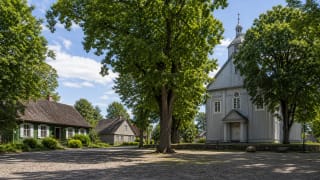
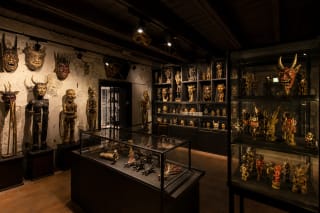
The Užgavėnės Mask Exhibition is housed in the 19th-century Plateliai manor stables in Plateliai, inside Žemaitija National Park. According to the national park, it is Lithuania's first museum exhibition dedicated to Užgavėnės, a place where the living winter-farewell tradition is gathered under one roof.
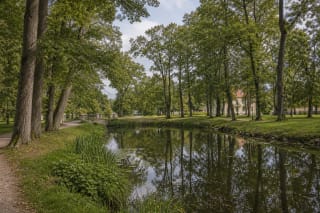
It should be distinguished from other Plateliai objects: the town itself, the manor park, and the separate local-history museum. This exhibition is specifically about Užgavėnės masks and customs, making it a distinct Žemaitija National Park site.
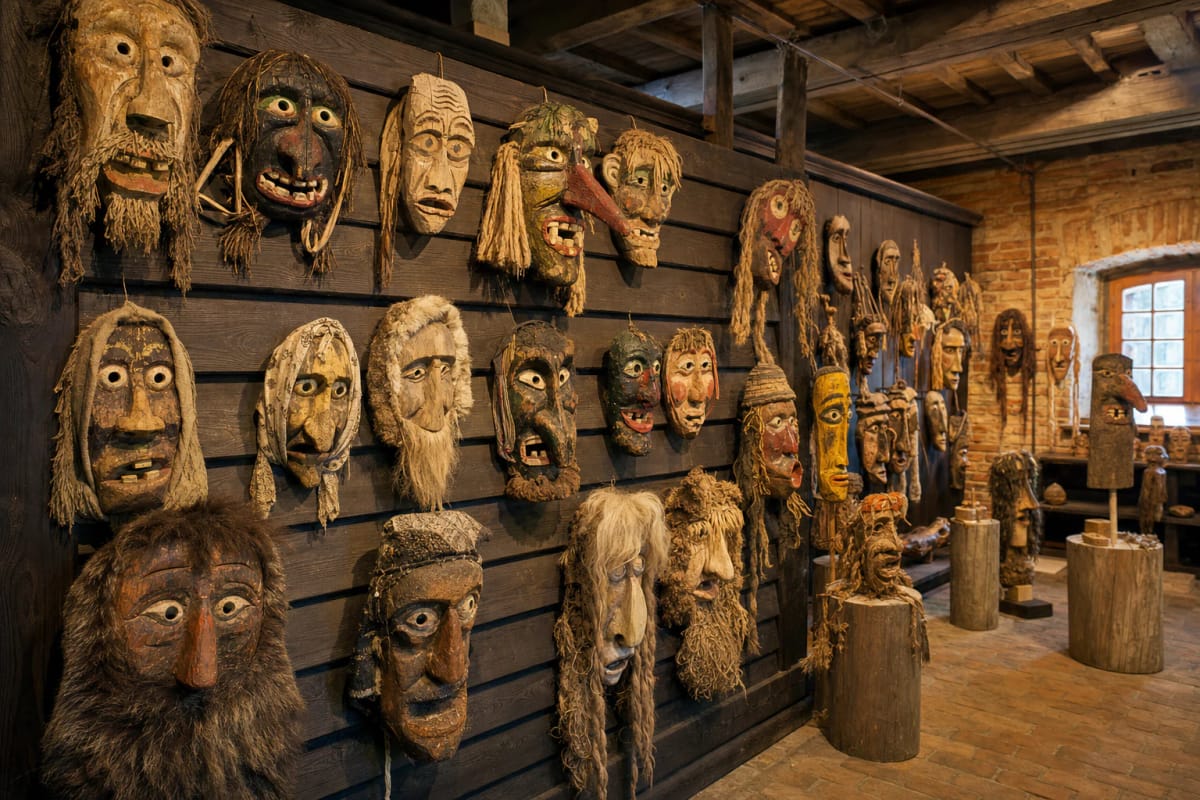
More than 300 masks
The exhibition holds more than 300 masks, called lėčynos in the Samogitian dialect, and the collection is supplemented every year. The masks were collected for about 20 years and only from Samogitian areas, so the exhibition reflects this region's particular tradition.
Most masks are wooden, and Plateliai is known for its wooden-mask makers. They are deliberately ugly and grotesque: with large noses, bulging eyes, missing teeth, warts, and sometimes tall crowns wrapped in coloured paper. Such masks helped costumed performers hide themselves and portray different characters.
Samogitian Užgavėnės: Lašininis, Kanapinis, Morė
Užgavėnės marks the boundary between departing winter and approaching spring and is celebrated on Tuesday, the 46th day before Easter. In the Plateliai area, the group of costumed performers was called Užgavėnių žydai, and the postwar tradition was revived in the second half of the 1960s.
The key festival characters are Lašininis and Kanapinis, symbolizing the struggle between winter and spring: the fat, powerful Lašininis always loses to the lean, winter-worn Kanapinis. Even more important is Morė, the festival goddess and fertility symbol, who in Plateliai is placed on a wheel and sleigh runner, spun to awaken the earth, and burned at the end of the festival.
Building and national park context
The exhibition operates in the historic Plateliai manor stable building, part of the 19th-century manor estate complex. It is managed by the Žemaitija National Park directorate, so it is easy to combine with other park sites.
One point is worth keeping clear: Lithuanian Užgavėnės is not inscribed on UNESCO lists, so neither the masks nor the festival should be called UNESCO heritage. It is nevertheless a living, distinctive tradition valued at the national level.
How to visit the exhibition
The exhibition is convenient to visit together with Plateliai, the manor park, and Lake Plateliai. A regular visit usually takes 30-60 minutes. The most vivid time is before Užgavėnės, when Plateliai holds the living winter-farewell festival.
Opening hours and ticket prices can change and vary seasonally, and Žemaitija National Park also uses a general visitor-ticket system, so check the official national-park page before travelling.