- Place
- Plateliai, Plungė District Municipality
- Region
- Samogitia
- Type
- manor park in Žemaitija National Park
- Address
- Didžioji g., Plateliai, Plungė District
- Coordinates
- 56.03880, 21.81600
Plateliai Manor Estate Park
Plateliai Manor Park at the centre of Žemaitija National Park
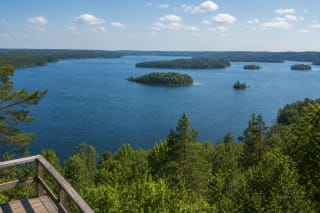
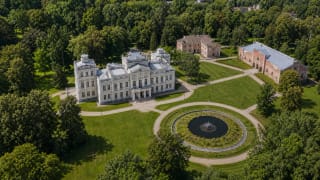
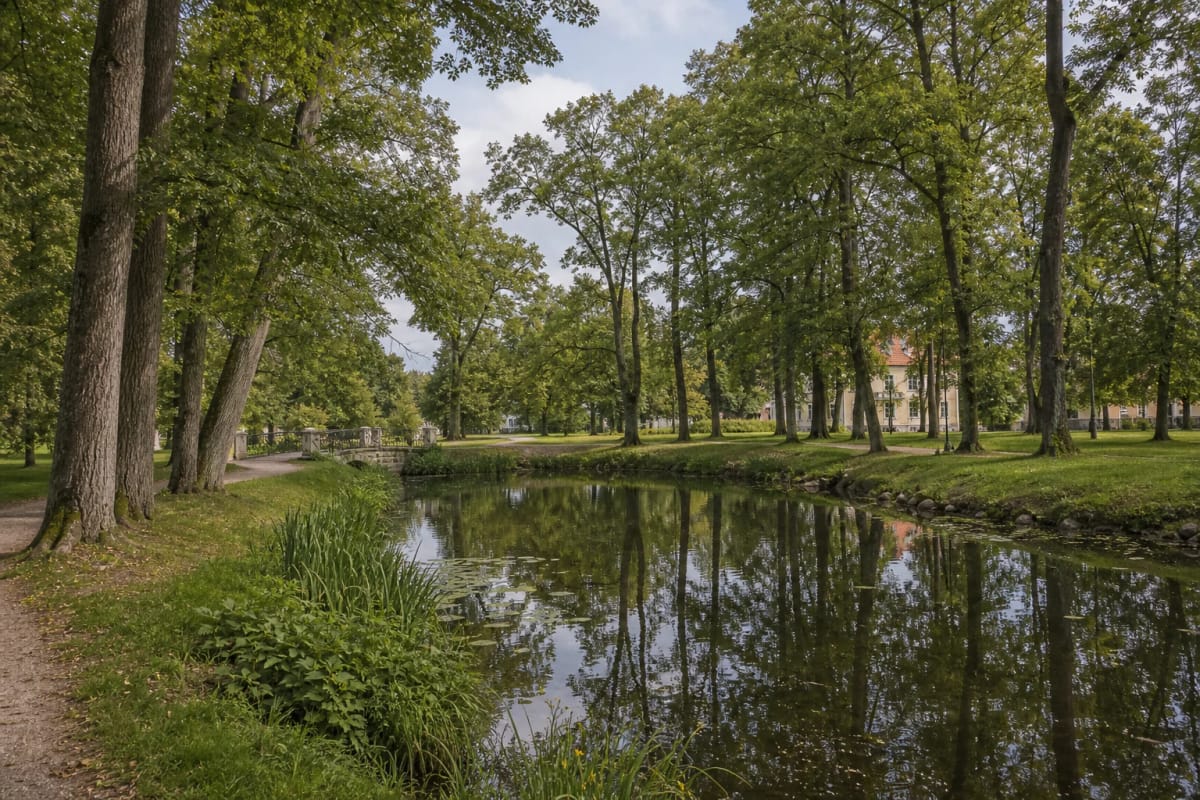
Plateliai Manor Park is one of the most convenient places to begin learning about Plateliai and Žemaitija National Park, whose directorate is nearby at Didžioji g. 10. In one place you meet manor history, monumental old trees, two ponds, and the largest lake in Samogitia, Lake Plateliai.
Official Žemaitija National Park information says the park began to be formed in the nineteenth century and covers 6.2 ha. It is not a huge park, but its value lies in a dense, varied route: within minutes you can move from winding alleys to water bodies and trees declared natural monuments, reflecting the hilly, tree-rich Plateliai landscape.
Plateliai Manor estate: from Kęsgaila land to the de Choiseuls
The park is part of the historic Plateliai Manor estate. According to VLE, in the first half of the fifteenth century the estate by Lake Plateliai passed to the Samogitian elder Mykolas Kęsgaila, and from the mid-sixteenth century Plateliai became a grand-ducal manor and eldership. A Plateliai castle was even marked on a 1526 map of Samogitia, though the 1585 inventory already described it as abandoned.
In 1797 Plateliai passed to the de Choiseuls, or Šuazeliai, a noble family of French origin connected with the nineteenth-century development of the manor estate and landscape park. Surviving estate buildings include a barn, cellar, granary, stable, and service wing; the granary has housed the Plateliai local-history museum since 1982. Near Raganos Ash remain the foundations of the burned wooden central manor house, a quiet sign that the park once surrounded a real residence.
Mixed landscape park with winding alleys
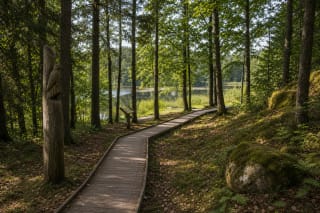
Žemaitija National Park describes Plateliai Manor Park as a mixed park dominated by landscape-park elements. For visitors this means there is no strict geometry: alleys and paths curve, lawns are irregular, and views open gradually. Two small ponds in the park are worth seeing without rushing.
The park is dominated by native, often large tree species: ashes, maples, lindens, hornbeams, rowans, and oaks. The northern part of the alley is planted with small-leaved lindens, the southern edge alley with Norway maples and horse chestnuts, and the eastern part around the large pond has spruce, pine, and weeping white willows like a natural grove. Among exotic plants, horse chestnuts, black locusts, and common lilacs survive.
Raganos Ash, Plateliai Linden, and Plateliai Elm
The park's most important natural signs are three trees declared natural monuments. The best known is Raganos Ash, officially considered the thickest ash in Lithuania: its trunk circumference at 1.3 m height is 7.56 m, its height 30.5 m, and its age about 240 years. It was declared a natural monument in 1960. Plateliai Linden is 23.5 m high, with a trunk circumference of 5.52 m and age about 180 years; Plateliai Elm is 25 m high, with circumference 5.15 m and age about 210 years. Both were declared natural monuments in 1997.
Several legends surround Raganos Ash. In one, witches misled a village woman returning home late, and a witch who had taken a loaf of bread heard roosters and threw it into the tree, creating the burl. Other tales say the devil pressed four ash trees together so they grew into one trunk, and that witches meeting by this tree fly to Šatrija Hill. Such tales show that Plateliai Park is protected not only as a manor setting or dendrological value but also as a living point of local mythology.
Protected animals and the park's largest bat habitat
Plateliai Manor Park is the largest bat habitat in all of Žemaitija National Park; seven bat species have been recorded here, most of them listed in Lithuania's Red Book. This is important for night and twilight life, so old hollow trees in the park are protected not only for their appearance.
Other protected plants and animals are also found in the park, including species named in Lithuanian sources such as raudonvidurė žiauberuotė, plačialapė plikūnė, žalsvažiedė blandis, crested newts, black apollo butterflies, and grey-headed woodpeckers. Because of this living nature value, visitors should stay on paths and avoid disturbing habitats.
How to visit Plateliai Manor Park and the visitor ticket
Plateliai Manor Park is an open outdoor space, and checked official sources do not list separate museum-style opening hours; visiting in daylight and following local signs and paths is safest and most convenient. For a short visit, walk the main alleys, ponds, and three natural monuments. With more time, combine the park with Lake Plateliai, the town centre, national-park exhibitions, and Paplatelė Educational Trail.
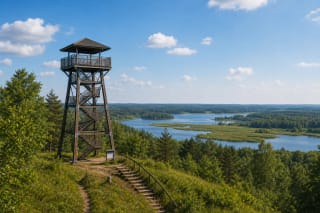
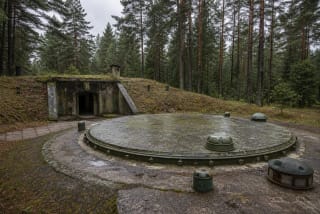
The manor park is a calm stop before or after more intense Žemaitija National Park sites, such as the Cold War Museum in Plokštinė or Siberijos Observation Tower. At the time of research, Žemaitija National Park listed a visitor ticket: EUR 1 single, EUR 5 monthly, EUR 25 annual, and EUR 1.35 total by SMS. Prices can change, so check the official national-park page before travelling.