- Place
- Viršurodukis village, Marcinkonys eldership, Varėna District Municipality
- Region
- Dzūkija National Park
- Type
- partisan headquarters site and memorial bunker
- Address
- Viršurodukis village, Marcinkonys eldership, Varėna District Municipality
- Coordinates
- 54.08471, 24.23184
- Visit duration
- 30–45 minutes while reading the memorial information at an unhurried pace
- Best time
- during daylight, in dry weather and while following forest rules
Juozo Balčiaus-Balučio bunker
A memorial site near Viršurodukis
Juozo Balčiaus-Balučio Headquarters and Partisan Bunker is in Viršurodukis village, Marcinkonys eldership, Varėna District. The current administrative identity matters: some older descriptions may point more generally to the Merkinė area, but this attraction’s address is in Marcinkonys eldership.
This is an open-air memorial in a forest setting, not a staffed museum with an exhibition hall. The map point marks the visitor approach to the maintained bunker memorial, so the final part of the route depends on forest-path conditions.
The headquarters and bunker in resistance history
The memorial site is associated with Lithuanian partisan resistance and the headquarters of Juozas Balčius-Balutis. The bunker was probably built in spring 1946, but the date remains approximate because dating post-war shelters relies on testimony and later research.
On 11 April 1947 the MGB surrounded the bunker; the episode is associated with four partisans who were there. This is not entertainment history: read the memorial information, keep a respectful silence and do not treat the bunker as a playground.
The memorial’s later history and appearance
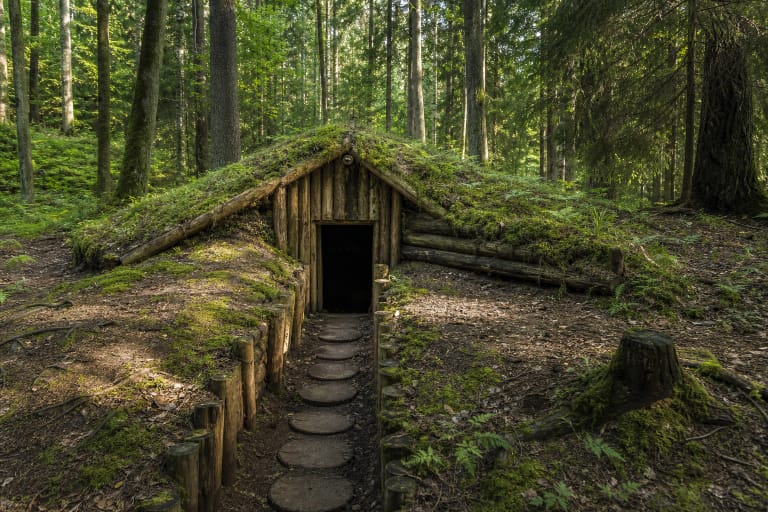
The Genocide and Resistance Research Centre of Lithuania records a memorial sign installed here in 1989 and the bunker reconstructed in 1997 through the efforts of the Druskininkai branch of the Lithuanian Union of Political Prisoners and Deportees. The reconstructed site opened to visitors on 27 September 1997.
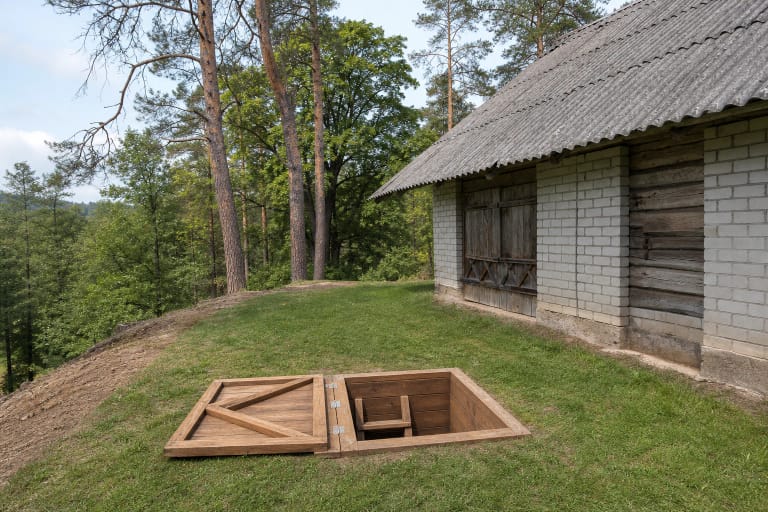
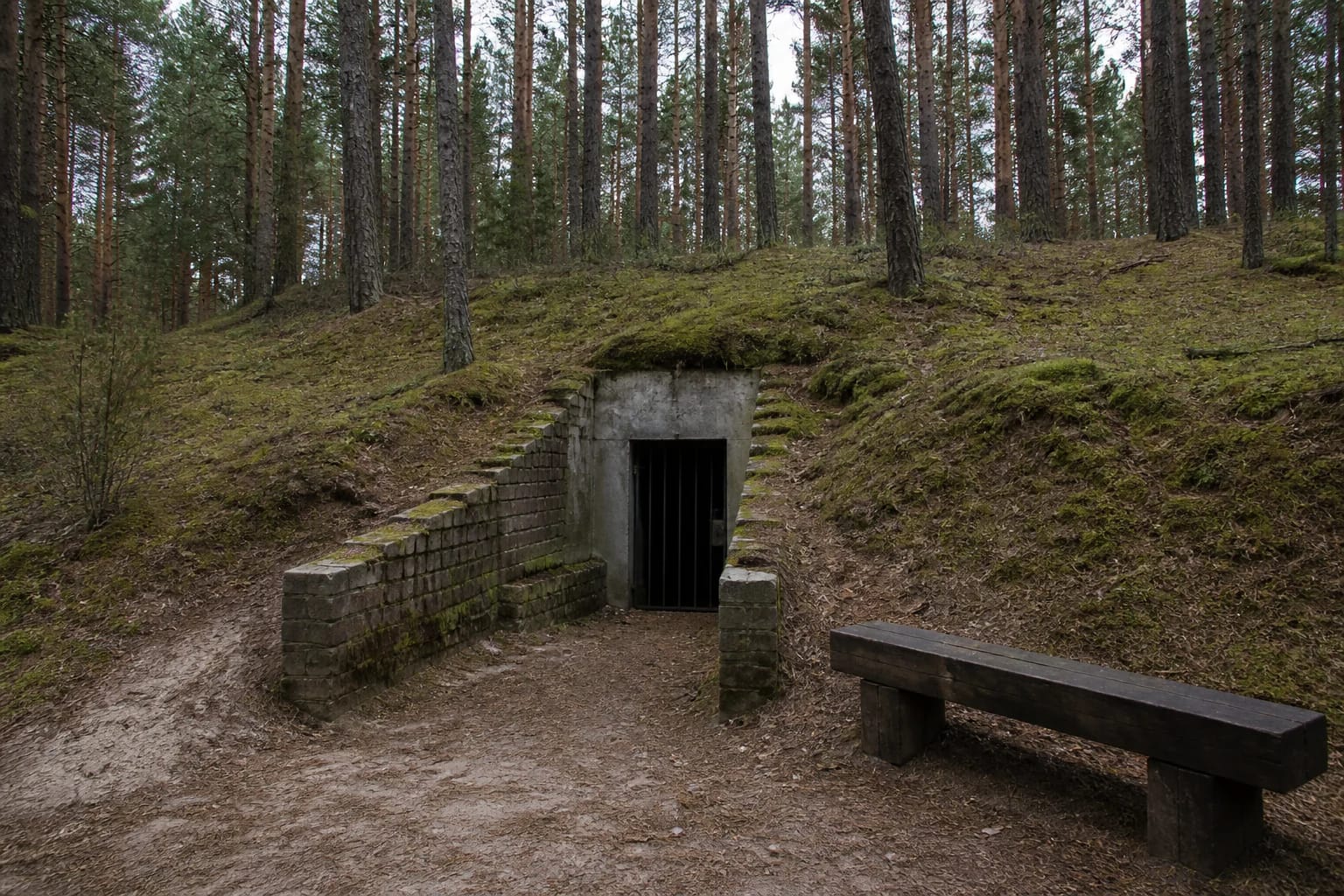
The present concrete entrance, steps and brick retaining details are part of the visitor-oriented memorial treatment. They are not an unchanged wartime shelter, and the authentic underground interior is not open to visitors. Use the bench and signs only for rest and information; do not touch them or climb the structures.
What to see in the forest setting
The first thing visible is the bunker entrance set into the ground, with its masonry-and-soil bank and memorial information. The pine forest is part of the story: its terrain explains why the shelter was placed in a secluded site and why the path may be uneven.
There is no separate building or ticket desk to find. Do not open barriers, attempt to enter the underground section, light a fire or leave rubbish; both the memorial and the Dzūkija National Park setting deserve protection.
Visiting the Viršurodukis memorial
Because the memorial is outdoors, daylight and dry weather are the most practical conditions. There is no ticket desk or fixed opening timetable at the site; check parking, toilet, and road conditions separately before travelling, as the forest approach can vary through the year.
Allow about 30–45 minutes to stop at the bunker and read the information, or combine it with Marcinkonys, Merkinė and other Dzūkija routes for a longer outing. Wear closed, non-slip footwear and follow protected-area visiting rules.