- Place
- Varėna District Municipality
- Region
- Varėna District
- Type
- Dzūkija town history museum in a former Orthodox church
- Address
- S. Dariaus ir S. Girėno a. 1, Merkinė, Varėna District
- Coordinates
- 54.16470, 24.18310
Merkinė Museum, Merkinė Local History Museum
Merkinė Region Museum in a former Orthodox church
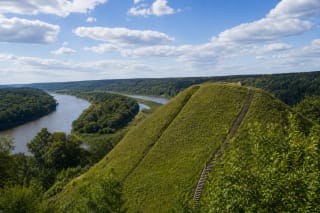
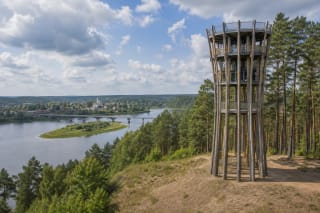
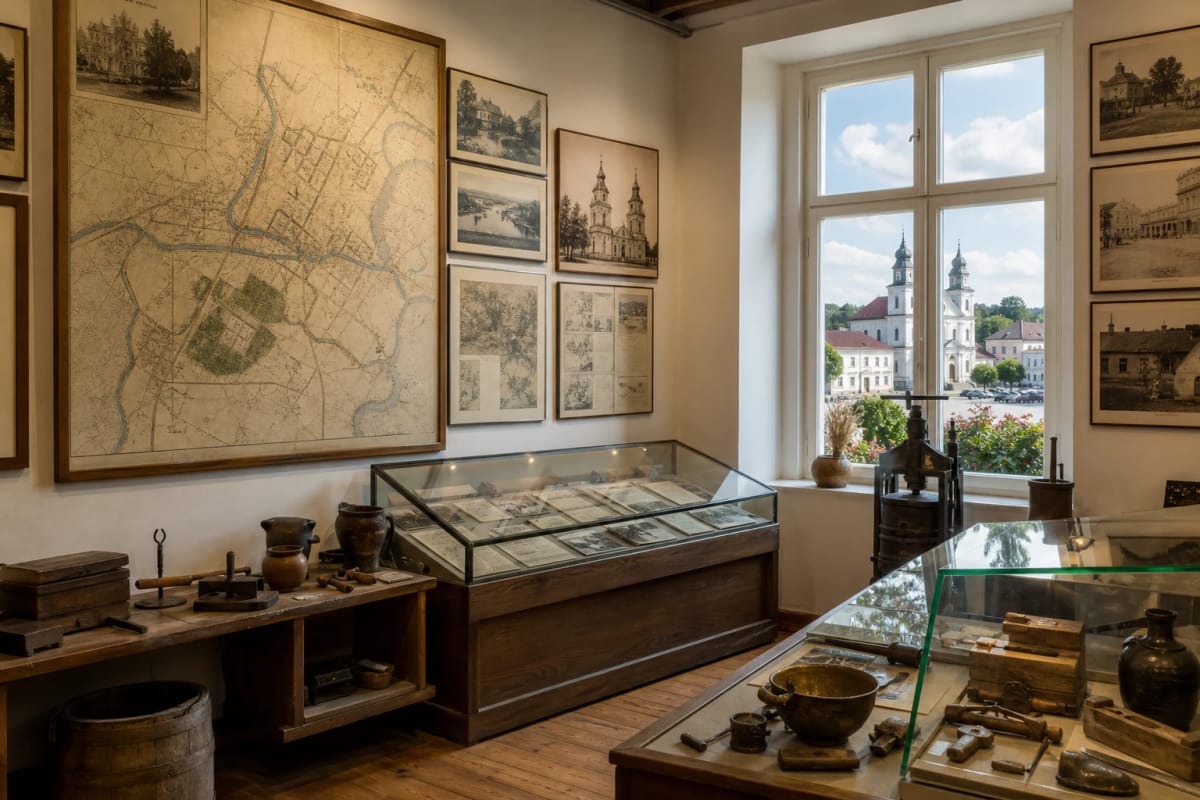
Merkinė Region Museum is a good first stop before walking to the hillfort, the Nemunas and Merkys confluence, or the viewpoints. The museum stands on S. Dariaus ir S. Girėno Square, in a brick Orthodox church that, according to VLE, was built in 1888 on the foundations of the sixteenth to seventeenth-century town hall. The museum has operated here since 1968 and was formerly called the Merkinė Local History Museum.
Without the museum, Merkinė can look like only a beautiful Dzūkija stop. VLE presents Merkinė as a historically significant town, and the local museum makes that importance concrete through objects, photographs, documents, and local stories.
What the museum tells
Merkinė history includes rulers, castles, trade routes, church, Jewish community, crafts, partisans, and everyday town life. Merkinė is first mentioned in 1359 in the Novgorod Chronicle, was an important defensive point among the Grand Duchy of Lithuania's Panemunė castles, received Magdeburg rights and a coat of arms in 1569, and flourished from the mid-sixteenth to early seventeenth century. The official museum stresses that the ruler of the Polish-Lithuanian Commonwealth, Władysław IV Vasa, died in Merkinė in 1648.
Pay special attention to the confluence landscape and twentieth-century memory. The Nemunas and Merkys shaped routes, defence, trade, and movement of people, while the museum also tells of the December 15, 1945 assault on Merkinė by partisans of the Merkys unit led by A. Ramanauskas-Vanagas, and the nearby Merkinė Hill of Crosses, a memorial to victims of Soviet terror created from 1989.
Merkinė route: museum, hillfort, and confluences
After the museum, walk to Merkinė Hillfort, explore the town centre, the Gothic Church of the Assumption of the Blessed Virgin Mary from the first half of the fifteenth century, Jewish memory sites, and viewpoint directions. With more time, Merkinė becomes a gateway to Dzūkija National Park.
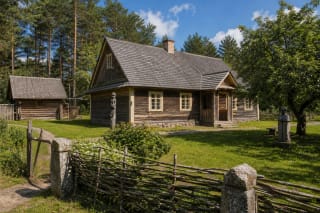
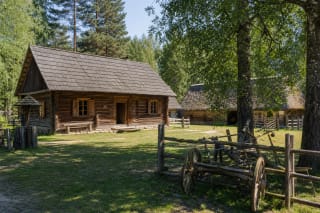
The museum has nearby branches: Perloja History Museum and the Vincas Krėvė-Mickevičius Memorial Museum in Subartonys. It is therefore easy to include it in a wider Dzūkija route. It also works well on a rainy day, when some nature routes are less convenient.
Practical visiting and opening hours
During research, the official museum listed seasonal opening hours: September 1 to April 30, Tuesday-Friday 9:00-18:00 and Saturday 9:00-16:45; May 1 to August 31, Wednesday-Saturday 9:00-18:00 and Sunday 9:00-16:45. Check the official Merkinė Region Museum page for current opening hours, tickets, tours, and temporary exhibitions.
For the museum alone, 45 minutes to 1 hour is usually enough, but with the hillfort and town route, realistically plan 2-3 hours.