- Category
- Sacred and Memorial Architecture
- Type
- Cemetery plans, grave markers, and small sacred architecture
- Context
- Cemeteries, grave markers, crosses, krikštai, chapel-posts, roofed posts, cemetery gates, Lithuania Minor, memorials
- Source status
- well attested
Cemetery architecture, Grave monuments, Small sacred architecture, Cross-crafting
Cemetery and Memorial Architecture: types and elements
Cemetery gate and fence: Boundary and entrance elements that separate the space of the dead.
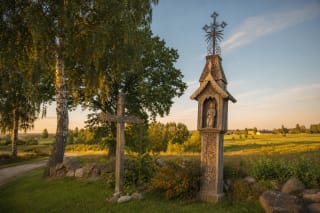
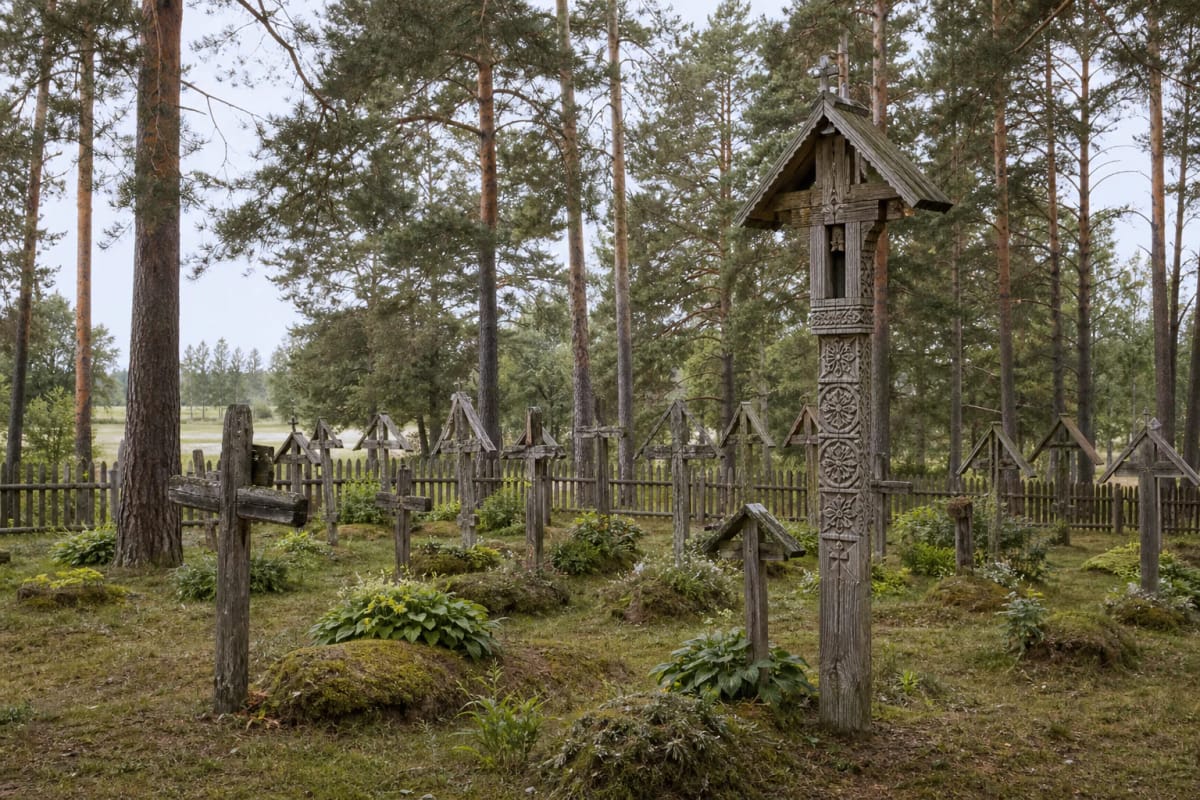
Crosses and roofed posts: Wooden memorial and sacred signs connected with cross-crafting.
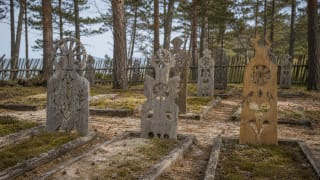
Krikštai: Wooden grave markers of the Lithuania Minor and lagoon tradition.
What is cemetery and memorial architecture?
It includes cemetery plans, gates, fences, chapels, grave markers, crosses, krikštai, chapel-posts, roofed posts, and other signs of remembrance. It covers not only buildings but the landscape of memory for the dead.
A cemetery is architecture because its space is planned, bounded, marked, and used according to the rules of belief and community.
History
After the establishment of Christianity, burial was strongly connected with churches and churchyards. Later, cemeteries were increasingly established separately from churches and settlements.
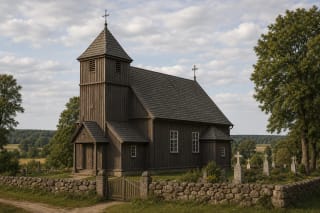
The appearance of Lithuanian cemeteries was shaped by wooden and metal crosses, stone monuments, chapels, gates, and trees. According to VLE, cemeteries are usually rectangular in plan and divided into sections; according to burial customs, Catholic, Orthodox, Lutheran, Muslim, Jewish, and other community cemeteries are distinguished. Chapels, which began to be built in the early Middle Ages, often once stood in churchyards and cemeteries, were frequently joined with mausoleums, and their complexes form Calvaries.
Regional signs
In Lithuania Minor, krikštai are especially important: wooden grave markers. They are connected with the Curonian Spit, Nemunas delta, and local memorial tradition.
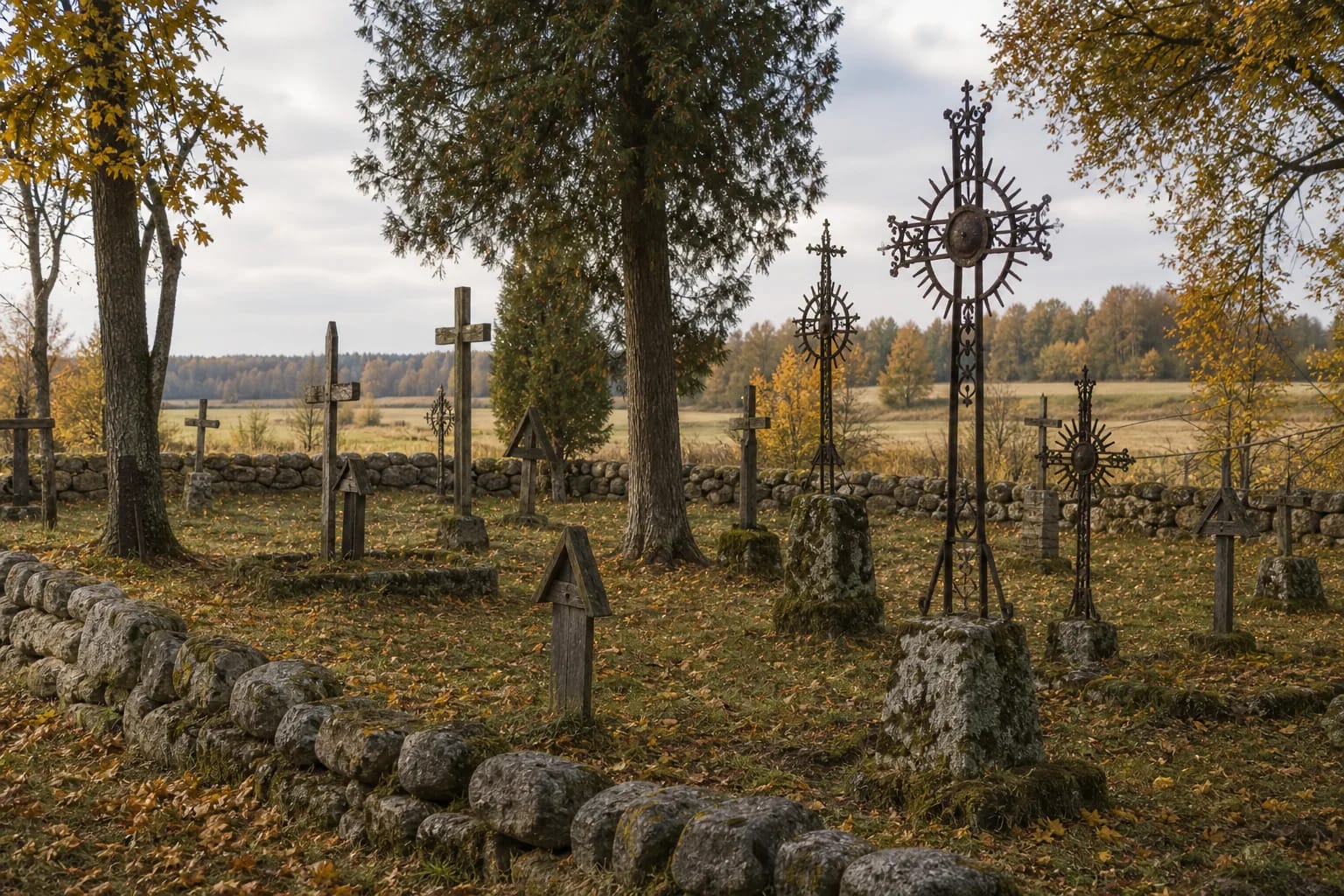
Cross-crafting joins Christian and folk symbolism, so cemetery architecture often overlaps with the history of folk art.
Heritage protection
In cemeteries it is important to protect not only individual monuments but also the plan, old trees, paths, gates, fences, materials, and inscription culture.
Poor standardization can destroy local memory: fully uniform new monuments are not the same as a living memorial landscape.