- Place
- Šilutė District Municipality
- Region
- Nemunas Delta region
- Type
- protected historic metal arch bridge temporarily dismantled for restoration
- Address
- Rusnės g. 2, Šilutė
- Coordinates
- 55.34102, 21.45914
- Visit duration
- 10-20 minutes to see the historic location; the bridge itself is unavailable during restoration
- Best time
- after an official reopening announcement; until then, view only from safe public approaches
Šilutė Yellow Bridge, Rusnė Street Bridge
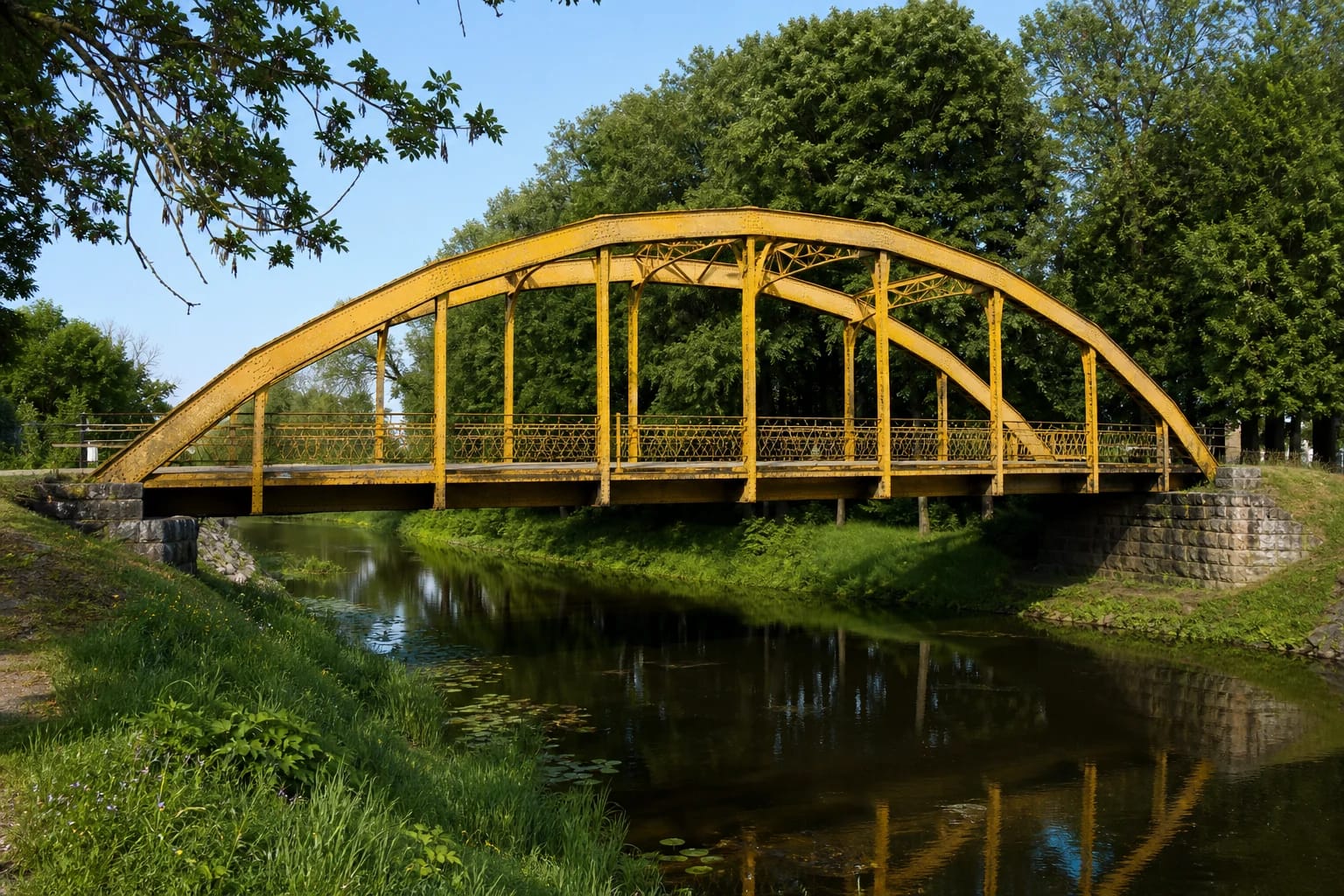
A riveted Prussian-type bridge across the Šyša
The Yellow Bridge carries the line of Rusnė Street across the Šyša. Lithuania's Cultural Heritage Department describes it as a two-span riveted metal arch structure typical of late nineteenth and early twentieth-century Prussian road engineering. Such standardised bridges are known as the Preussische Normalbruecke type.
The protected property has register code 4837. It is 40 m long and 5 m wide. Its value lies not only in the recognisable silhouette but also in its surviving riveted system, evidence of the period when Šilutė formed part of East Prussia's infrastructure network.
Why the historic span is currently absent
Traffic closed on 19 November 2025 because the bridge was unsafe. On 30 December its metal structure was lifted and taken away for repair. In July 2026 Rusnė Street therefore had a worksite, not an open visitor bridge. Never enter the fenced area or attempt to cross an unfinished road gap.
Once dismantled, the structure revealed more extensive corrosion than initially estimated, particularly in the beams, and design calculations had to be revised. Contractors aim to restore safe pedestrian use by winter 2026, but this is a project target. Check the latest municipal notice before making a special trip.
Grey heritage and a yellow civic memory
Paint-layer analysis and historic images established grey as the authentic finish. The bridge became yellow in the Soviet period, yet decades of familiarity made that colour part of local identity and gave the landmark its modern name. Conservation must weigh that living memory against documented original fabric.
The solution agreed with heritage authorities is to paint the metal in historic grey and evoke yellow with lighting after dark. The engineering form should read accurately by day, while the familiar civic symbol returns at night. Its final appearance can only be assessed after completion.
More than the metal span is being conserved
Historic paving fragments were uncovered during the works, and their conservation and display are being coordinated with the Cultural Heritage Department. The bridge is therefore treated as part of Rusnė Street and the riverbank's historic movement corridor rather than as an isolated piece of metalwork.
State funding supports the project. The purpose is not to invent a decorative new bridge, but to strengthen original material, recover evidence-based characteristics, and make the crossing safe. After reopening, look closely at the rivet pattern, abutments, and the restored surface's relationship with both banks.
Visiting safely during restoration
The map pin identifies the historic site on Rusnė Street. During restoration, vehicles have been diverted through Lietuvininkų, Žalgirio, Tulpių, and Rusnės streets. Pedestrians were directed to the existing footbridge between the centre and hospital. Always follow current temporary signs because arrangements can change.
Make a trip here only with the understanding that the historic metal span is away. Combine a short look at the public approaches with the Old Market Square, Hugo Scheu Manor, and open stretches of the Šyša riverfront. This page's image shows the bridge's yellow appearance before dismantling in 2025, not the present worksite.