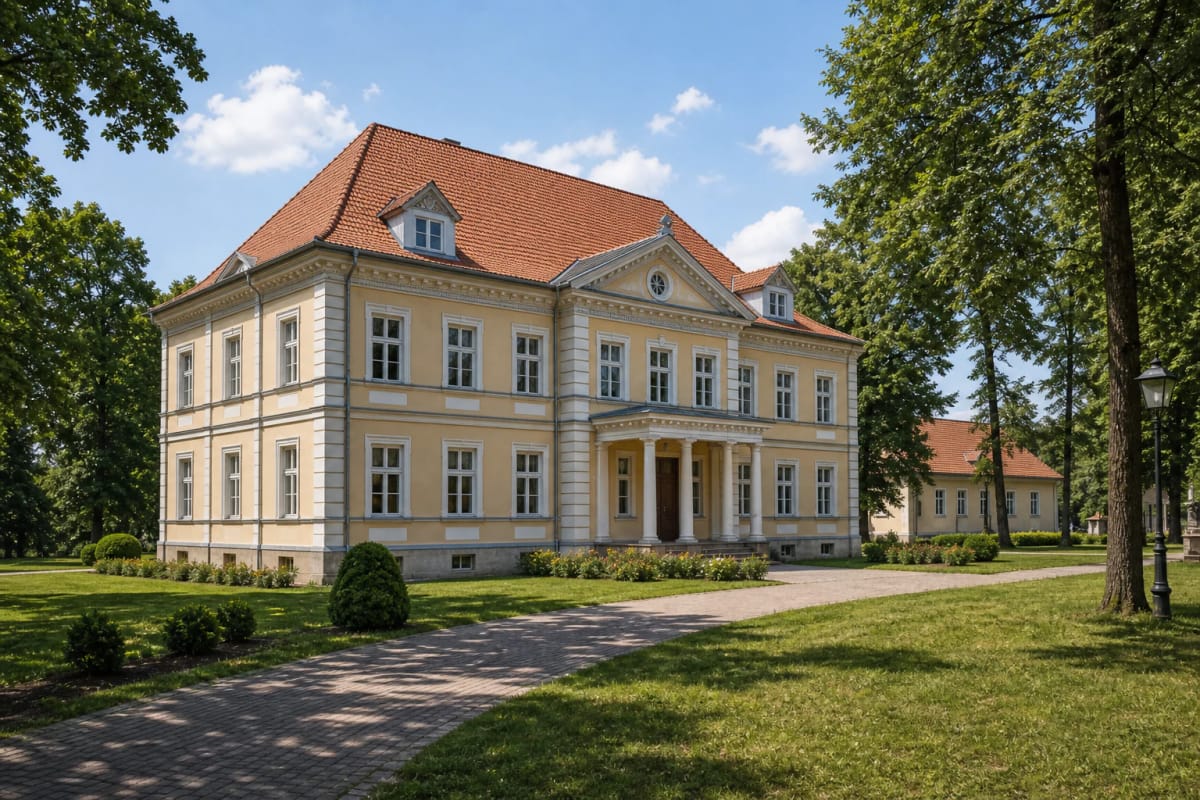
- Place
- Šilutė District Municipality
- Region
- Pamarys
- Type
- Lithuania Minor manor estate and museum
- Address
- Lietuvininkų g. 4, Šilutė
- Coordinates
- 55.34340, 21.46680
Hugo Scheu Manor, Šilutė Museum
Hugo Scheu Manor: centre of Šilutė history
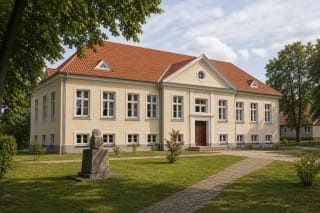
Šilutė Hugo Scheu Manor is one of the most important museum places of Lithuania Minor. It stands in the city of Šilutė itself, on Lietuvininkų Street, and lets visitors see Pamarys history not only through rivers, the lagoon, or fishing, but through a manor, local-history collecting, and urban culture. The manor estate is entered in the Register of Cultural Values, unique code 663, and is state protected.
The manor is valuable because several themes meet here: the history of Šilokarčema, German Heydekrug, Lithuania Minor heritage, Hugo Scheu's personality, museum collections, and Šilutė's identity as a Pamarys centre. The manor can be seen as a beginning of the town: VLE states that a state manor in Šilokarčema was founded in 1721.
Hugo Scheu (Hugo Šojus), 1845-1937
Hugo Scheu, Lithuanian Hugo Šojus, full name Hugo Johannes Wilhelm, was born in Klaipėda on 1 April 1845 and died in Šilutė on 25 July 1937. He was a collector of Lithuania Minor folklore, agronomist, economist, public and cultural figure. In 1869-1870 he studied agriculture in Berlin, worked as an agronomist, carried out agricultural reforms, and actively participated in the life of Klaipėda and Šilutė counties.
In his manor, H. Scheu established the first private museum in the Klaipėda Region and cooperated with Adalbert Bezzenberger. He collected folklore from the Klaipėda and Šilutė areas and prepared the tale collection Pasakos apie paukščius, or Žemaitische Tierfabeln, in 1912. For services to culture and economy, Königsberg University awarded him an honorary doctorate of philosophy in 1922. A monument by sculptor Erikas Daugulis was erected by the manor in 2001.
Šilokarčema Manor bought in 1889
Hugo Scheu bought the old Šilokarčema Manor in 1889 and began its flourishing period. He reorganized the manor economy and donated part of the land to the town: the county hospital, market square, gymnasium, post office, fire station, harbour, and Evangelical Lutheran church all rose on former manor lands. The manor thus became one of Šilutė's identity nodes.
According to VLE, the manor palace dates from the late nineteenth and early twentieth centuries. Part of the building is late Classicist, built in 1819, and a risalit was added in the early twentieth century. The complex is not only the palace: a stable, cowshed, pigsty, barn, cellar, woodshed, gardener's house, tower, icehouse remains, and park have survived.
Šilutė Hugo Scheu Museum and Lithuania Minor heritage
In 2015, the restored manor complex became home to the Šilutė Hugo Scheu Museum, formerly the Šilutė Regional Museum, and was named after him. It preserves the most valuable exhibits collected by H. Scheu himself, and also houses the tourist information centre and library. The museum's themes include Lithuania Minor, Pamarys, Lietuvininkai culture, town history, and manor history.
This is one of the best places to begin a Šilutė and Nemunas Delta route if you want to understand the region before travelling to Rusnė, Ventė, or Kintai. In the museum, look not only for individual exhibits but for connections: how Pamarys nature shaped life, how the manor is linked with the town, and how Lithuania Minor culture differs from other Lithuanian regions.
How to visit Šilutė Hugo Scheu Manor
Allow 1-2 hours for the manor and museum. If you combine it with Šilutė centre, the park, or a Pamarys route, plan more time. Walk around the manor-estate buildings and the park too; Hugo Scheu himself was buried in the town cemetery in 1937.
Before travelling, check the official museum opening hours, tickets, and exhibitions. The manor is easy to combine with the Nemunas Delta, Ventė Cape, Kintai, or Macikai Camp Complex, but the latter needs a separate, more serious tone.