- Place
- Vilkija, Kaunas District / Pavilkijys, Šakiai District
- Region
- Kaunas District
- Type
- seasonal motor ferry carrying passengers, bicycles, and vehicles across the Nemunas
- Address
- Vilkija ferry landing, Vilkija
- Coordinates
- 55.03904, 23.57577
- Visit duration
- 10-20 minutes for a crossing without a queue; allow 30-45 minutes for waiting and brief stops on both banks
- Best time
- May to September, during daylight and after confirming by telephone that the ferry is operating
Vilkynė Ferry, Vilkija-Pavilkijys Ferry, Vilkija Ferry, Vilkynė, Nemunas Ferry at Vilkija
Vilkynė is a working road link, not a sightseeing boat
The ferry crosses the Nemunas between Vilkija and Pavilkijys. Board on the Vilkija side and you disembark on the southern bank in Šakiai District rather than returning to the same landing. Vilkynė can therefore serve both as a practical route connection and as an experience in its own right, especially for cyclists and travellers following roads on both sides of the river.
The coordinate on this page marks the Vilkija boarding ramp. The Pavilkijys landing lies on the opposite bank. River levels change, so the exact position of the floating deck and ramp may shift slightly in relation to the map pin, but the access road leads to the same ferry area.
Kaunas District Municipality calls Vilkynė the only ferry in Lithuania carrying vehicles across the Nemunas. It is motorised and should not be confused with the smaller Padaliai-Čiobiškis Ferry on the Neris, which uses the current itself for propulsion.
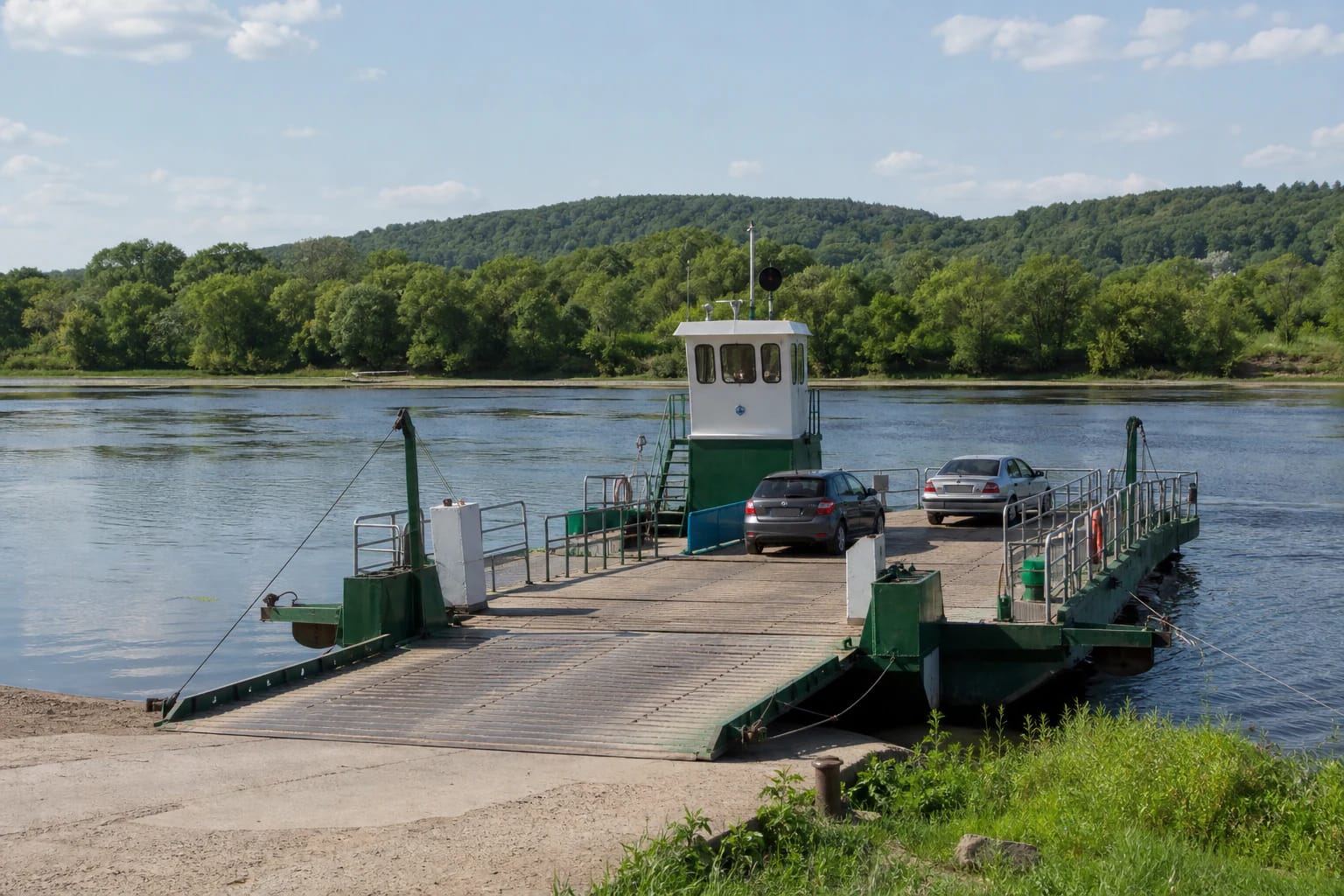
The broad deck takes seven or eight cars, but the ferryman makes the final decision
The municipality gives a rated capacity of 40 tonnes and space for seven or eight passenger cars. Those figures describe the general capability of the vessel, not automatic permission for a lorry, long motorhome, coach, or car with a trailer. River level, ramp angle, vehicle dimensions, and weight distribution all affect loading on a particular crossing.
Stop before the ramp and wait for the ferryman's signal. Drive aboard slowly, park exactly where instructed, apply the parking brake, and do not reposition a vehicle for a better photograph. Pedestrians and cyclists must stay clear of moving ramps, cables, and the vehicle manoeuvring zone.
The voyage itself takes about four minutes in ordinary conditions, but this is not a guaranteed total journey time. You may wait for the ferry to return from the other bank, for safe loading, or for the landing to clear, so allow at least 20-30 minutes even for a short itinerary.
The crossing began at the end of the twentieth century
An official Kaunas District route description dates the ferry operation from 1999, while the operator family's account places the first crossing in 2000. The one-year difference probably distinguishes the start of the project or service from the first actual voyage, so the most accurate concise description is that Vilkynė began operating around 1999-2000.
Romanas Chadaravičius constructed and operated the ferry for many years. His son Paulius later took over as captain, passing practical skills and knowledge of the Nemunas through the family. That continuity matters because the work depends on more than machinery: the operator must judge current, wind, shore ramps, and safe vehicle distribution.
Vilkynė is neither a reconstruction of an ancient ferry nor a static museum object. Its significance is different: it is a rare example of working river transport that returns to the road network each season and shortens journeys between the two banks.
The river, not only the calendar, determines the season
Municipal information says the ferry operates for about 180 days each year, normally from May to early November. Published hours are 07:00-20:30 daily from May through September and 07:00-19:30 in October and early November. Treat them as a seasonal guide, because spring water, drought, fog, storms, and maintenance can change the schedule.
The safest step on the day of travel is to call the ferryman on +370 675 36900 and confirm that crossings are running, the closing time, and whether your vehicle can be accepted. Navigation software may route you through the ferry even when it is closed, so a calculated arrival time is not proof of operation.
If the service is suspended, you must turn around before the ramp and use the nearest bridge. Plan an alternative road route in advance, particularly when travelling to a booked tour, event, or accommodation on the opposite bank.
Fares depend on the passenger and type of vehicle
On 25 July 2026, publicly displayed one-way fares were EUR 1 for a pedestrian or passenger, EUR 2 for a bicycle or moped under 50 cc, EUR 4 for a larger motorcycle, EUR 7 for a passenger car including its occupants, and EUR 8 for a passenger or cargo minibus.
A motorhome, extended minibus, or car with trailer was listed at EUR 12; the separate trailer fares shown were EUR 1 for a single axle and EUR 2 for a twin axle. A tariff does not guarantee that a large vehicle will be accepted under current conditions, so discuss its dimensions and total mass with the ferryman in advance.
Prices, payment methods, and operating arrangements can change faster than this guide. Bring both a payment card and cash, but confirm the accepted method by telephone or at the landing. The fare is for transport to the other bank, not a return sightseeing trip.
Combine the crossing with a Vilkija and Nemunas valley itinerary
The waiting area opens onto a broad Nemunas valley and wooded banks, but the landing remains a working zone. Take photographs only from a safe position, never block the vehicle queue, and stay off the lowering ramp. Keep children beside you and animals on a lead.
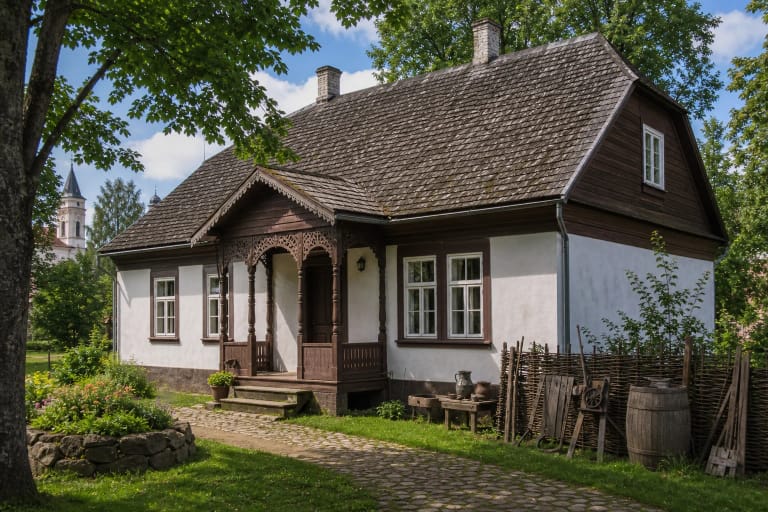
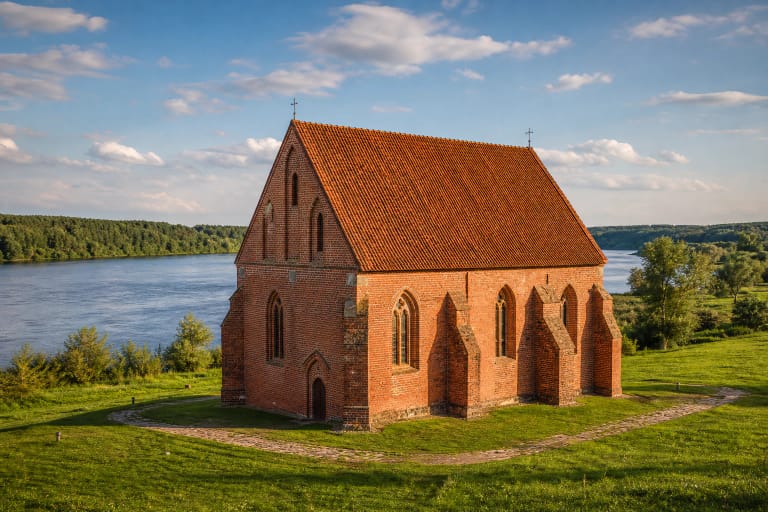
On the Vilkija side, the A. and J. Juška Museum of Ethnic Culture and the steep old-town slopes add substance to the stop. Following the river towards Kaunas naturally connects Kulautuva, Raudondvaris, and Zapyškis. After crossing to Pavilkijys, have your onward route prepared because the landing itself is not a visitor-service centre.
No reliable audit of step-free access across the complete ferry journey was found. A car can board the deck, but movement on foot or with a wheelchair depends on the ramp gradient, gaps, and vehicle arrangement. Discuss assistance in advance and follow crew instructions on site.