- Place
- Kaunas District Municipality
- Region
- Kaunas District
- Type
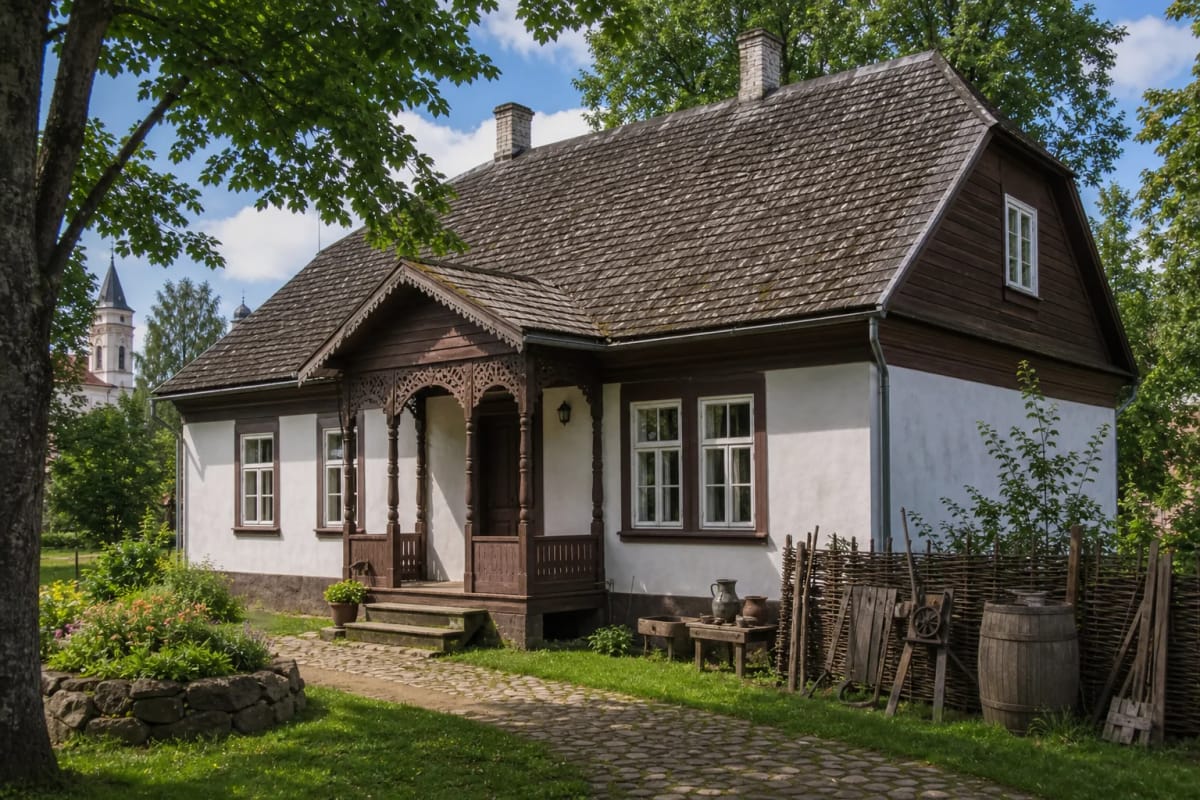
- Ethnic culture museum in Vilkija's oldest building
- Address
- Kauno Mažoji g. 2, Vilkija, Kaunas district
- Coordinates
- 55.03775, 23.58378
Juškų muziejus, Vilkija Ethnic Culture Museum
The Juška Museum: Ethnic Culture in the Old Rectory
The Antanas and Jonas Juška Ethnic Culture Museum is in Vilkija, Kaunas district, in the town's oldest building - the former rectory. The place is important in two ways: the building itself is a valuable architectural monument, and the institution inside preserves the memory of the Juška brothers and local ethnic culture.
The museum was founded in 1990 and since 2013 has operated as a branch of Kaunas District Museum. Priest and folklorist Antanas Juška worked in this very rectory in the nineteenth century, so the museum stands in an authentic place of his activity.
The Juška Brothers and Their Work
Antanas Juška (1819-1880) was a priest, folklorist, and lexicographer. VLE states that he prepared a large Lithuanian-Polish dictionary containing about 30,000 words with examples from living speech, and recorded about 7,000 Lithuanian folk songs and melodies, including in the Vilkija area. His song collections became one of the most important monuments of Lithuanian folklore.
His brother Jonas Juška (1815-1886) was a linguist, the first to classify Lithuanian dialects in more detail and to propose Lithuanian linguistic terms such as galūnė, skaitvardis, and skiemuo. The brothers complemented each other: one gathered living language and songs, the other organized them scientifically. Both died in exile in Kazan and were reburied in Veliuona in 1990.
The Oldest Building in Vilkija
The museum building is the old Vilkija rectory, considered the oldest surviving structure in the town. According to AUTC, its core dates to the mid-eighteenth century, while local people regarded it as even older. It is a rare surviving example of wooden and masonry architecture and is worth attention in its own right.
The museum exhibitions present Lithuanian language and song material, as well as local ethnography: textiles, chests, furniture, and personal objects. The museum also emphasizes living activity, organizing Juška brothers song festivals, calendar-feast programs, and educational sessions, so ethnic culture is not only displayed but experienced.
How to Visit
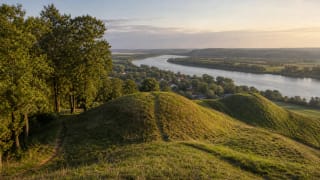
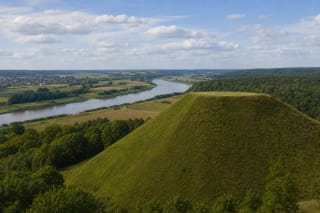
The museum is in the center of Vilkija, near the scenic Nevėžis valley, so it is easy to combine with a walk through the town and surrounding nature. A visit usually takes 45-60 minutes.
During research, opening hours were listed on weekdays, but they may change. Check the Kaunas District Museum page or call before traveling to confirm hours and visiting conditions.