- Place
- Šilutė District Municipality
- Region
- Šilutė District
- Type
- historic watermill
- Address
- Vilkėnai, Švėkšna Eldership, Šilutė District
- Coordinates
- 55.49930, 21.62990
- Visit duration
- 30–60 minutes for the exterior and water setting, longer with the Švėkšna sights
- Best time
- in daylight, when the building, water, and surroundings are easiest to read
Vilkėnai Mill, Vilkėnai Watermill
A separate heritage stop beside the Švėkšnalė
Vilkėnų Watermill stands around Vilkėnai in Švėkšna Eldership, Šilutė District. The Šilutė Tourism Information Centre describes it as part of the Vilkėnai manor estate complex, yet it is a distinct engineering building with its own water and production history rather than another name for the manor house.
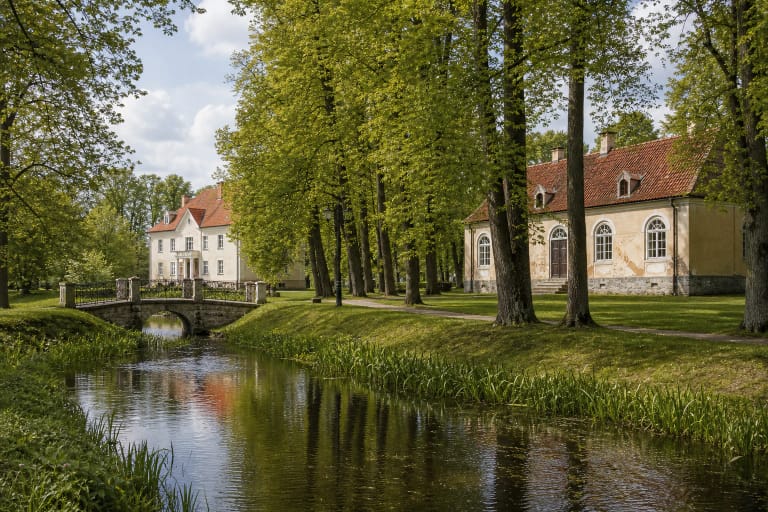
The place makes most sense through the relationship between masonry and river. The mill was built where the Švėkšnalė could provide power, so an exterior visit is about the channel, bridges, and green bank as well as the building itself.
An 1843 building of fieldstone
Official Šilutė tourism information dates the mill to 1843, when the Švėkšnalė was dammed on the initiative of Count Pranciškus Plater. The end of the building carries the year and the initials F. H. P., associated with the count, giving visitors a useful detail to look for while reading the facade.
The tourism study describes a rectangular structure with fieldstone walls about one and a half metres thick, while broad plaster bands emphasize the window openings. That combination explains the building’s sturdy, almost monumental appearance even when it is seen only from the public approach.
A dam, wheels, and changing power sources
The mill’s machinery was originally driven by the flowing Švėkšnalė. A flood broke through the dam in 1891 and the building had to be restored, a reminder that a watermill was working infrastructure sensitive to a living river, not simply a decorative building in the landscape.
Around 1924–1925, wooden water wheels were replaced with metal ones, and a diesel engine was installed in 1936 so work could continue during periods of low water. Šilutė tourism information says the mill operated until 1964, showing both traditional and newer technologies in one history.
A restored building with a current hospitality use
The mill’s surroundings and ownership changed after the Second World War. The Šilutė Tourism Information Centre says the estate was returned to Plater heirs in 1993 and that a complete renovation of the watermill was finished in 1995. The building now accommodates hotel and restaurant functions.
That present use means the mill is not a conventional museum with a guaranteed exhibition timetable. The exterior and water setting can be planned as a landscape stop, but arrange interior access, services, and photography in private areas with the current operators.
Adding Vilkėnų Watermill to a trip
Half an hour to an hour is usually enough for the mill, while more time makes sense if you combine it with Švėkšna Manor and Park, the church, or the museum. Near the water, take care: wet masonry, bridges, and the bank can be slippery, and water levels and access vary with conditions.
Wear non-slip footwear near the mill and leave time for the channel, bridges, and bank, since stones can be slippery after rain. Interior spaces and services depend on the current operators, so arrange an indoor visit in advance.