- Place
- Švėkšna town, Švėkšna Eldership, Šilutė District Municipality
- Region
- Pamarys
- Type
- historic manor estate and park
- Coordinates
- 55.51410, 21.61900
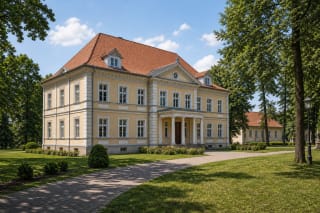
Švėkšna manor estate
Core of Švėkšna Manor and Park
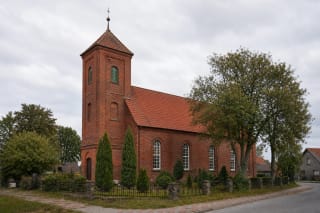
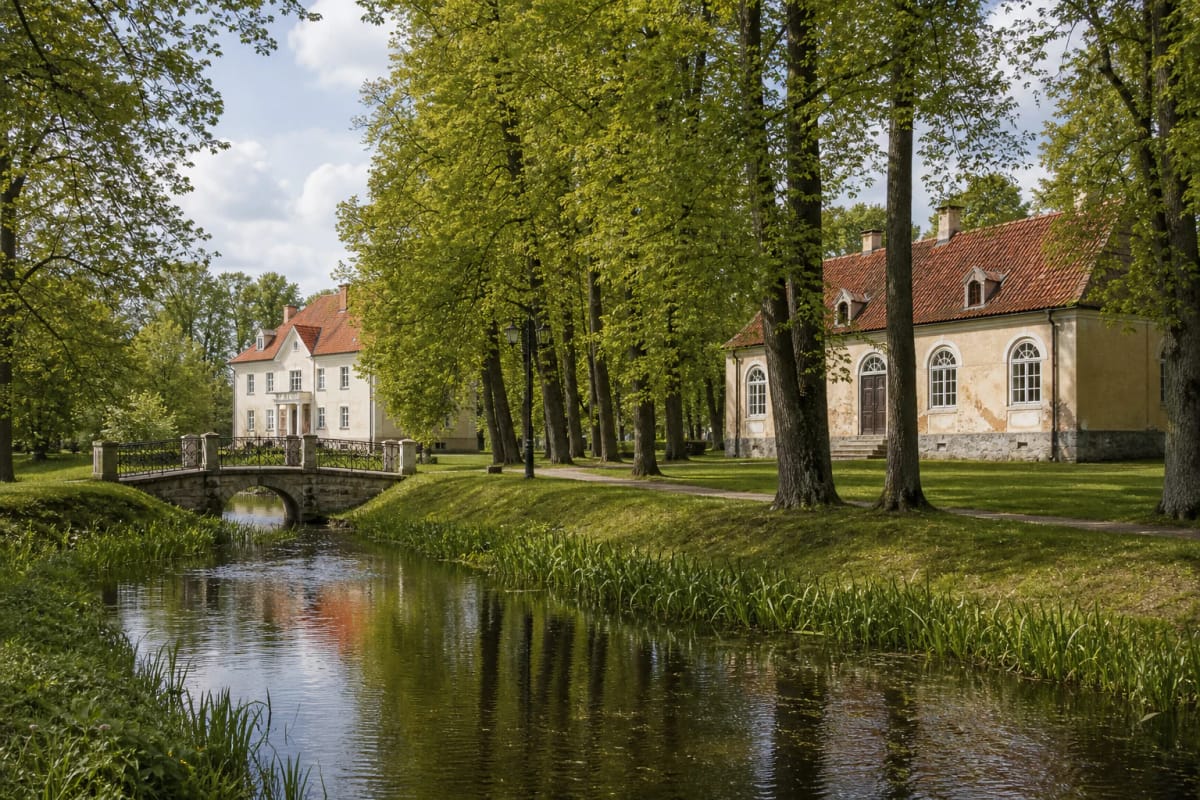
Švėkšna Manor and Park is one of the town's most important spaces. Here manor history merges with park alleys, ponds, canals, and the huge Švėkšna church nearby.
In the Register of Cultural Values, Švėkšna manor estate is listed under code 1015. It is a state-protected complex of national significance. KVR separately lists Švėkšna manor-estate park, code 26198.
Švėkšna Manor from the Kęsgailas to the Platers
KVR links the manor-estate chronology with the sixteenth to first half of the twentieth century, but written sources begin mentioning Švėkšna Manor already in the mid-fifteenth century. It then belonged to Mikalojus Kęsgaila, elder of Samogitia; the holding was large and bordered the royal land of Gardamas, Prussia, and the Rietavas and Pajūris administrative districts.
In 1569 Kęsgaila's daughter married Jonas Zaviša, voivode of Vitebsk, to whom Švėkšna passed as dowry; under him the Švėkšna and Šalna streams were dammed. In 1624-1644 the manor belonged to Jeronimas Krišpinas Kiršenšteinas, during whose time small paper, glass, gunpowder, and wool workshops operated here. The longest historical layer is linked with the counts Plater, who according to KVR owned Švėkšna in 1766-1944.
Larch palace and manor-estate buildings
According to KVR, the eighteenth-century manor house was built of larch, a Siberian cedar-type timber, measured about 40.0 by 14.6 m, and was known for fine tile stoves. Today on the western side of the parterre you can see the house remains: foundations with cellars covered by cylindrical vaults. The manor core is therefore worth reading not only as buildings but as locations and remains.
The manor territory contains a thick cultural layer from the sixteenth to early eighteenth centuries, in places up to 2.6 m, with archaeological finds. This shows that Švėkšna manor estate is not a late representative park but a place of long historical continuity.
Švėkšna Park with alleys, ponds, and Diana's sculpture
KVR links Švėkšna Manor Park with the second half of the eighteenth century and notes management and expansion layers in 1836-1910; the park was redesigned in the mid-nineteenth century and around 1880, with separate works around 1991-1992 to a project by engineer M. Aidukaitė. KVR highlights its mixed character: a regular geometric alley network in the northern and central parts and a landscape-style southern part on two terrace levels.
The park's value lies not only in trees. The 12 m wide central alley ends in a ceremonial loop around an oval parterre; on the southern slope, cut-granite steps lead to the large pond with an island where a sculpture of the Roman hunting goddess Diana stood. The Šalna, now Pakalys, stream flows through the park with a pond and canal system. Local tree species dominate: small-leaved linden, common ash, maple, and oak, with some non-native trees such as horse chestnuts.
What to see in Švėkšna Manor and Park
In Švėkšna, do not walk only to individual buildings. The best experience is a slow route through the park spaces: along radial linden alleys, beside ponds and canals, down granite steps to the pond with the island, through open and enclosed views that shape the manor atmosphere.
The link between manor and town is especially important here. Švėkšna is not a manor in a separate field: the town's Neo-Gothic church, manor park, and historic streets form one recognizable urban landscape.
Planning and visiting rhythm
Allow 1-2 hours for the manor and park. If you want to go slowly, photograph alleys, or also visit Švėkšna St James the Apostle Church, plan half a day in town.
Verified KVR sources do not list permanent opening hours or ticket information for the park. Because parts of the manor estate may have different access, check local information before travelling and respect restrictions on site.