- Place
- Ukmergė, Ukmergė District Municipality
- Region
- Ukmergė
- Type
- fire-watch tower built in 1882-1883 with a visitor panorama over Ukmergė Old Town
- Address
- 3 Kęstučio Square, Ukmergė
- Coordinates
- 55.24924, 24.76457
- Visit duration
- 30-45 minutes for the climb, historical panels and panorama; approximately 1.5-2 hours with Ukmergė Local History Museum and Kęstučio Square
- Best time
- a bright, dry and calm day, after arranging a time with Ukmergė Local History Museum
Ukmergės gaisrinės bokštas, Senosios gaisrinės bokštas Ukmergėje, Ukmergė Fire Tower, Ukmergė Old Fire Observation Tower
The register protects one tower, whose current address is 3 Kęstučio Square
Property 31799 in the Cultural Heritage Register is formally named Ukmergė Fire Tower. It is classified as a stand-alone immovable cultural property of regional significance, with lookout duty recorded as its original function. That distinction matters: the listing is not an invented unified old fire-station complex, and the low garages or service buildings abutting the tower should not automatically be described as one protected nineteenth-century ensemble.
The current address, corrected to match the property register, is 3 Kęstučio Square. An earlier Cultural Heritage Register document used 9 Pilies Street, while some older visitor material and information associated with the tactile model give 11 Pilies Street. These are address variants for the same tower. For a visit, use 3 Kęstučio Square together with the coordinates 55.249236, 24.764574.
The pin was calculated from the centre of the four official heritage-boundary vertices and marks the tower itself rather than a surveyed doorway. This is useful because public maps can also associate 3 Kęstučio Square with a wider municipal administration plot. The tower stands on the southwest approach to the square beside low former service spaces; it is not the present-day Ukmergė Fire and Rescue Service station.
After the disastrous fire of 1877, the town built a permanent watchpoint in 1882-1883
A major fire devastated Ukmergė in 1877, destroying more than 500 houses, killing seven people and causing losses above one million roubles. In a compact town dominated by timber construction, flames could cross densely built streets quickly. Detecting smoke early was therefore practical public protection, not an ornamental function.
The chronology published by Ukmergė Local History Museum dates construction precisely to 1882-1883. Town head Stanisław Kazimierz Kossakowski brought an experienced firefighter, J. Kačanovskis, from Warsaw to train the local team and paid for his journey. Ukmergė still relied on a volunteer rather than salaried fire brigade, which the municipality supported with 500 roubles each year.
The museum's historical account records stables and a cart carrying a water barrel beside the tower. This explains how surveillance became a response: a signal came from above while horses and water were prepared below. It does not establish that the low buildings seen there today are those same stables or that every surviving structure belongs to an authentic nineteenth-century fire station.
Watchmen scanned the town day and night, while the bell also served as its clock
The tower gave watchmen a line of sight above the roofs, allowing them to detect a fire as early as possible. Day-and-night guard at a height of 18 metres made it part of Ukmergė's working warning network in the late nineteenth century rather than a leisure viewpoint. An alarm could summon volunteers and direct equipment towards the emergency.
The lost bell performed two jobs. It called residents and firefighters during danger, but in ordinary time it marked the town's hours: one strike sounded every half-hour, followed on the hour by the corresponding number of quieter strokes. Museum research indicates that this public time signal continued until approximately 1936.
Motorised equipment gradually replaced the horse-drawn response without instantly making the tower irrelevant. Ukmergė bought its first fire engine in 1934 and a new Flaner vehicle in 1937. The sequence of watchman, bell, water cart and motor vehicle captures a transition from a nineteenth-century volunteer company to a modern municipal service.
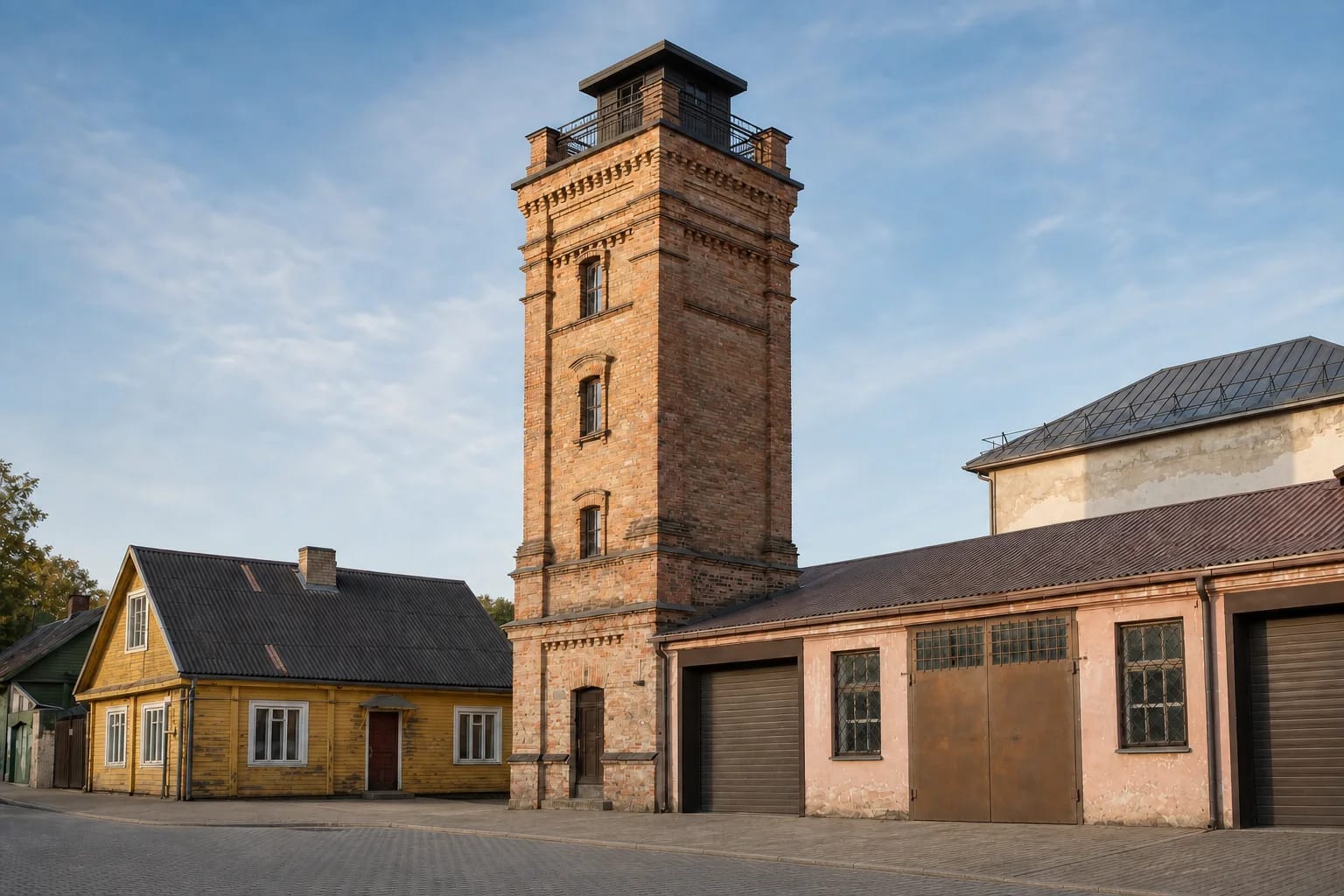
Four masonry stages rise to a terrace and the timber lookout of stage five
The register describes a compact square tower divided into five stages. A terrace occupies the flat roof above the fourth stage, edged by square brick posts and metal railings. A smaller square lookout room rises from its centre beneath a four-sided pyramidal roof.
The historicist composition depends on more than the colour of its red and yellow clay bricks. Projecting bands and corbelled cornices divide the tall shaft, while segmental arches finish its rectangular door and window openings. Horizontal timber boards clad the upper lookout, creating a close-range contrast with the masonry below.
Stone foundations survive beneath the brickwork, clay-brick pavers are registered on the ground floor, and timber stairs pass through stages one to four. A 2007 assessment recorded the condition as good, but that is a dated heritage record rather than a present guarantee for every stair. The museum responsible for entry determines current safety and access.
Today's viewpoint pairs the Ukmergė skyline with historical photographs
The municipality presents the building as a visitor viewpoint 18 metres above Ukmergė Old Town. It is modest beside Lithuania's tallest modern observation towers, but its location is the point: the view reads Kęstučio Square, church spires, roofs and street lines in the heart of the historic town rather than a distant natural landscape.
A museum project completed in 2019 added an illuminated information panel, binoculars and four displays combining old photographs with town history. Visitors can look beyond the horizon and compare which elements of the skyline have survived, changed or disappeared. The panel lighting does not imply independent evening access.
A tactile model beside the site makes the tower's proportions legible by touch and provides valuable interpretation for visitors with visual impairments. It does not make the climb step-free: the register documents historic internal timber stairs, while no verified lift or barrier-free route to the panorama was found. Ask the museum in advance about individual assistance.
A museum employee escorts visitors, so confirm a time before travelling
The current consolidated municipal tariff lists observation-tower admission at EUR 1 per person and states that a museum employee accompanies the visitor. This is not a self-service site where finding an unlocked door guarantees entry. The price was checked on 19 July 2026 and may change later.
No separate, regularly published opening schedule was found for the tower. Ukmergė Local History Museum has seasonal hours, but they do not guarantee that an employee can lead a tower visit at every moment the museum is open. Contact the museum before travelling to agree a date and time and confirm payment, weather, event or maintenance restrictions.
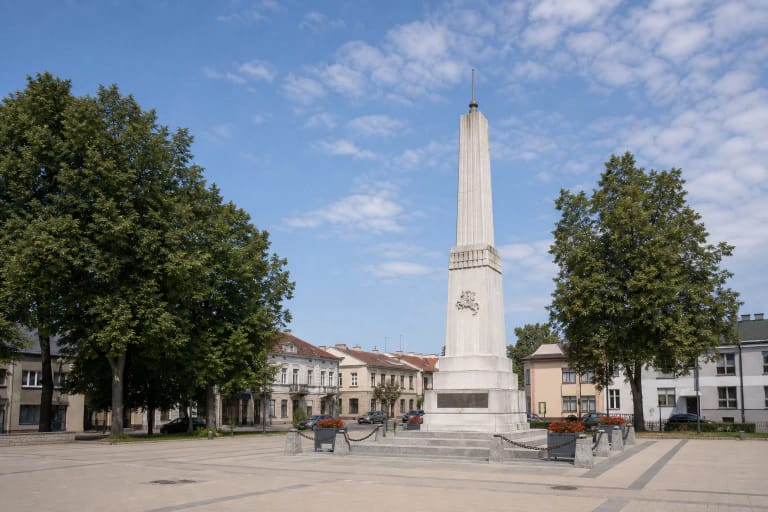
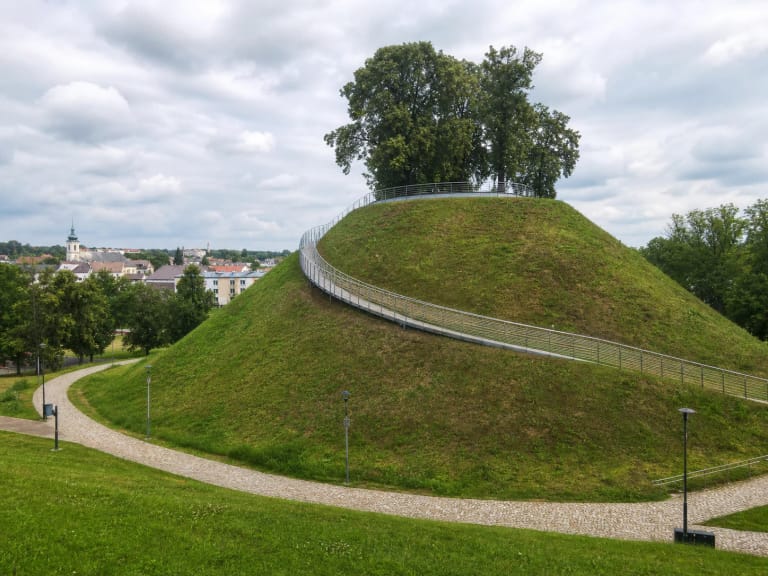
The climb uses narrow historic timber stairs, and the upper terrace can be windy. Wear stable footwear, keep young children close, leave bulky bags behind and follow the employee's limit on group size. Allow 30-45 minutes for an unhurried climb and the displays, then continue to the museum, the Lituania Restituta monument on Kęstučio Square and Ukmergė Hillfort.