- Place
- Ukmergė District Municipality
- Region
- Aukštaitija
- Type
- small public sculpture
- Address
- 4 Vienuolyno Street, Ukmergė
- Coordinates
- 55.24935, 24.76346
- Visit duration
- 5-15 minutes; 45-90 minutes as part of an Ukmergė Old Town walk
- Best time
- by day, when the granite and bronze details are clearly visible
Keksas, Ukmergė City Guardian
A small city guardian on Vienuolyno Street
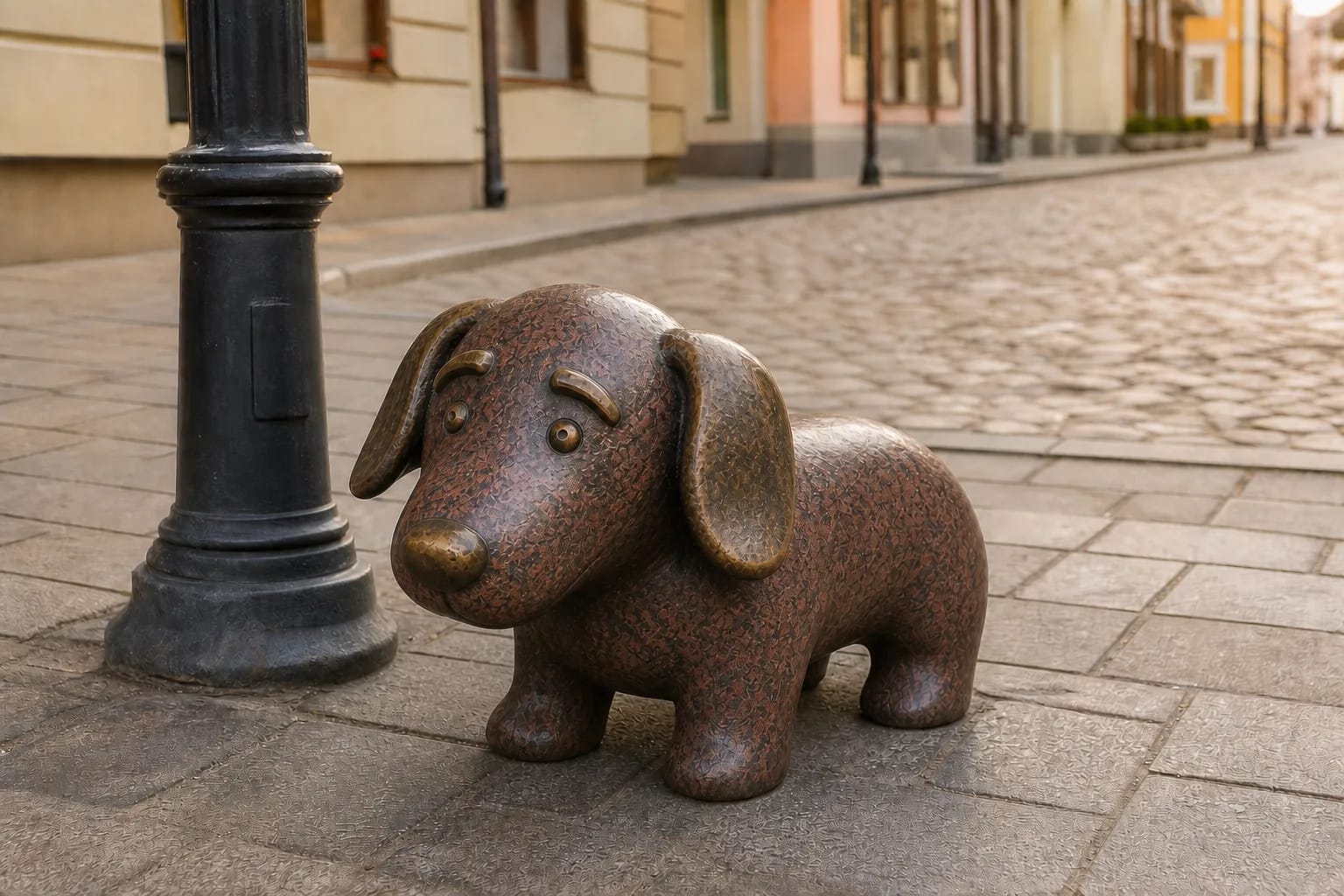
Keksas stands in Ukmergė Old Town at 4 Vienuolyno Street beside a dark street lamp. Its scale is deliberately approachable: the sculpture is not elevated on a high pedestal, so the bronze nose and ears can be examined closely. Reddish granite gives the body weight, while bronze details create an alert, slightly concerned expression.
Ukmergė's official accessible route describes Keksas as a city symbol that guards visitors. The sculpture stands in public space and is free to see at any time, but take photographs without blocking pedestrians and remain aware of nearby traffic.
A 2013 work by Ričardas Širvelis
Attributed to sculptor Ričardas Širvelis, Keksas was installed in 2013. It is about 60 centimetres high, weighs around 100 kilograms, and combines a reddish-granite body with bronze ears, eyes, eyebrows, and nose. Side light reveals the material contrast particularly well.
Keksas is not a memorial to a specific historic dog. It is a contemporary urban character whose meaning grew from its location, name, and reception by residents. Its low scale encourages a face-to-face encounter rather than solemn monument viewing.
How the dog received the name Keksas
The community helped choose the name: a naming contest was won by Keksas, suggested by five-year-old local girl Kornelija. That detail transformed the piece from anonymous street decoration into a recognisable city personality.
The character later moved into civic communication and souvenirs. Ukmergė Regional Museum's activity reports mention plush Keksas toys, while in 2026 the municipality again called him a city symbol when organising a Snow Keksas competition.
The legend of touching Keksas's nose
Local storytelling says that when a visitor strokes Keksas's nose, the guardian remembers their scent and protects them. This is a playful modern urban legend, not a historical fact or guaranteed ritual.
Repeated touching can leave the nose more polished than other bronze details. Do not touch the sculpture if it is being cleaned or fenced for maintenance. A photograph including both Keksas and Vienuolyno Street gives the best sense of place.
A stop on an Ukmergė Old Town walk
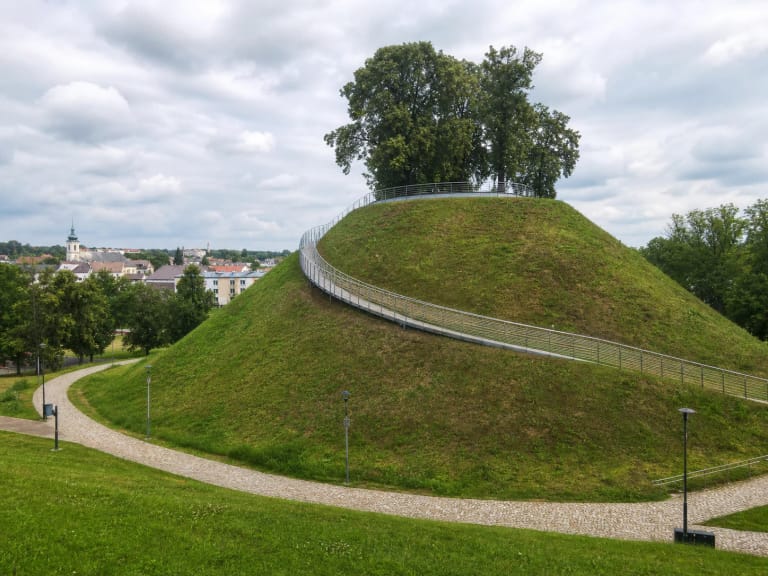
Keksas alone needs only 5-15 minutes, so connect it with nearby landmarks. Continue towards the old fire station tower, Castle Park, Ukmergė Hillfort, and the regional museum. The small sculpture then becomes a route marker rather than an isolated photo stop.
The municipal route was assessed with mobility-impaired visitors in mind, but paving, kerbs, and construction conditions can change. Check current city information when fully step-free access is essential to the trip.