- Place
- Zarasai District Municipality
- Region
- Aukštaitija
- Type
- historic stone watermill and former energy and radio exhibition site on the upper Šventoji
- Address
- Tiltiškių k. 4, Salakas Eldership, Zarasai District
- Coordinates
- 55.62767, 26.11037
- Visit duration
- 20-40 minutes for the exterior and river setting; arrange any interior access separately
- Best time
- daylight from late spring to autumn; take extra care by the water after heavy rain
Tiltiškės Mill, Tiltiškės Energy Museum, Tiltiškių vandens malūnas
A stone mill on the upper Šventoji
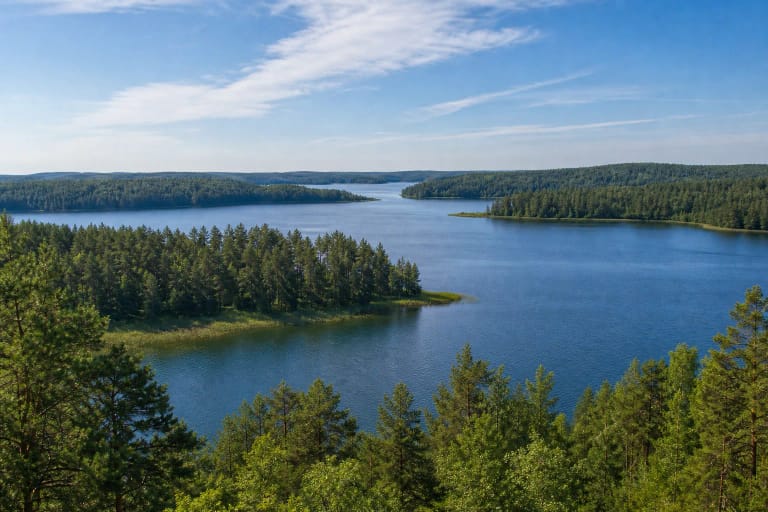
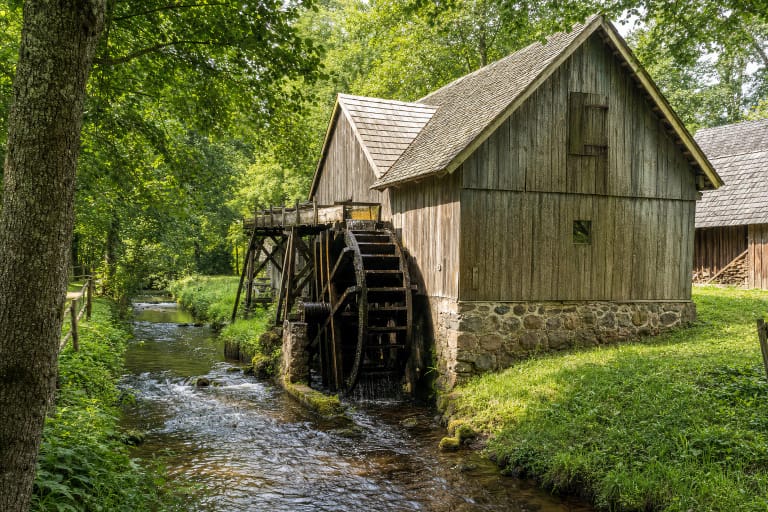
Tiltiškės Mill does not stand beside a large urban reservoir. It occupies a wooded corner of Gražutė Regional Park on a channel of the upper Šventoji. Specialists classify it as a stone channel-type watermill: water passed through the building line and transferred energy to machinery inside.
The surviving fieldstone mill was built in 1936. Zarasai sources associate it with Alfonsas Juozėnas and the Juzėnas family. An earlier Tiltiškės mill stood roughly 150 metres away, so maps must distinguish the present stone building from the old mill site.
Heavy grey and brown masonry, a steep roof, small windows, and a low weir beside the building define the exterior. This is not a romantic mill with an enormous exposed wheel: its power system was tied to the channel and mechanisms within the structure.
More than flour: cloth, timber, and electricity
Tiltiškės performed far more work than an ordinary grain mill. Historical descriptions mention two sets of millstones, groat production, fulling woollen cloth, and sawing boards and roofing shingles. Several mechanised processes essential to rural life were concentrated in one place.
The generating plant is particularly important. Water power fed a high-voltage line with two transformer stations and supplied Tiltiškės and Salakas. Local sources describe this as the first such line in the Zarasai area and say the region's first electric light was lit here. These are regional-history claims, not national records.
Water drove the mill equipment for about three decades before the millstones switched to electric power. That transition captures a wider twentieth-century change: one building moved from a traditional water-powered workshop to electrified production and ultimately became a place preserving technical memory.
The Energy Museum and radio collection
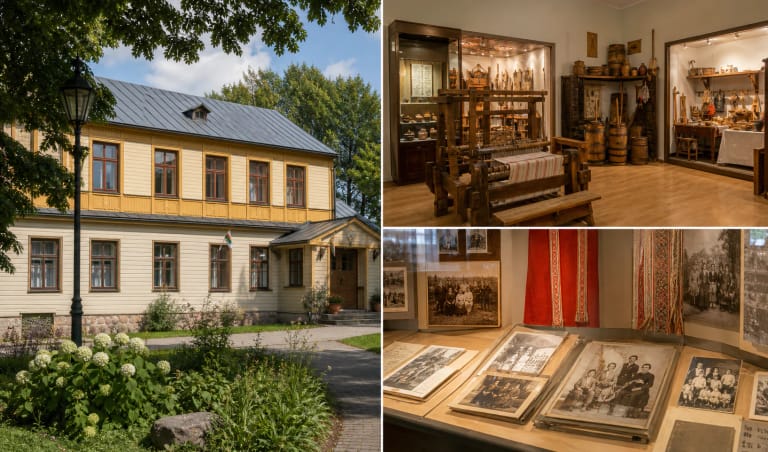
Employees of the Zarasai electricity network began restoring the neglected mill in 1982. The Energy Museum opened on 20 October 1986, presenting both the mill machinery and the district's electrification. Historical accounts call it Lithuania's first community Energy Museum.
Dalius Bučenka later gave the building another life. Antique radios, gramophones, and other audio media were displayed alongside surviving millstones and a sack lift, while the venue hosted tastings and music evenings. This period explains why many older web pages still present Tiltiškės as an operating radio museum.
That information is no longer reliable. By 2026, current Zarasai sources placed Bučenka's radio collection at Zarasai Regional Museum, while independent directories marked the Tiltiškės exhibition closed. Do not travel here expecting guaranteed interior access or the former collection.
What visitors can realistically plan today
No permanent opening hours, admission price, or regular interior access could be confirmed on 25 July 2026. The municipality's register listed VšĮ Tiltiškių vandens malūnas and +370 677 85555, whereas older pages use +370 667 85555. Try to contact the operator and verify the number before making a dedicated journey.
The safest expectation is a short stop for the exterior and river landscape, provided access on the day is permitted. Respect private-property boundaries, never test locked doors, and do not climb onto hydraulic structures. Water level and current change, so keep back from the weir and wet stones.
The mill appears on an upper Šventoji paddling route, but historical accounts of kayakers stopping here do not guarantee a current landing place. Ask an outfitter or the property operator about disembarkation, portage, and access rules before setting out.
Correct location and a useful itinerary
Tiltiškės is in Salakas Eldership, Zarasai District. Reliable specialist and official cycling-publication points cluster at 55.6276, 26.1104. On 25 July 2026, Google's listing with the same name sat tens of kilometres too far east and should not be used to locate this mill.
Combine a short stop with the Salakas nature trail and the fieldstone church in Salakas. The Gražutė Regional Park Visitor Centre adds context about the protected landscape, while the former mill radio collection should be sought at Zarasai Regional Museum.
If the priority is seeing a working watermill and its machinery, Šlyninka Water Mill near Zarasai is a clearer choice. Tiltiškės offers a different value: a quiet industrial witness where milling, timber work, early regional electrification, and later museum activity intersect.