- Place
- Zarasai District Municipality
- Region
- Aukštaitija
- Type
- local history, ethnic culture, and collections museum
- Address
- D. Bukonto g. 20, Zarasai
- Coordinates
- 55.72834, 26.24281
Zarasai Museum
A Centre of Regional Memory
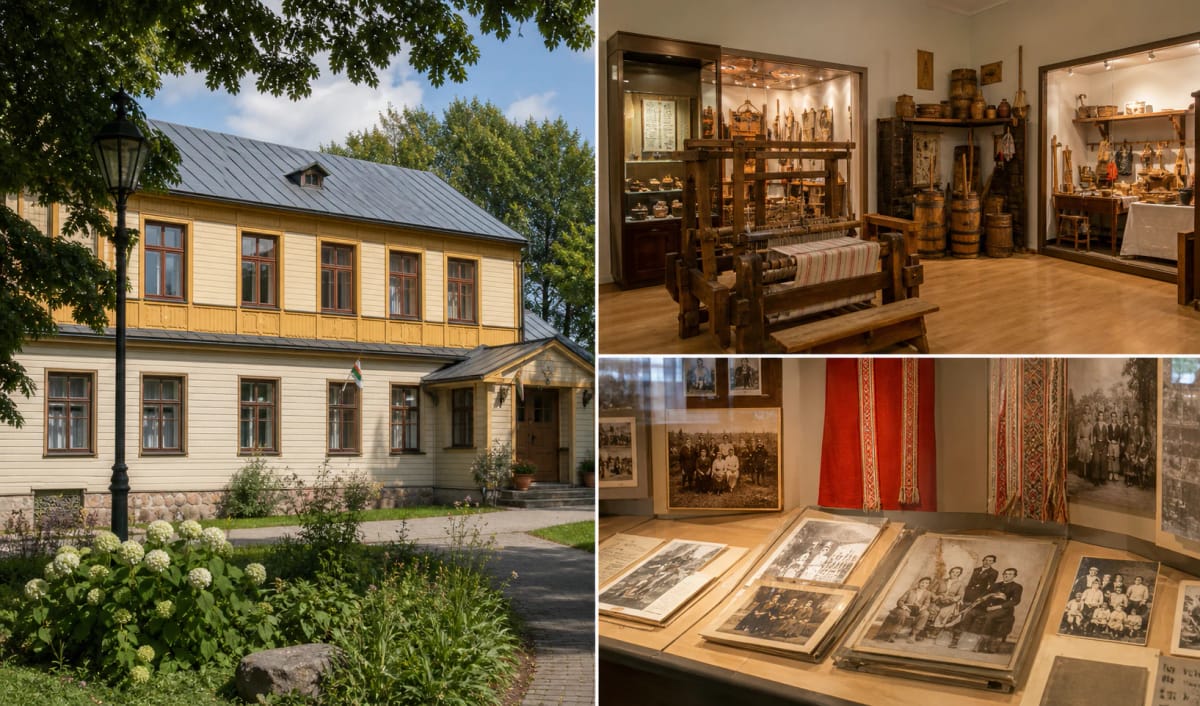
Zarasai Regional Museum is the main storehouse of Zarasai District history, ethnography, and regional studies. It collects, preserves, researches, restores, and displays objects connected with the region's history, culture, and customs, runs educational activities, and organises events. It is a useful first stop before travelling through the lake-filled northeast of Aukštaitija.
The collections hold more than 24,600 exhibits, but only about 1,000 are displayed at one time, so visitors should understand that much of the material is kept in storage. Visitor numbers are significant: in 2019 more than 16,000 people visited the museum.
What the Exhibitions Tell
The main exhibitions introduce the history of Zarasai town, the development of regional industry, agriculture, education, culture, public organisations, and characteristic crafts and trades. Exhibits include a farmer's chamber with furniture, costumes, and textiles. This material is especially valuable in a region where landscape alone is not enough to understand local life.
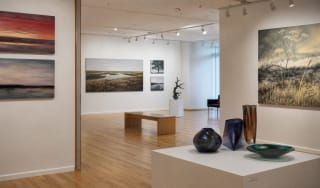
A separate hall is devoted to sacred sculpture, displaying works by eastern Aukštaitija folk religious carvers: wooden saint figures that once decorated stogastulpiai, koplytstulpiai, roadsides, and cemeteries. Since 2000 the museum has also had a gallery of paintings donated to the artist Mstislavas Šileikis' homeland, with about 50 works displayed and about 200 more in storage.
Founding History from 1934
The museum began operating on November 17, 1934, through the efforts of teacher Stasys Jauniškis, in the premises of Zarasai progymnasium. At first it had more than 2,000 numismatic, archaeological, folk-art, pedagogical, and press exhibits. At the end of 1935 it was taken over by the Zarasai County Board, and during the Second World War it suffered badly, with most exhibits destroyed.
After the war the museum operated from 1946, was closed in 1963, and its exhibits were transferred to the Rokiškis Regional Museum. In 1969 the Marytė Melnikaitė Memorial Museum opened in Zarasai as a Rokiškis branch; it separated in 1988 and on March 15, 1990 again became Zarasai Regional Museum.
The Museum and Its Branches
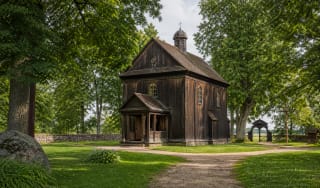
Zarasai Regional Museum has three branches. The Stelmužė Church Art Museum, operating since 1997, is located in Stelmužė Church of the Holy Cross, considered one of Lithuania's oldest wooden churches. A crafts centre is housed in Antazavė Manor, and the Kazimieras Būga Memorial Museum is in Pažiegė, Dusetos eldership.
The Antazavė Crafts Centre has weaving, woodcarving, and ceramics workshops and teaches paper-cutting, Easter egg decoration, straw-garden tying, wool felting, cooperage, and other crafts. The manor also has an exhibition dedicated to Emilia Plater. When planning, check exactly which site you are visiting, because branches may have different visiting rules.
Opening Hours and Tickets
At the time of research, the official museum listed the main exhibition hours as Tuesday-Friday 10:00-18:00 and Saturday 10:00-17:00; it was closed Sunday, Monday, and public holidays. Since schedules can change, check the official museum page before travelling.
At the time of research, an adult ticket cost 2.50 EUR, with a reduced ticket of 1.50 EUR for pupils, students, and seniors. A ticket to all exhibitions cost 7.50 EUR, reduced 4.50 EUR. Branches may have separate pricing, so recheck prices.