- Place
- Salakas, Zarasai District Municipality
- Region
- Aukštaitija
- Type
- regional park visitor centre with nature, ethnographic, and marine-collection exhibitions
- Address
- 14 Laisvoji Square, Salakas, LT-32216 Zarasai District
- Coordinates
- 55.57998, 26.13429
- Visit duration
- 60-90 minutes for the three indoor exhibitions and route planning; 3-4 hours with a pre-booked Salakas or park programme
- Best time
- at the start of a Gražutė Regional Park trip during current centre hours; reserve group activities in advance
Gražutė RP Visitor Centre, Salakas Visitor Centre, Gražutė Regional Park Visitor Center
The map point leads to one centre in Salakas, not the middle of the park
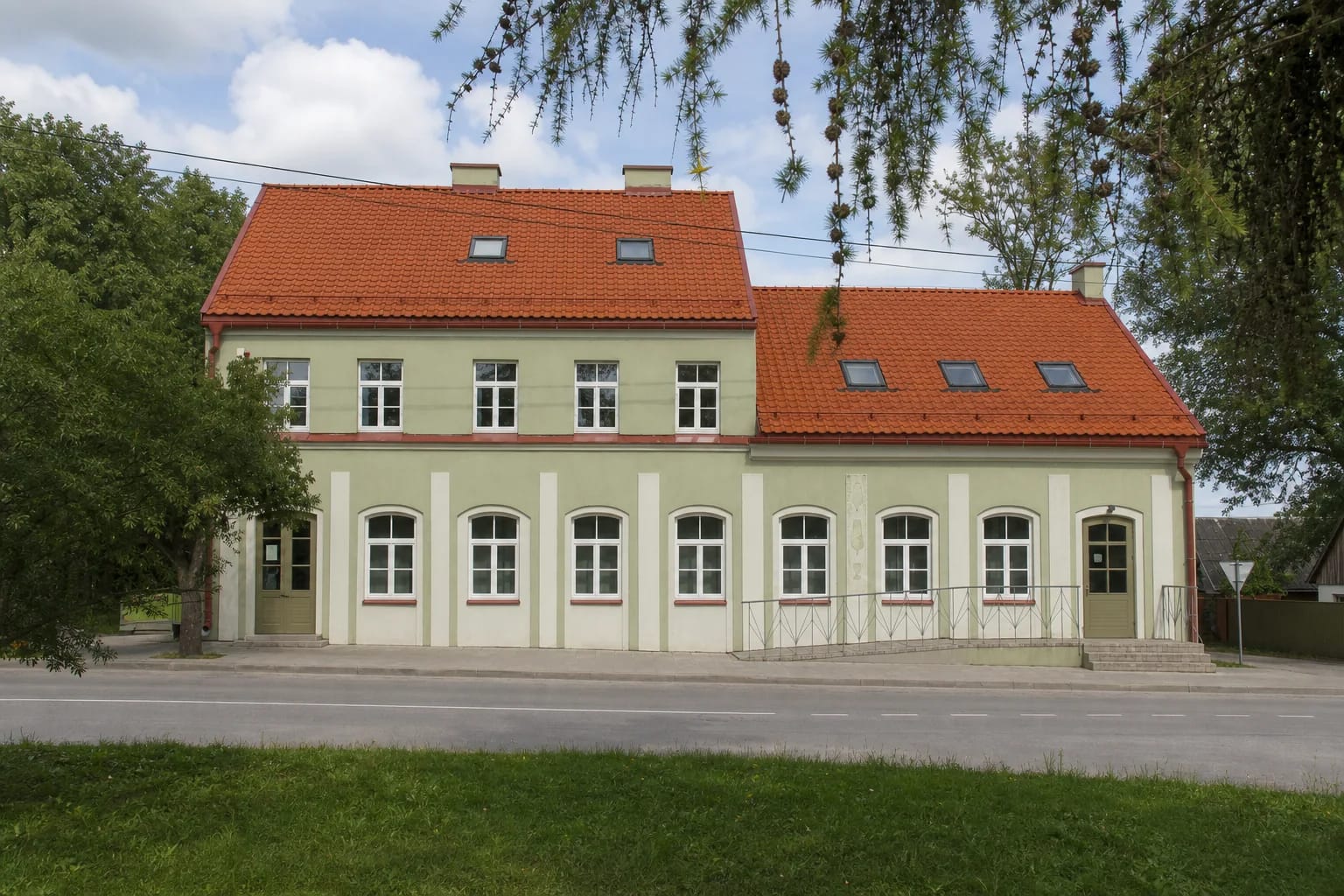
Gražutė Regional Park Visitor Centre operates at 14 Laisvoji Square in Salakas, Zarasai District. The official object's directions link supplies the more precise point 55.579983, 26.134286. It marks the centre building, hence pinType site, but it is not a claim about one particular door, a parking bay, or the geographical centre of the regional park.
The name can cause confusion because older material still refers to a separate Gražutė, or Sartai and Gražutė, regional park directorate. On 1 July 2022, the former regional park directorates were consolidated into the Aukštaitija Protected Areas Directorate. The Gražutė group continues to run its visitor centre in Salakas, while the new directorate's registered office is in Anykščiai.
Both the directorate's current programme page and Saugoma's object record still give the Salakas address and active services in 2026. This review found no current official announcement that the visitor centre had moved or closed for renovation. Earlier preparation for building modernisation does not prove that work began, so visitors concerned about temporary disruption should ask on the booking number.
Three separate exhibitions share the building
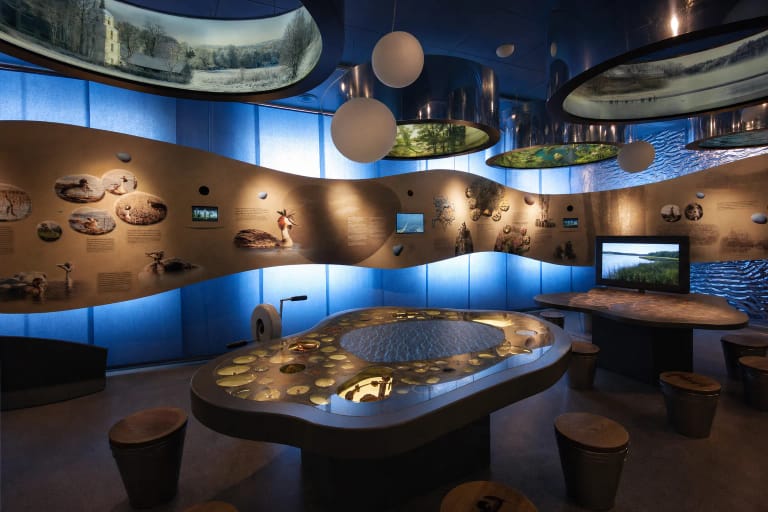
The first is an interactive natural-history exhibition about Gražutė Regional Park. Official descriptions say that it introduces the protected landscape, biological diversity, and cultural heritage. Real photographs show a large park map, suspended direction signs for Salakas, Degučiai, Dūkštas, Antalieptė, and Zarasai, a large moose image, illuminated interpretation panels, and display windows set into the floor.
The Salakas ethnographic exhibition explores local life from the late nineteenth into the twentieth century, including household objects, town character, festivals, crafts, trades, landmarks, and ethnic minorities. Old photographs, maps, and restored objects accompany forty manuscripts compiled by teacher Vida Žilinskienė about folk narratives, vanished villages, people, games, and the town's development. A book collection concentrates on early twentieth-century school publications, while the theological section contains late nineteenth-century prayer books, hymnals, and textbooks.
The third element is officially named Vida Žilinskienė's "Sea Museum". The teacher assembled its marine-animal specimens, corals, shells, fossils, and souvenirs over more than fifty years, and the official count now exceeds 4,000. Highlighted objects include a large lobster, a Japanese sea urchin, a dried young shark, a piranha, and shells once used as currency on Indonesian islands. This is neither a branch of the Lithuanian Sea Museum in Klaipėda nor a live-animal aquarium.
The centre becomes most useful before setting out for lakes and trails
Visitors can ask about museums, craft centres, nature trails, water and cycling routes, links between those routes, and campsites. The official listing also mentions rural accommodation, food, active recreation, Wi-Fi, souvenirs, and the sale of regional-park visitor tickets. The building is therefore more than a set of galleries: it is a practical place to shape a day in a large lake district.
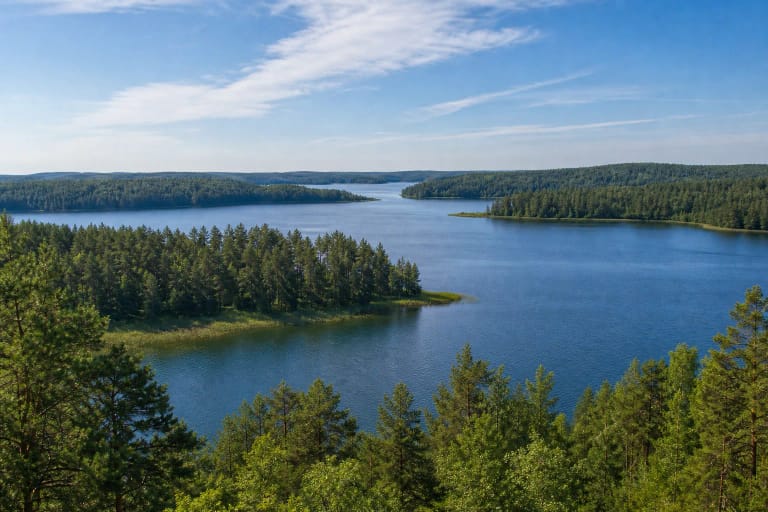
The Antalieptė Reservoir is central to several of the centre's programmes. It was created in 1959 by damming the Šventoji, which transformed the landscape and submerged former homesteads and roads; the programme description counts more than fifty islands. Marios krašto gilumoje, roughly Reservoir in the Depths of the Region, begins with this history indoors and then continues along the upper Šventoji route to Galminiai Hillfort, burial mounds, and the reservoir shore.
Do not give the indoor exhibition the same time allowance as the whole regional park. About 60-90 minutes is a practical editorial estimate for all three indoor components and a route-planning conversation, not an official promise for a guided visit. A trail, reservoir excursion, or guided walk needs additional time, transport, and an advance reservation if a specialist is required.
Bookable activities differ in age range, length, and meeting point
The one-hour Už devynių jūrų, už devynių marių programme, whose title plays on the Lithuanian phrase 'beyond nine seas and nine lagoons', is intended for primary pupils. It connects the formation of the Antalieptė Reservoir with objects in the Sea Museum through games and tasks. The four-hour Marios krašto gilumoje programme is for pupils aged twelve and above and leaves the centre for a field route. These are separate activities, not two parts of ordinary admission.
The directorate also lists two-hour activities at Lake Šventas, on the Degučiai nature trail, beside Lake Luodis, and in the alluvial woodland. The Salakas - Gražutė Regional Park's Gem tour begins at the centre, covers about 5 kilometres in roughly three hours, and includes the Luodis shore, town cemeteries, the Antanas Poderis memorial museum, Salakas's stone church, and an esker. Longer 11-kilometre walks are separate outdoor programmes.
Call +370 670 97265 to arrange an educational session, an exhibition tour, or a guided walk. Confirm the date, participant ages and number, language, real meeting point, duration, clothing or equipment, and final price. The tariff contains a foreign-language rate, but that does not guarantee that every language or guide is available on every requested date.
The 2026 exhibition ticket is not the same as the park-support ticket
The Aukštaitija Protected Areas Directorate tariff updated in April 2026 lists standard visitor-centre exhibition admission at EUR 2. A one-hour guided visit inside a regional park visitor centre is priced at EUR 4 per person in Lithuanian or EUR 6 in a foreign language. A minimum ten-person charge applies: a smaller party is served only if it agrees to pay the rate for ten participants.
A thematic educational session is listed at EUR 4 per person, EUR 5 with directorate materials, or EUR 8 in a foreign language, again with the ten-participant minimum charge. The general tariff does not state whether one EUR 2 ticket covers all three Salakas exhibitions on every date or identify every concession applicable to an individual visitor. Confirm the scope and any reduction at the desk or when booking.
The protected-area visitor ticket is a different product: it is a voluntary contribution to park infrastructure. In 2026 the State Service listed a EUR 1 same-day ticket for one protected area, EUR 5 for thirty days in one area, and EUR 25 for twelve months across all protected areas for an individual or a qualifying family. The Service explicitly says that this support ticket does not make paid directorate services free.
Seasonal hours and accessibility have precise limits
The Saugoma record checked on 19 July 2026 listed 1 April to 30 September hours as Tuesday and Friday 09:00-18:00, Wednesday 11:00-18:00, Thursday 13:45-18:00, and Saturday 10:00-15:00. For 1 October to 31 March it listed Tuesday-Friday 08:00-17:00 with lunch from 12:00 to 12:30, and Saturday 10:00-15:00 without a lunch closure. No regular visitor hours were published for Monday or Sunday.
Hours are reduced by one hour on the day before a public holiday, and the centre closes on public holidays. An older official winter-hours notice from 2025 gave 17:15 rather than 17:00 as the weekday closing time, leaving a genuine fifteen-minute discrepancy between official sources. Call before a late winter arrival, a special Sunday event, or any long journey.
Official accessibility information records a level paved route from the parking zone, a ramp at the entrance, room to move through the interior in a wheelchair, and an adapted toilet. Information can be supplied in easy-to-understand language, and a visitor with hearing loss may attend with a sign-language interpreter. This does not mean that an interpreter is always stationed on site, no number of designated accessible parking bays is published, and the building's accessibility does not automatically extend to 5- or 11-kilometre woodland and shore routes.