- Place
- Šlyninka, Zarasai District Municipality
- Region
- Aukštaitija
- Type
- working watermill and technical heritage
- Address
- Šlyninka village, Zarasai eldership, Zarasai District
- Coordinates
- 55.73390, 26.19780
Ditkūnai Mill
A living mill
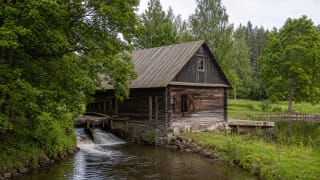
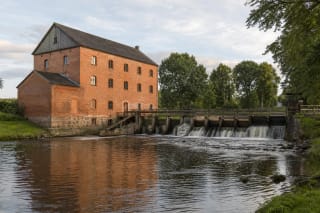
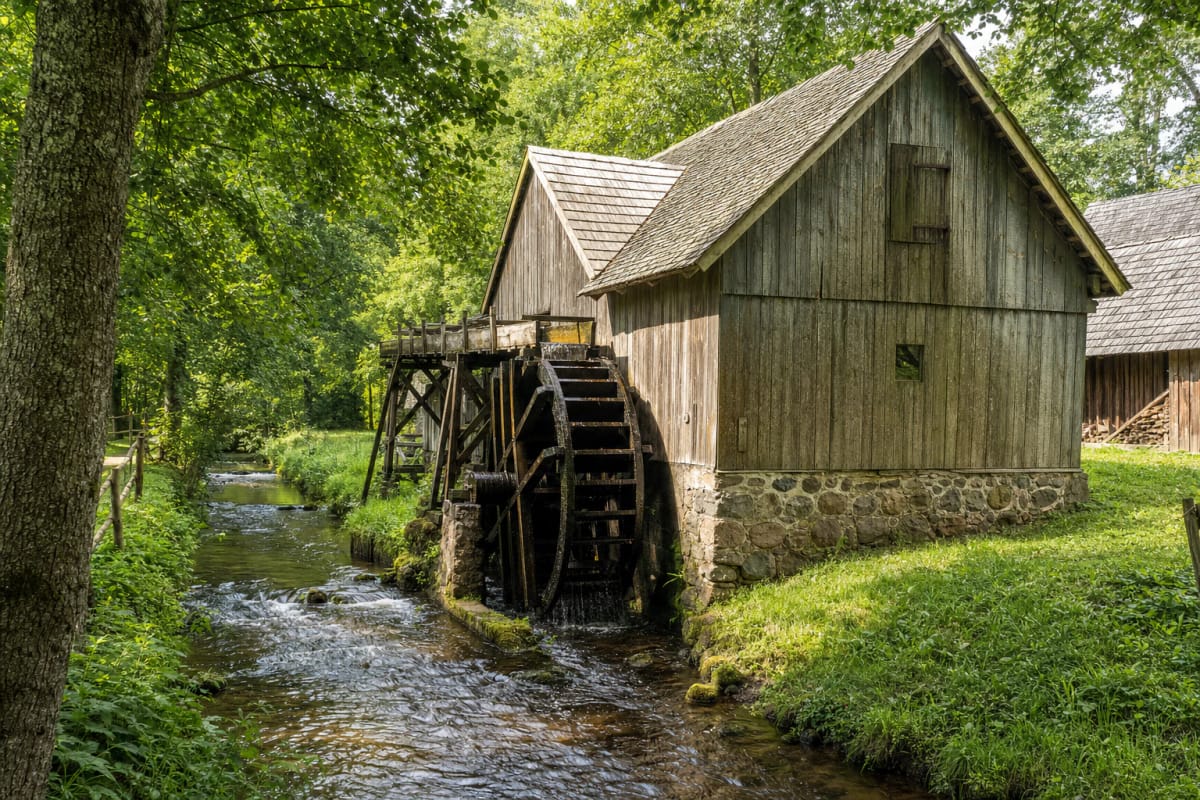
Šlyninka Watermill stands on the Nikaja River in Šlyninka village, about 3 km west of Zarasai. It is one of the few Lithuanian watermills still operating today; most similar mills are now static museum buildings, while Šlyninka still mills and bakes.
Do not be misled by the location: the mill is sometimes wrongly associated with Antalieptė or the Šventoji River, but it stands specifically on the Nikaja near Zarasai. It should also not be confused with the Ginučiai or Minčia mills in Aukštaitija National Park.
About 300 years of history
The mill's origins reach the late eighteenth century. It was then called Ditkūnai Mill and belonged to Livonian land judge Pranciškus Mohlys, owner of Imbradas Manor. The name Šlyninka came from the nearby Šlynina tavern.
The often mentioned age of about 300 years is a rounded figure consistent with late eighteenth-century origins, so it should be treated as approximate. Still, the mill site and function have remained alive for centuries, which is rare in Lithuania.
Milling technology and electricity
Authentic equipment survives and still works inside the mill: stone millstones, rollers for flour milling, a groats machine, and an old sack-lifting wheel. This surviving technology is what makes the mill valuable, because visitors can see how an old mill actually worked.
Because the Nikaja's water flow decreased, the mill has been powered by electricity since the second half of the twentieth century, with 1963 given in sources. The old mechanisms, however, have been preserved and continue to operate. Historically, water was stored behind a dam and released to turn the mill.
Heritage flour, bread, and education
Today Šlyninka mill grinds national-heritage flour, groats, and bran, while a neighbouring homestead bakes traditional rye and wheat bread and prepares food. Visitors are offered tours with a miller's story and bread-baking educational programmes, where they can bake and take home their own loaf.
Recent years have also brought new entertainment near the mill, such as a zipline over the water. Treat this as a commercial addition, separate from the mill itself: the heritage value lies in the working old mill and its machinery.
How to visit Šlyninka Watermill
The mill fits well into a Zarasai-area route with Zarasai town, lakes, and Antalieptė Reservoir nearby. A visit with a tour or educational programme usually takes 1-2 hours.
Tours and bread-baking sessions are arranged in advance, so contact the mill owners before travelling and check current opening hours and prices. They may change and vary by season.