- Place
- Skuodas District Municipality
- Region
- Skuodas District
- Type
- 1881-1885 historic red-brick Catholic church
- Address
- S. Dariaus ir S. Girėno g. 23, Šatės, LT-98242 Skuodas District
- Coordinates
- 56.16844, 21.75342
- Visit duration
- 30-45 minutes; longer if combined with a Skuodas District itinerary
- Best time
- in daylight, after checking Mass times and whether the interior can be visited
Šatės Church, Šatės Church of St John the Baptist
The red-brick church in Šatės
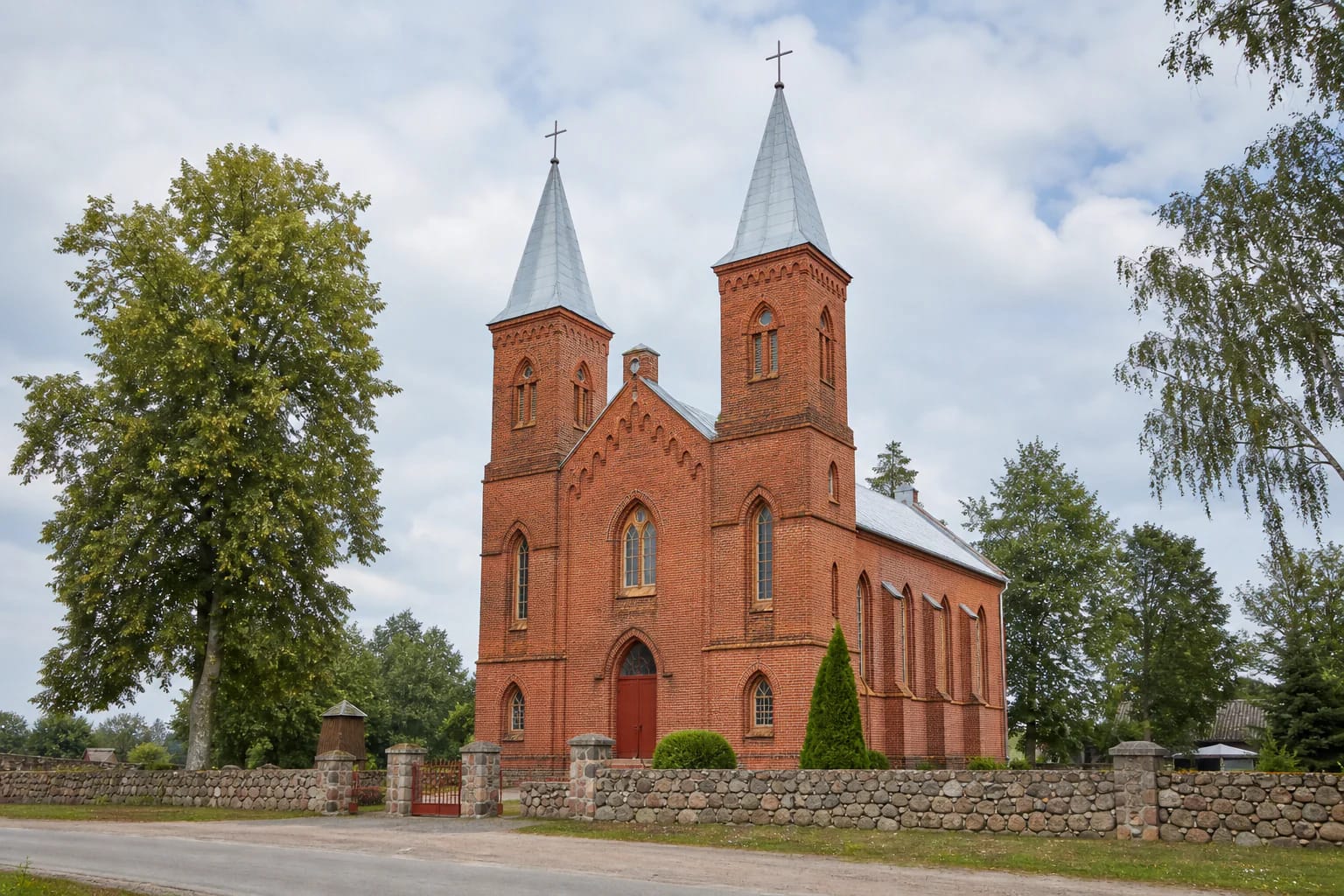
Šatės Church of St John the Baptist stands at S. Dariaus ir S. Girėno g. 23 in Šatės, Skuodas District. It is a historic red-brick sanctuary whose two narrow towers can be seen above the village setting. The coordinate 56.1684406, 21.7534214 marks the church and churchyard, not the centre of the entire settlement.
The church was built in 1881-1885 and remains an active parish site. For a dependable visit, come in daylight to see the exterior and churchyard; enter only during worship or with the parish's permission.
Walk around the churchyard calmly and give priority to graves, prayer, services, and parish activity. The twin towers, red brick and stone enclosure are easiest to appreciate from outside.
An 1881-1885 historic composition
Šatės church was built in 1881-1885. Red-brick masonry, a tall main body, pointed openings, and two slender towers give the church a clear historic silhouette. Walk around the churchyard to see how the facade and side walls read from different distances.
The towers end in light pyramid-shaped spires with crosses, while a stone enclosure separates the sacred grounds from the street. These features are useful identity cues for Šatės and help distinguish this church from other Skuodas District sanctuaries.
The interior has an arrangement with three altars. That historical detail does not guarantee that the interior will be accessible on a particular morning or that photography is permitted. Exterior architecture can be viewed independently; the parish sets the rules inside.
Churchyard and a living parish
The churchyard is part of the site's visitor experience. The stone fence, trees, and religious setting establish the building's scale. Stay on paths, do not touch graves or memorials, and allow parish users to move through the space without interruption.
Mass in the Šatės parish is held at 12.00 on Sundays, at 10.00 on weekdays, and on Saturdays by arrangement. Times can change, so check the schedule before travelling.
Because the church is used for worship, its doors and interior may be occupied by Masses, funerals, or community activity. Groups, interior visits, and photography should be arranged with the parish in advance and carried out according to its instructions.
How to visit Šatės church
Šatės has no regular tourist timetable, admission price, or daily tour-registration service. Allow about 30-45 minutes for the exterior and churchyard, and include interior access in your plan only after the parish or caretaker has confirmed it.
Daylight is the best time to read the red-brick texture, tower spires, and stone enclosure. Do not photograph during worship and do not enter in a way that distracts the congregation. Recheck the schedule before travelling because services and local conditions can change.
Šatės church can be part of a wider Skuodas District itinerary, but Mikytai Sacred Hill, the Dr Vaclovas Intas Homestead, and other town churches are separate destinations. Treat the church, its churchyard, and the parish context as one distinct itinerary stop.
A Samogitian sacred-heritage stop
The church suits a short sacred-heritage stop while travelling through Samogitia. Note the full name and exact address before setting out: the settlement name Šatės can describe the wider village, while the destination is Šačių Church of St John the Baptist.
For more district history, Skuodas Museum is a separate destination, and St Anne's Church in Lenkimai belongs to another parish and another building. Plan these places as separate stops, each with its own building, setting and visiting arrangements.
The value of Šatės church lies in the relationship between its brick proportions, twin towers, churchyard, and living community. Visit it as a house of prayer as well as heritage, and follow the parish's directions during worship or events.