- Place
- Plungė, Plungė District Municipality
- Region
- Samogitia
- Type
- an outdoor Lourdes grotto consecrated in 1906 and containing a statue of the Virgin Mary
- Address
- 27B Birutės Street, Plungė, LT-90112
- Coordinates
- 55.91435, 21.82573
- Visit duration
- 20-45 minutes for the grotto, terrace and historical context; longer for private prayer or a ceremony confirmed in advance
- Best time
- in daylight from spring to autumn; for a feast or communal prayer, consult current Plungė parish announcements
Lourdes Grotto Plungė, Plungė Grotto of the Virgin Mary, Plungės Lurdas
The fieldstone grotto by the Babrungas is a place of prayer, not ornamental park scenery
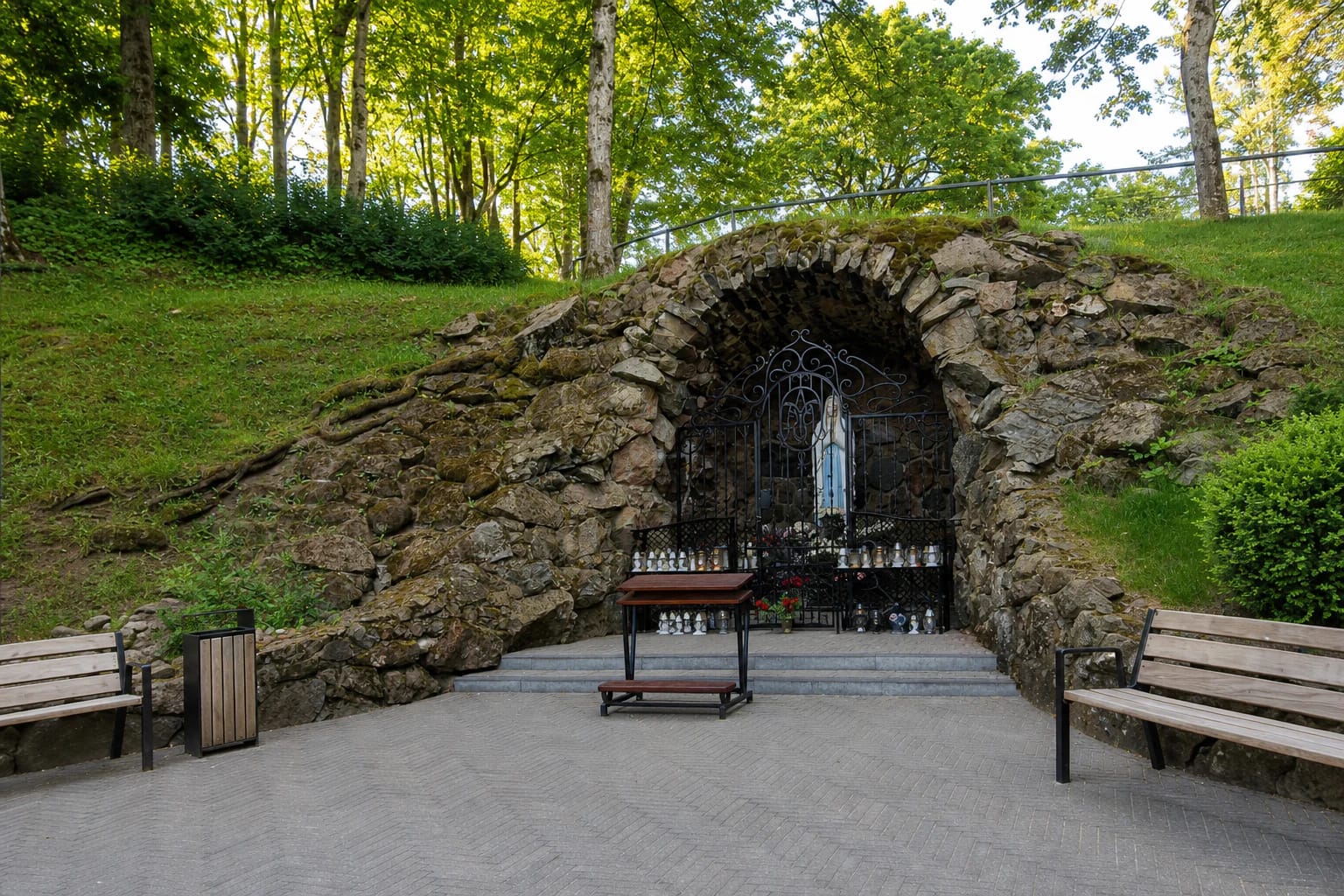
Plungė Lourdes Grotto occupies a wooded slope in the valley of the River Babrungas off Birutės Street. A white statue of the Virgin Mary stands in the niche of a fieldstone grotto, behind a black metal gate and close to candle stands and a kneeler. A paved terrace with benches provides a calm view of the composition, but its primary purpose remains religious.
A Lourdes grotto takes its model from the Massabielle cave in Lourdes, France, associated in Catholic belief with Bernadette Soubirous's visions in 1858. VLE lists Plungė among Lithuania's best-known examples. Here, a copy means a local interpretation of the devotional tradition rather than an exact architectural replica: a Marian statue, a stone niche and room for prayer.
The grounds are maintained, while candles and flowers show that the shrine remains in use. Even if you come for history or architecture, speak quietly, do not enter through the gate or climb the stonework, and give worshippers privacy. Light candles only in the designated place.
A duchess, a nun and the Plungė parish priest created the shrine in 1903-1906
Plungė District Municipality traces the grotto's beginnings to Duchess Maria Skuževska-Ogińska. In 1903, she invited Sister Zofia Zakrzewska of the Handmaids of the Sacred Heart of Jesus to Plungė. Together with the priest Vincentas Jarulaitis, they selected a site by the Babrungas; the duchess provided land and 5,000 roubles.
A statue of the Virgin Mary brought from France in 1905 initially stood outdoors. The fieldstone grotto was completed and consecrated in 1906. These events form documented local history, so there is no need to explain the shrine through later stories of miracles or supposed healing powers.
A wooden Gothic Revival chapel with a white marble altar was built above the grotto in 1909-1910. The result was not simply an isolated monument but the centre of a religious community where an outdoor shrine, a chapel and institutions supported by nuns functioned side by side.
The Capuchin period made the grotto part of a larger Catholic complex
In 1928, Bishop Justinas Staugaitis of Telšiai transferred the grotto and adjacent buildings to the Capuchins. VLE's history of Plungė likewise records that the friars settled in the town that year. They looked after the shrine and contributed to religious life and education.
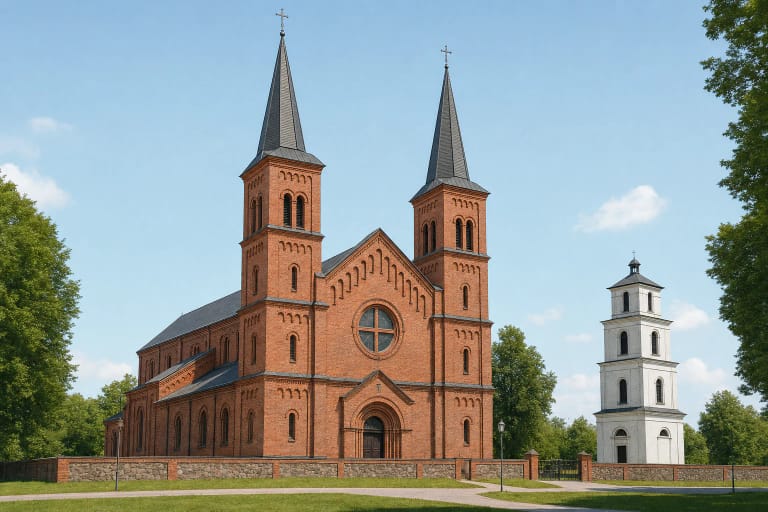
The Capuchins opened a mission school in 1933. Its building survives and is now used by Plungė Saulės Gymnasium, a reminder that the area's history extends beyond the single grotto. Worship, education and the wooden chapel formed an interconnected ensemble.
Pilgrims came to the grotto, but its historical significance is best judged from the documented growth of the complex rather than unreproducible claims about exact crowd sizes or miracles. Present-day visitors should also distinguish the surviving grotto from the wooden chapel, which no longer exists.
The shrine was destroyed under Soviet rule, but residents rescued its first statue
After the Second World War, the monastery was abolished, religious activity suppressed and the grotto closed and dismantled under Soviet rule. Sources differ on the year of the actual demolition, so the period is more reliable than a single definitive date. The wooden chapel was reused for secular purposes and burned down in 1982; traces of its foundations remain.
A historical publication on Plungė church recounts that the first Marian statue was covered in tar and thrown into the Babrungas. Residents found it, saved it and carried it to the Church of St John the Baptist in Plungė. The original remains there today, while the restored grotto contains another figure.
The rebuilt grotto was consecrated on 20 October 1990. The site is entered in the Lithuanian Cultural Heritage Register under unique code 4132. The restored shrine and rescued original, now held in separate locations, jointly tell a story of twentieth-century repression and a community's determination to preserve memory.
There is no admission fee, but Google's hours are not an official door schedule
The grotto is an open outdoor site without a ticket desk. On 25 July 2026, Google Maps described it as open 24 hours, but Plungė parish does not publish separate tourist hours for the shrine. Treat that label as an indication of outdoor access, not a promise about lighting, winter maintenance or temporary arrangements during an event.
Daylight is the safest time to visit. The terrace is paved and has benches, but steps are visible next to the grotto and no detailed step-free access audit has been published. Contact Plungė parish in advance if you require vehicle access or assistance, or plan to bring a group, and check current parish notices.
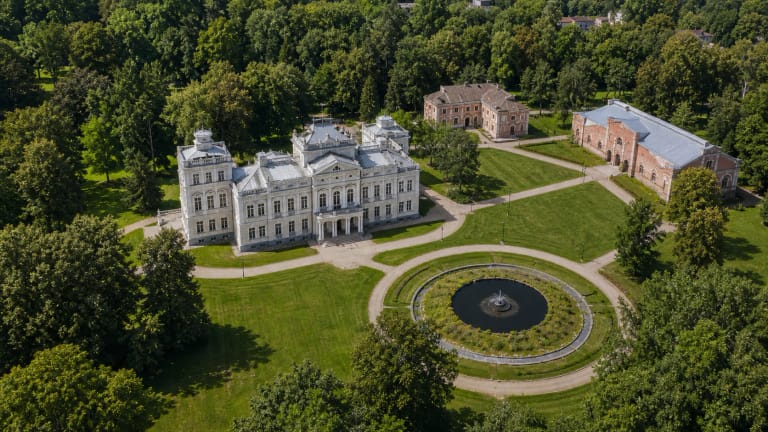
Twenty to thirty minutes is enough for a brief visit, but the history becomes clearer if you continue to the Church of St John the Baptist, where the first statue is preserved, and to Oginskiai Manor. The grotto then emerges not as an isolated stop but as part of a story encompassing Oginskiai patronage, Catholic life and the rupture of Soviet rule.