- Place
- Nida, Neringa Municipality
- Region
- Neringa
- Type
- art residency, exhibition, education, and research centre
- Address
- E. A. Jonušo g. 3, Nida
- Coordinates
- 55.29977, 20.98597
Vilnius Academy of Arts Nida Art Colony, NAC, NMK
Nida Art Colony - a contemporary art stop on the Curonian Spit
Nida Art Colony is a Vilnius Academy of Arts unit in Nida, at E. A. Jonušo g. 3, in the southern part of the settlement by the Curonian Lagoon. It works as a hybrid space - a place for art education, production, research, meetings, and focused creative work - so it differs from a traditional museum.
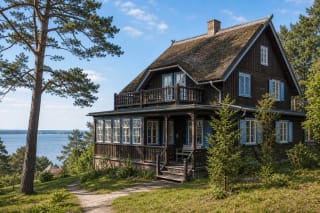
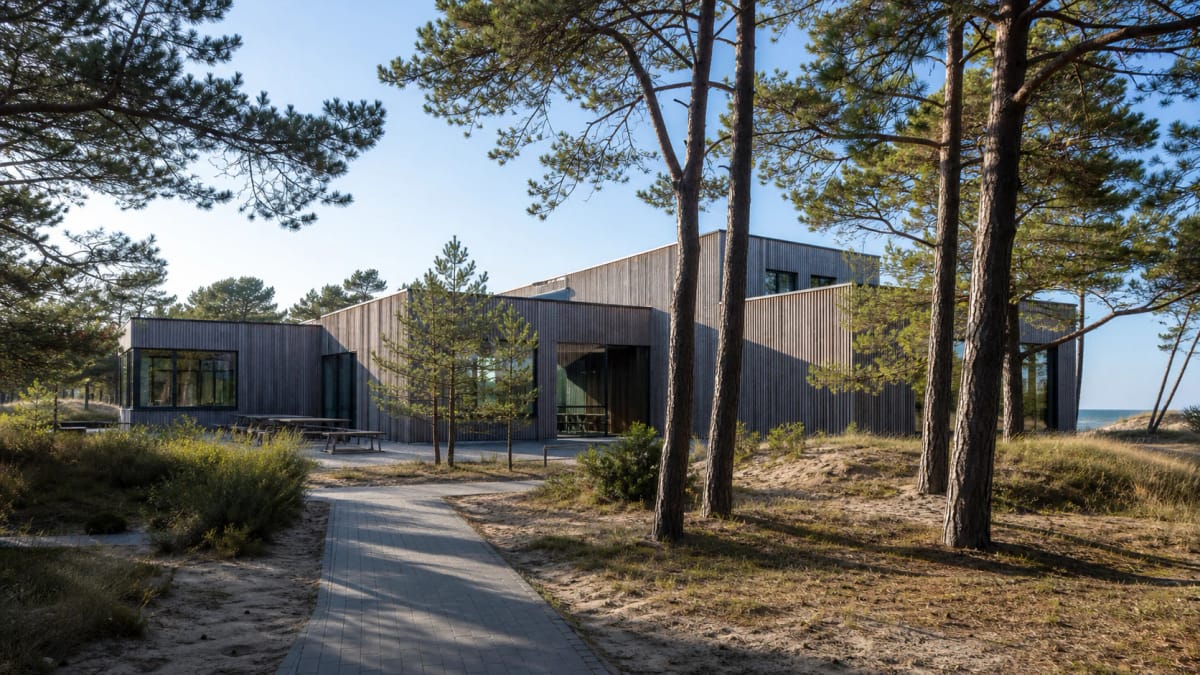
In the context of the Curonian Spit this matters: Nida is often understood through dunes, fisherman's architecture, Thomas Mann, and summer holidays, while the art colony adds a contemporary, international, and experimental layer. The colony stands in the UNESCO-protected Curonian Spit landscape, among pines and dunes.
From the nineteenth-century Nidden painters to the contemporary colony
The Nida painters' tradition is far older than the present colony. According to the Universal Lithuanian Encyclopedia, from the last decade of the nineteenth century painters from the Königsberg Academy of Art visited Nida constantly, and their gathering point became Hermann Blode's guesthouse, opened in 1867. In this way one of the best-known East Prussian artists' colonies formed, known in the German world of the time as Nidden.
The name of the present Vilnius Academy of Arts Nida Art Colony deliberately takes up this historical memory. The contemporary institution continues the idea that the Nida landscape, the dunes, and the lagoon light are a place of creation, not merely of rest.
The 2011 opening and the Algimantas Kančas Studio architecture
The Vilnius Academy of Arts began building the present colony in the early 2000s: it acquired the Nida plot in the mid-2000s and at first used it as a place for intensive summer studies. The building was constructed in two stages - the first began in 2009 and opened in 2011 (funded by the European Economic Area and Norway Grants), and the second was completed in 2015 with support from European structural and investment funds.
The architectural design was prepared for a 2008 competition by the Kaunas-based Algimantas Kančas Studio (architects Algimantas Kančas, Tomas Petreikis, Gustė Kančaitė, and Gytautė Gružauskaitė). The building is not resort decoration: it works among pines, dune light, and the protected landscape, yet keeps the restraint needed for work, residencies, and exhibitions, so it is itself a contemporary architecture object.
Residencies, the Nida Doctoral School, and research
Nida Art Colony runs an international artist residency programme, curates and commissions art and research projects, exhibitions, and courses, and holds the annual Nida Doctoral School. It is open to the public, but focuses mainly on the academic and cultural community.
That means what happens here is not only an exhibition for visitors, but a real international process of making, research, and learning. A visit is therefore best for those who want to see what Nida is living with today, not only what it remembers.
The Venice Biennale and international recognition
Nida Art Colony has been responsible for three Lithuanian pavilions at the Venice Biennale. One of them - the opera-performance Sun & Sea (Marina) - won the top award, the Golden Lion, at the 58th Venice Biennale of Contemporary Art in 2019, and in 2023 the Children's Forest Pavilion was presented at the 18th Architecture Biennale.
In 2017-2021 the colony took part in the international Creative Europe project 4Cs (From Conflict to Conviviality through Creativity and Culture). Since its founding the colony was shaped by its initiator and first director Rasa Antanavičiūtė (2011-2019), then led by Egija Inzule (2019-2025), and from October 2025 it is directed by Neringa Bumblienė.
How to visit Nida Art Colony
No fixed tourist opening hours were found during research, because visits depend on the exhibition, residency, and event programme. The colony is set apart from central Nida, so check the official Nida Art Colony page before going; the colony also offers accommodation.
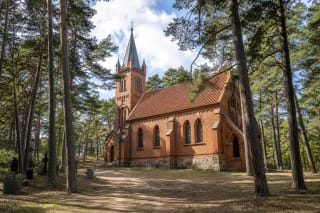
If an exhibition or event is open, allow at least 30-90 minutes. The colony is easy to combine with central Nida, Parnidis Dune, the Evangelical Lutheran church, and the Thomas Mann Memorial Museum, but it is best chosen for a specific event.