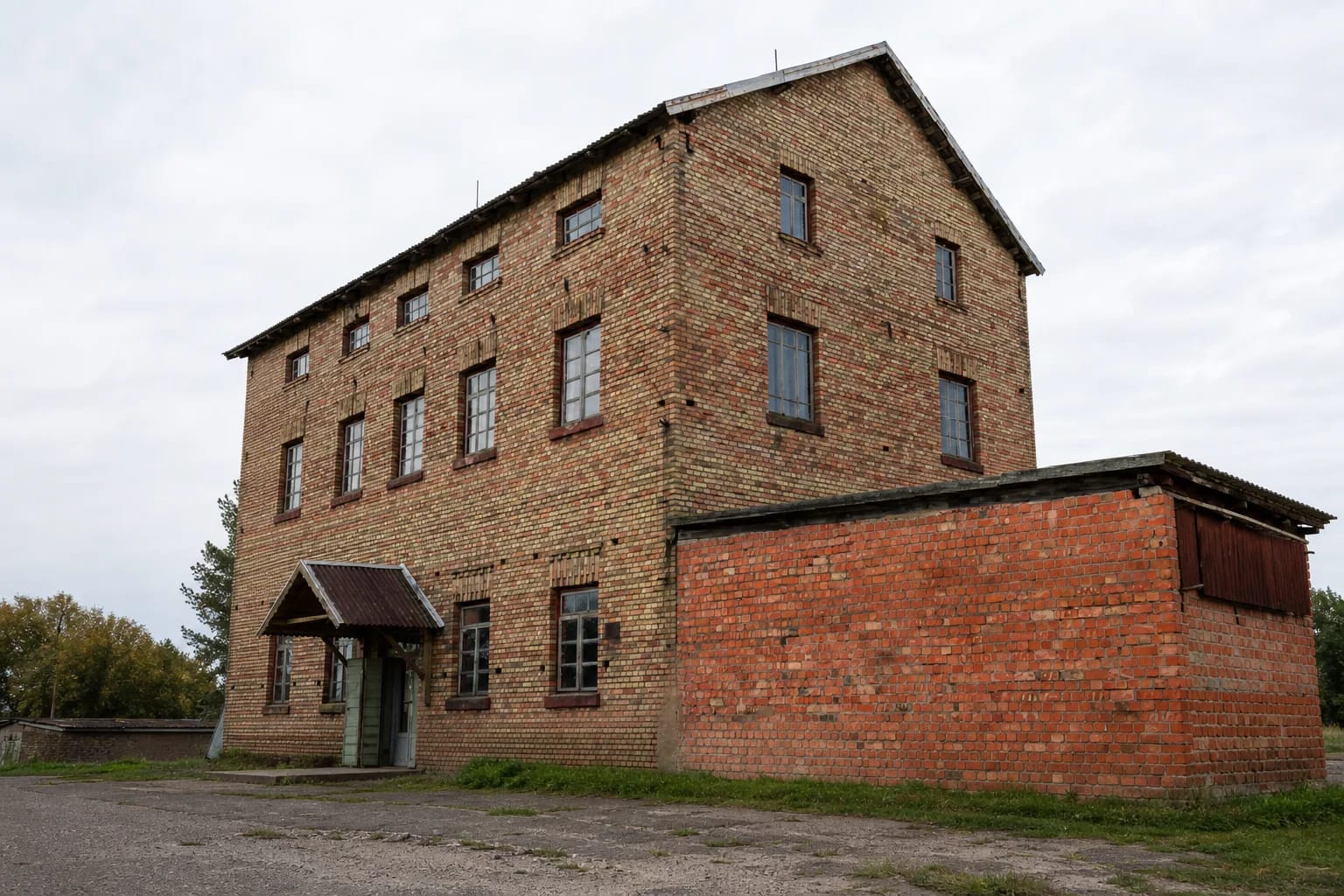
- Place
- Ramygala, Panevėžys District Municipality
- Region
- Aukštaitija
- Type
- working electric grain mill with historic machinery
- Address
- 46B S. Darius and S. Girėnas Street, Ramygala
- Coordinates
- 55.50419, 24.30263
- Visit duration
- 45-90 minutes when a programme or mill visit has been arranged in advance
- Best time
- by prior telephone arrangement only; no regular public hours or price list are published
Ramygala Old Mill, Senasis Ramygalos malūnas, Old Grain Mill in Ramygala
Not a windmill: how to identify the real Ramygala site
The Old Mill stands in the southern part of Ramygala, away from the town square. It is a tall rectangular grain mill of mottled yellow and red brick, with a simple gabled roof, a rhythm of narrow windows, and a low red-brick annex. There are no sails, rotating cap, or water wheel because a motor, rather than wind or a river, supplies the machinery's power.
Do not confuse it with the two nineteenth-century windmills on Ramygalos Street in the city of Panevėžys. This page covers the 1929 grain mill in the town of Ramygala. The research found no separate Cultural Heritage Register code for this site, so it does not invent a KVR number or claim legally protected monument status.
The coordinates 55.504191, 24.302634 come from the municipality's official crafts publication and mark the building itself, not a public entrance or reserved parking bay. The municipality's latest 2025 map gives 46B S. Darius and S. Girėnas Street, while another official list uses 46A and an older event entry used 2 Kaštonų Street. Use the coordinate and telephone ahead rather than relying on one number alone.
Built in 1929, operating by 1930, with an ownership story that needs caution
Current Panevėžys District publications consistently date the building to 1929. A 2010 account on Ramygala's local website describes it as operating since 1930. The dates fit if 1929 marks construction and machinery installation, while 1930 marks the start of sustained operation.
In a 2021 interview, miller Jonas Plučius named Arieška, Masiokas, and Variakojis in the sequence of early owners, and identified Alfonsas Ryliškis as the first miller, who helped build the mill and worked until 1950. Other accounts call Anupras Masiokas the founder. This is valuable locally transmitted history, not a complete archival chain of title, so the names are not presented as an uncontested legal ownership record.
The mill continued to work in the Soviet period, and that operational continuity helped its machinery survive. A public account says Jonas Plučius began working here in 1997 and described himself as the fifth miller. The present National Heritage catalogue links the site with the public institution Senasis Ramygalos malūnas, but a catalogue entry establishes activity and certification, not ownership of the building or plot.
Swedish machinery, a timber frame, and two generations of millstones
A three-storey timber machinery frame survives behind the masonry exterior. Ramygala's official local account emphasises that much of the equipment and nearly all important structural detail are authentic. The greatest value is therefore not only the old facade, but the integrated system of drives, chutes, shafts, and grain movement rising through the floors.
The municipality's crafts publication carefully distinguishes the old and working millstones: flour is ground with newer stones, while the old stone millstones remain in their former position. The same description mentions the winnowing machine, and the programme demonstrates how grain becomes flour, semolina, and bran. This does not mean every unit will run during every visit.
An electric motor drives the units today. The official crafts publication contrasts it with a diesel engine used in the past, while secondary accounts disagree about the very earliest source of power and variously mention steam or electricity. Without a single 1929 technical record, the defensible claims are the present electric drive and the documented reference to earlier diesel power.
Grain Transformation is an arranged experience, not a self-guided display
The Grain Transformation programme introduces visitors to cereal varieties, the milling sequence, and the products that result. The miller traces the grain's route through the machinery and explains how the building and its inventory were preserved. Earlier official descriptions mention pancakes, cake, or bread made with flour milled on site after the tour.
Panevėžys District Municipality's November 2025 map still says that the surviving machinery operates and grinds grain, and that educational programmes take place. This is the newest official confirmation found, but it does not guarantee milling or food on a day chosen without consultation. Confirm the programme, group size, duration, demonstration, and any meal directly.
The National Heritage catalogue lists the public institution Senasis Ramygalos malūnas as a traditional activity provider. Such certification relates to a traditional process or product; it should not be confused with legal protection of the building, formal museum status, or unrestricted daily admission.
Who admits visitors, what can be seen outside, and what sources do not promise
The official 2025 map gives one unambiguous rule: visits are possible only by advance arrangement. It lists +370 699 81 131. No dependable source publishes regular tourist hours, an individual ticket, an education price, or an online reservation system, so directory opening hours should not be treated as guaranteed admission.
Public legal-entity data and the National Heritage catalogue connect the activity with the public institution Senasis Ramygalos malūnas and Jonas Plučius. They are not a land-register extract, so this page does not call them confirmed owners of the real estate. In practical terms, this is a working site in a controlled yard: enter the yard or building only with permission.
The mill is set away from the town's main view, and no official public viewing platform is identified. Part of the building may be visible from the public approach, but it is not a freely accessible open-air museum. Sources also publish no confirmed parking, toilet, lift, or step-free access plan; old stairs across three machinery floors may limit accessibility.
Building a day around Ramygala
When a visit is confirmed, allow roughly 45-90 minutes. The shorter end covers the milling story, while a machinery demonstration or food programme needs longer. Without confirmation, do not travel solely for the interior: a controlled yard and unpublished timetable may mean that none of the mechanisms can be seen.
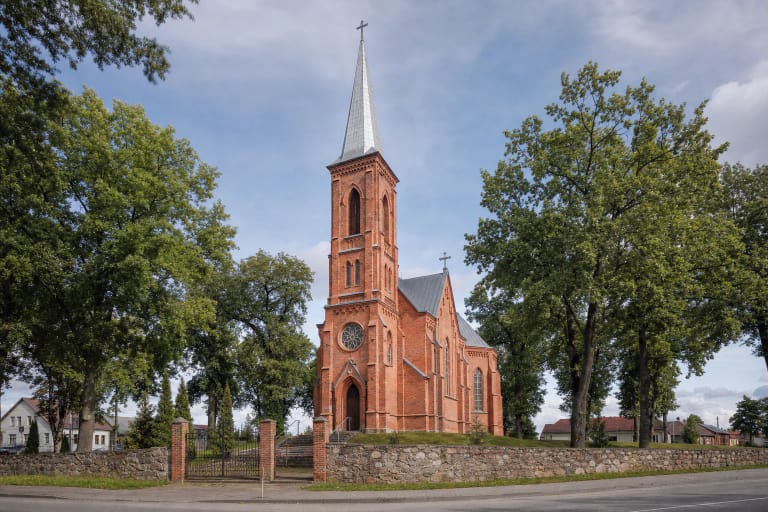
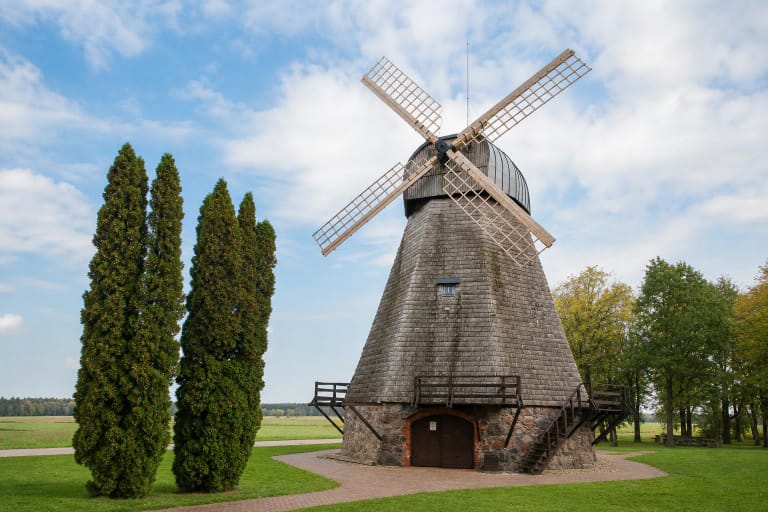
Ramygala Church of St John the Baptist is a nearby town landmark whose exterior can be visited independently. For two entirely different mill types, continue to the Flax Museum at Stultiškiai: that exhibition occupies a true windmill, while Ramygala uses a motor-driven system inside a rectangular industrial building.
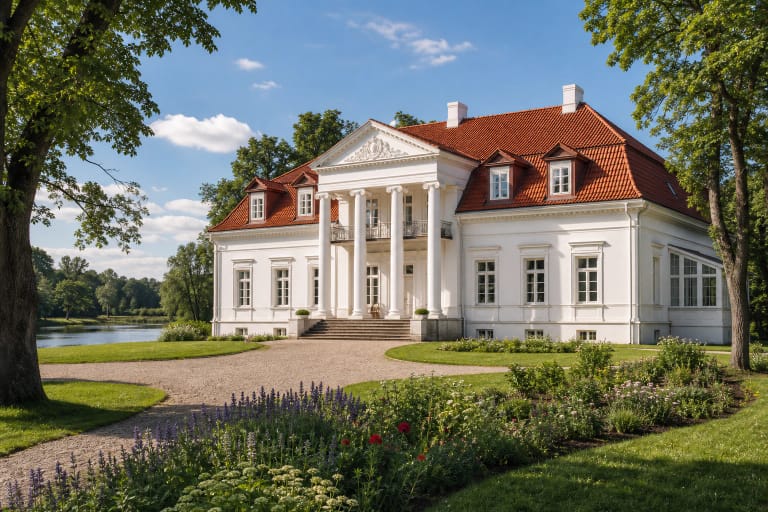
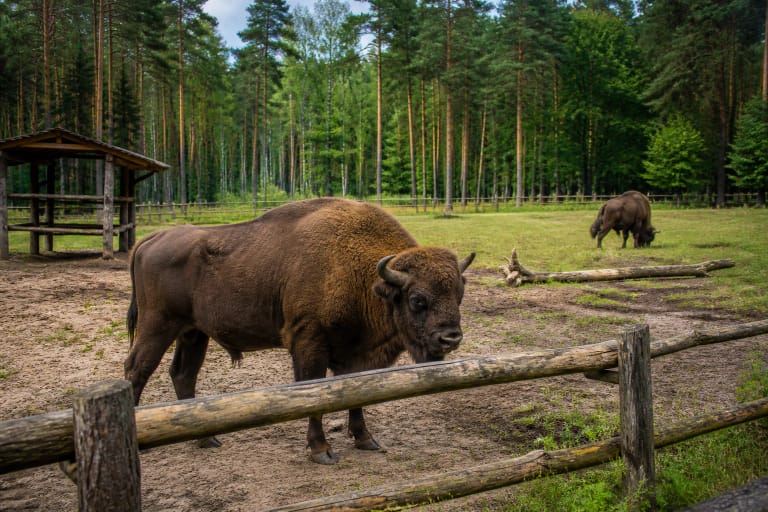
A longer day can continue to Bistrampolis Manor or the Pašiliai Bison Enclosure. Their schedules differ, so confirm the Ramygala mill first and arrange the more flexible stops around that fixed time.