- Place
- Kučiai village, Ramygala eldership, Panevėžys District Municipality
- Region
- Aukštaitija
- Type
- manor estate with palace, park, museum spaces, and events
- Address
- Bistrampolio g. 1, Kučiai village, Panevėžys District
- Coordinates
- 55.59686, 24.35646
A manor between Panevėžys and many historical layers
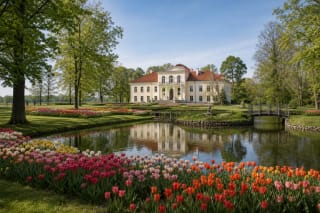
Bistrampolis Manor is in Kučiai village, Panevėžys District. Today it operates as a visitor manor estate with a palace, park, ponds, museum spaces, events, and hospitality services.
The visitor experience is twofold: a restored manor with historic forms, and a living place for concerts, celebrations, tours, and educational activities.
The Bistram family manor
The Bistram family came to Lithuania from Courland. In 1645 Jonas Kazimieras Bistramas, a courtier of King Władysław Vasa, received land and moved to Lithuania. In the late seventeenth century his descendants acquired the Barklainiai holding with Kučiai village, the future Bistrampolis, first mentioned by that name in 1795.
The manor identity was shaped especially by Karolis Bistramas (1819-1887), noble marshal of Panevėžys County and owner of a large estate. His son Vladislovas Bistramas took part in the 1863 uprising; on 31 July 1863 a battle of Antanas Mackevičius's insurgents took place near the manor. The Bistramai owned the estate until nationalisation in 1940.
Palace and estate structure
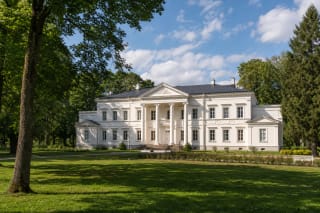
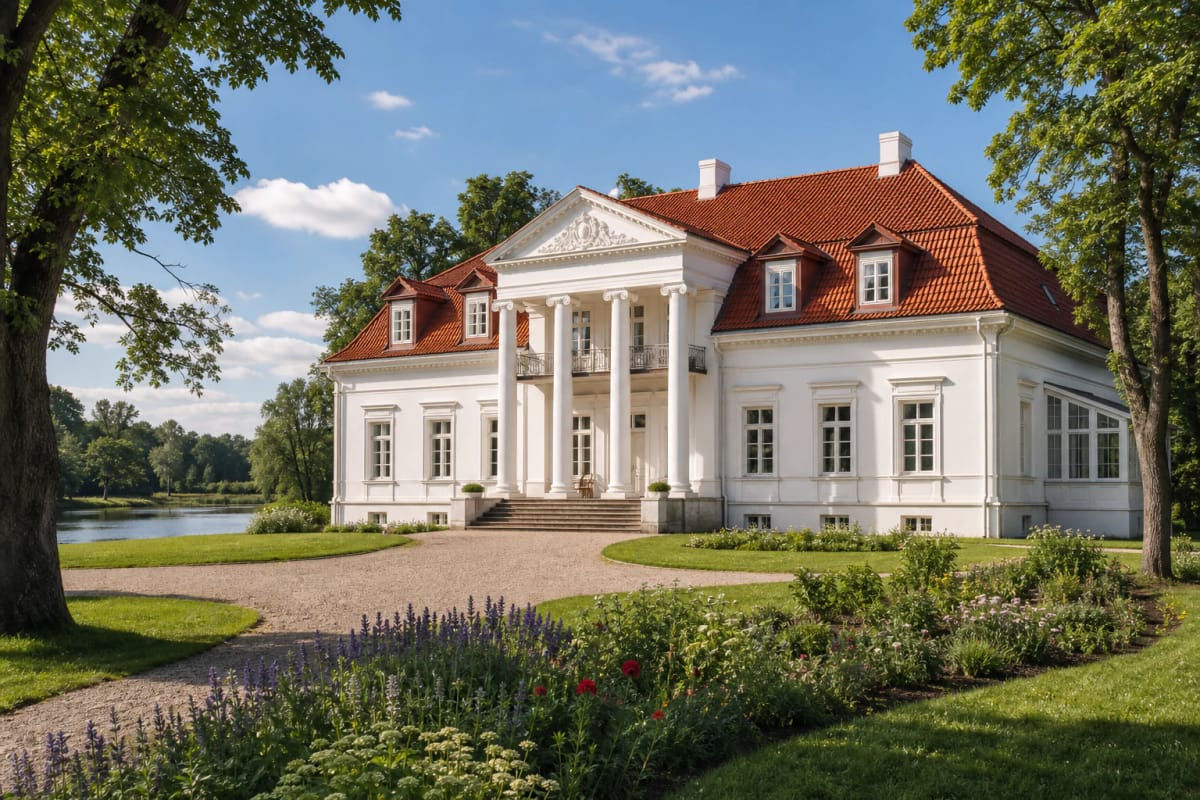
The present masonry Classicist palace was built in the mid-nineteenth century: the official manor history gives 1850, and the whole ensemble with park was completed around 1863. KVR gives the palace dimensions as about 32.50 m long, 18.10 m wide, and 8.50 m high, with two storeys and a portico.
The Cultural Heritage Register lists 11 estate objects: palace, granary, carriage house, icehouse, gardener's house, cellar, cowshed, barn, stable, power-station building, and park. Older buildings are also noted, with some dated to 1820 and others to 1854 and 1857. Together with three ponds and the Bistram cemetery with forged fence, they mean Bistrampolis is best understood as a complex.
Restoration, museum, and book-smuggling memory
In 1997 the manor was transferred to the Panevėžys Diocese and the public institution Youth Integration Opportunities Centre. Restoration began in 2003 under priest Rimantas Gudelis, and the restored palace with restaurant, hotel, and conference spaces opened to visitors at the end of 2008.
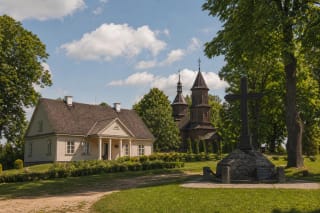
One interesting layer is the former power-station space, now containing a chapel and a book-smuggling museum. Wooden sculptures in the estate commemorate the 1863 uprising. Since 2003 Bistrampolis has hosted an annual cultural festival.
Tours and practical visiting
During research, the official tours page stated that guided tours are organised for groups and must be arranged in advance. It listed group rates, self-guided visiting, and audioguide prices, but such information may change.
The manor also hosts events and seasonal activities, so check the official page before travelling. If your aim is heritage rather than an event, a guided tour is best because it links the palace, park, family history, and museum spaces.