- Place
- Akmenė District Municipality
- Region
- Samogitia
- Type
- modern parish church
- Address
- L. Petravičiaus g. 5, Naujoji Akmenė, 85133 Akmenė District
- Coordinates
- 56.32196, 22.88443
- Visit duration
- 30-60 minutes; 2-4 hours with Akmenė attractions
- Best time
- daylight, when the white façades and geometric windows stand out against the park
Naujoji Akmenė Holy Spirit Church
What you see at Naujoji Akmenė Church
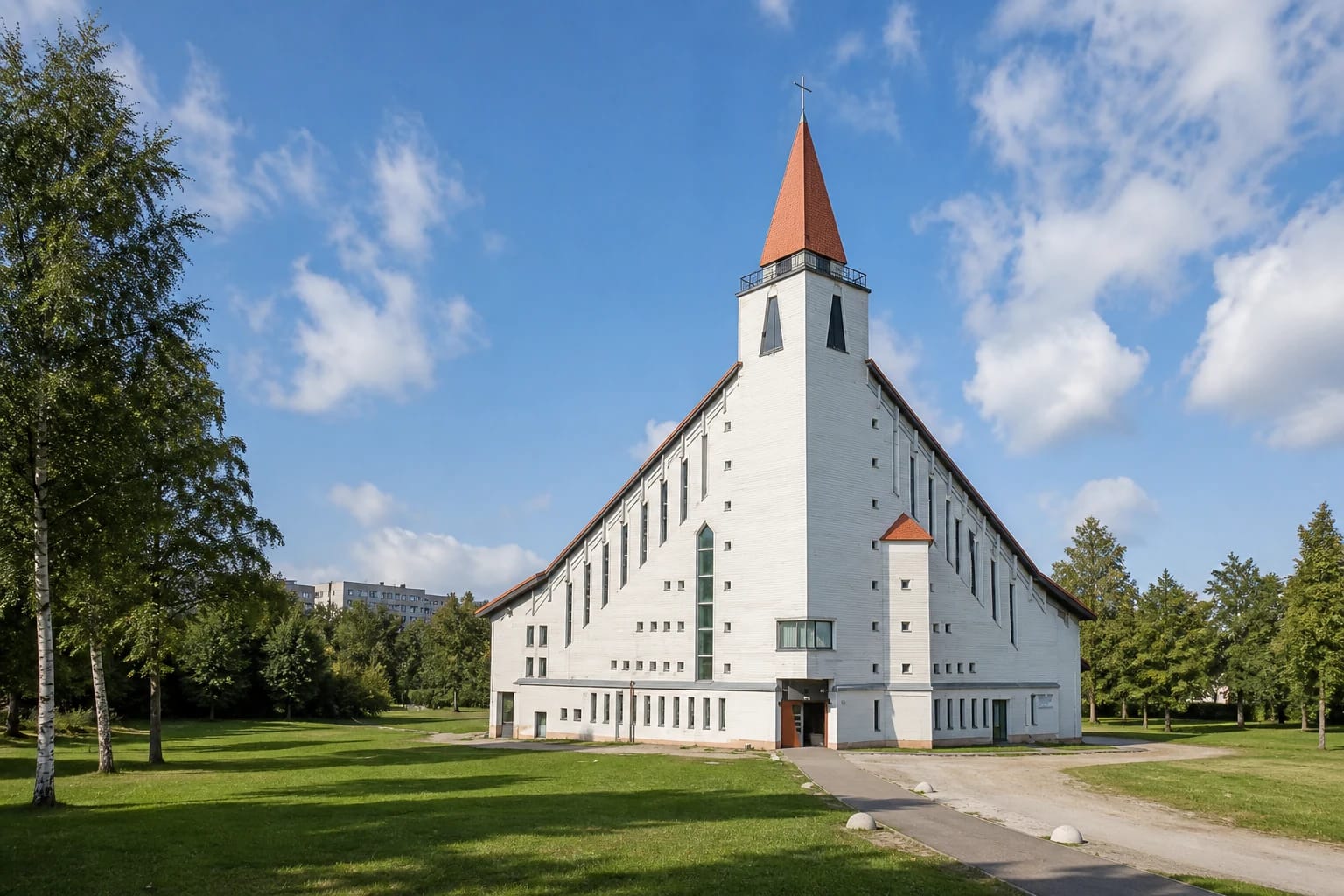
The church stands on L. Petravičiaus Street in a green urban setting, and its shape immediately differs from a traditional Samogitian church. A white angular volume rises into a tall central tower topped by an orange pointed roof and cross; narrow vertical windows, small square openings, and a lower side tower repeat across the façades.
A straight path from the lawn leads to the entrance, so walk around the building to understand its geometry. The side view reveals the triangular roof line and bands of light, while the front shows the tower's scale. Keep public paths clear and remember that this is a working parish, not simply a backdrop.
A church history that began in 1992
Construction began in June 1992 on a one-hectare plot. Architect R. Zimkus designed the project, and K. Matjošaitis was its constructor; the building's scale is defined by walls about 40 m high and a tower roughly 50 m high. It is an ambitious work of sacred architecture from the beginning of Lithuania's independence.
The first Mass in the new church was celebrated on August 15, 1998, and Bishop Antanas Vaičius consecrated it on September 4, 1999. The visit is therefore about more than form: it is also a concrete story of a city community building its place of worship.
A worship space and the story of three bells
Inside, the church has a worship hall of about 600 sq. m and a balcony of roughly 180 sq. m, while the lower level includes approximately 350 sq. m for meetings. These dimensions explain why the restrained exterior opens into a substantial community space rather than a small chapel.
On April 22, 1999, three bells arrived: the 1,800 kg Bell of Mourning, the 1,400 kg Bell of Prayer, and the 1,100 kg Baptism Bell. Cast in Dortmund in 1954 by Diegner und Schade Dorsten, they were later restored and donated to the parish. For visitors, the bells connect the building with a wider European Catholic heritage.
Mass times and planning a church visit
The parish schedule lists Sunday Mass at 10:00 and 12:00, weekday services at 17:00, Monday and Tuesday services by arrangement, and Saturday Mass at 11:00. Confession is heard about 15 minutes before Mass. Schedules change, so check the current information before travelling.
The church's titular feast is connected with Pentecost, and the Feast of the Assumption is also marked on August 15. For a quiet interior look, choose a time between services and ask the parish about access, because the church follows parish arrangements rather than a museum timetable.
Naujoji Akmenė in context
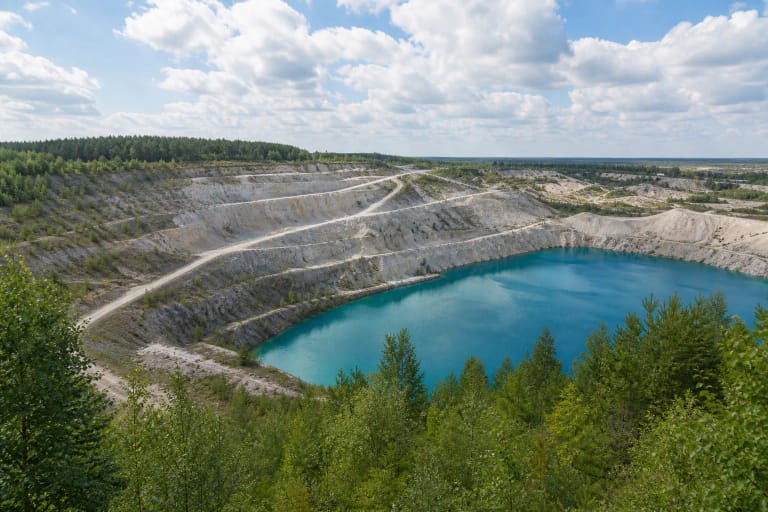
This church belongs in a town route where industrial history meets a recovering landscape. After the regional museum or Akmenė Nature and Culture Park, the white church can be read as a late-twentieth-century sign of urban identity, while the quarry viewpoint reveals a very different scale of the district.
This is an active parish, so contact the parish with questions about services, interior access and photography before visiting.