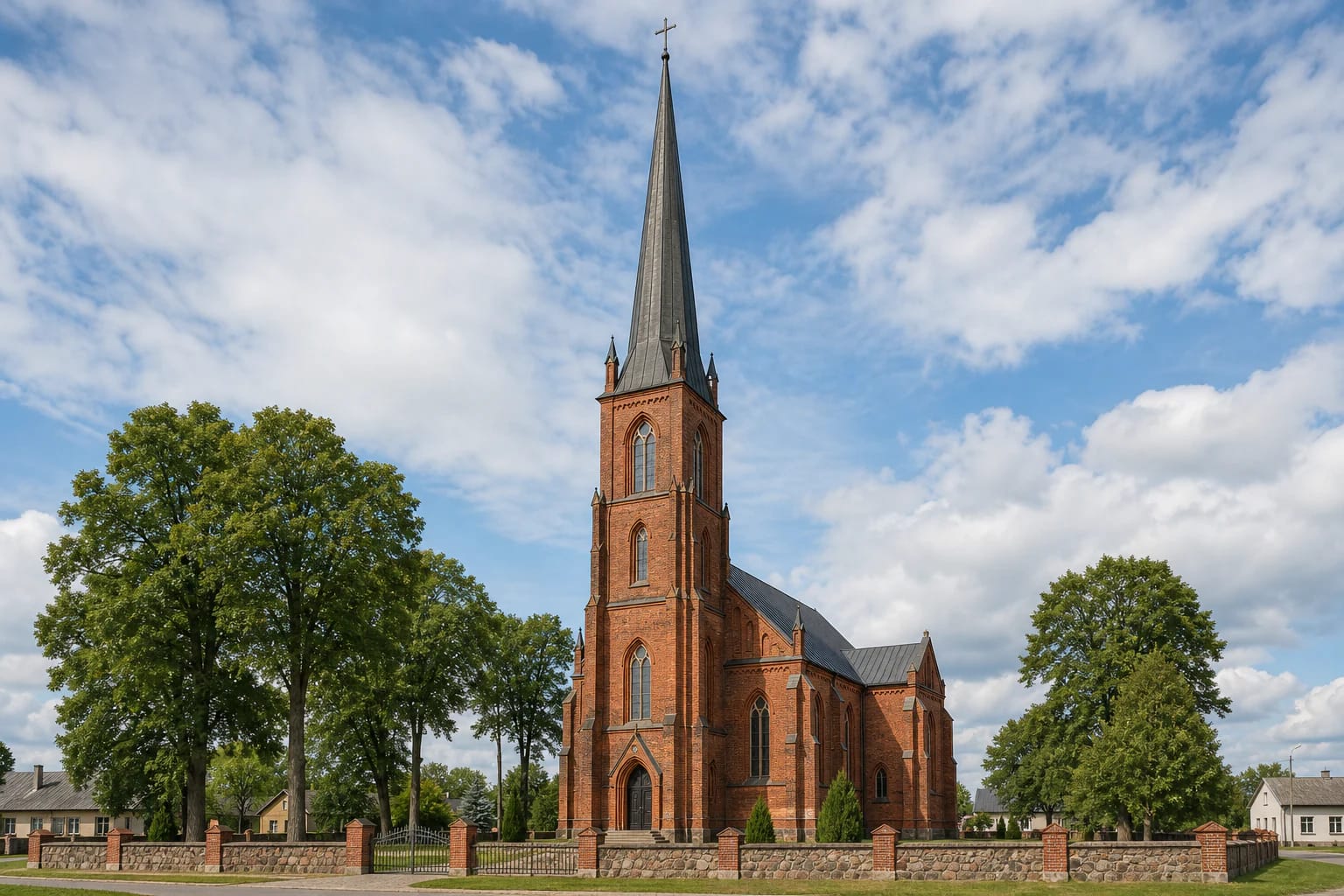
- Place
- Lygumai, Pakruojis District Municipality
- Region
- Šiauliai Region
- Type
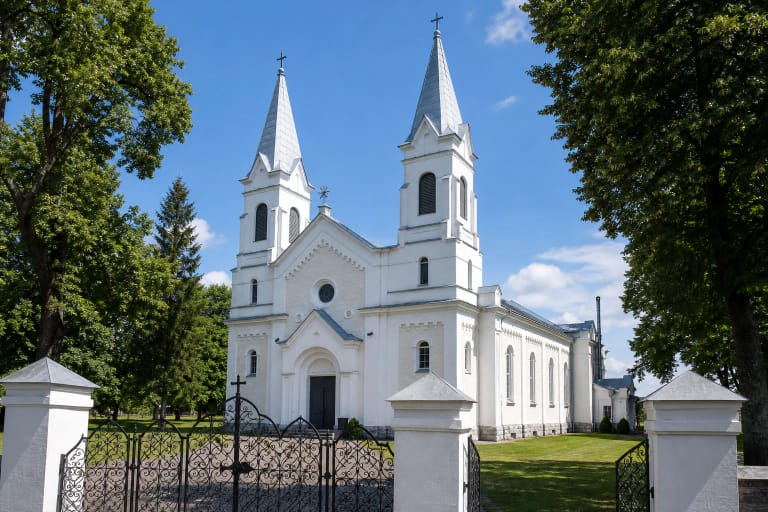
- red-brick Neo-Gothic Catholic church built in 1906-1914, with a Latin-cross plan and one exceptionally tall tower
- Address
- Sodo g. 6, Lygumai, Pakruojis District
- Coordinates
- 56.00561, 23.65526
- Visit duration
- 20-40 minutes for the architecture and churchyard; about one hour when attending Mass
- Best time
- in daylight for the facades, or before Sunday Mass at noon if you wish to see the interior respectfully
Lygumai Church, Holy Trinity Parish Church of Lygumai, Lygumų Švč. Trejybės bažnyčia
A 73.84-metre spire over a low town
Lygumai Church first registers as a vertical landmark. One narrow tower rises far above the town's low houses and becomes a long dark spire crowned by a cross. Measurement with certified equipment in 2016 established a height of 73.84 metres, including the cross, which itself measures exactly 3 metres.
That result replaced an approximate figure of 75 metres repeated in earlier publications. It should not be turned into a definitive national ranking of Lithuania's tallest churches, since measurement methods for different buildings may not match. The reliable claim is the specific 73.84-metre result obtained at Lygumai.
The tower is not a public viewing platform. The parish advertises no tourist ascent into the spire, so do not enter closed doors or attempt to use service stairs. Step back into the town square and surrounding streets for the clearest view of the entire silhouette.
Neo-Gothic design made with ordinary brick
Architect Nikolai Andreyev designed a Latin-cross church with a strongly articulated transept. Pointed openings, vertical elements resembling buttresses, and an upward facade rhythm draw on Gothic architecture, but this is early 20th-century Gothic Revival rather than a medieval building.
Architectural historian Povilas Spurgevičius notes that unprofiled brick was used in construction. Decoration therefore relies on rectangular ribs, disciplined lines, and their repetition instead of elaborate mouldings. This economical vocabulary gives the substantial masonry a striking sense of lightness.
Walk around the churchyard to see how the transept alters the outline from the side. Close views reveal brickwork, pointed windows, and the junctions between volumes of different height; from farther away, the exceptionally slender proportions of the whole composition become clear.
The present church replaced several timber predecessors
A local history of Pakruojis District's churches mentions a chapel at Lygumai around 1436. In 1524 or 1526 estate owner L. Vietkavičius built a timber Holy Trinity church by the Kruoja, and King Sigismund the Old confirmed the supporting endowment on 7 November 1526.
Successive timber churches were rebuilt. In 1791 or 1793 Father Kristupas Volfas erected one that served for more than a century. In 1902, through the efforts of Father Juozapas Korsakas, Andreyev prepared the design for a masonry replacement; authorities approved it in 1905.
Sources differ on whether construction began in 1906 or 1908. They agree that Father Jurgis Rupka and his parishioners completed the building in 1914, and Bishop Pranciškus Karevičius consecrated it in 1915. The construction centenary celebrated in 2014 and the 1915 consecration date therefore do not conflict.
The eggshell story and interior details
A Lygumai tradition says townspeople collected poultry eggshells during construction, supposedly supplying calcium and chalk for the mortar. The local-history publication explicitly attributes the episode to residents' accounts. Without a published laboratory study of the material, it remains a story rather than tested engineering evidence.
Petras Jagminas designed the church's smaller architectural furnishings. He expressed Gothic forms in reinforced concrete, then a new material, and also incorporated Lithuanian ornamental motifs. Look for these ideas in the altars, pulpit, and other fittings when the church is open.
In 1936 Father P. Svilas oversaw interior decoration and the installation of three large bells weighing 1,079, 640, and 320 kilograms. These precise figures convey how much engineering and funding were required not only for the tall tower but also for its liturgical function.
Mass, access, and a respectful visit
In 2026 the Šiauliai Diocese page listed Mass at noon on Sundays and 9 am on weekdays except Monday; Saturday services were by arrangement. Schedules can change for feasts, funerals, or clergy appointments, so verify them on the official parish page before making a special journey.
There is no tourist admission fee or permanent sightseeing timetable. The most reliable opportunity to see the interior respectfully is shortly before an advertised service: avoid disrupting preparations, then remain for Mass or leave quietly before it begins. Call the parish on +370 620 52 072 to arrange a group or architecture visit.
The churchyard belongs to an active parish. Dress modestly, silence your phone, do not use flash during worship, and ask consent before photographing people. The diocesan listing gives no detailed accessibility statement, so discuss steps, door width, or assistance for a visitor with mobility needs beforehand.