- Place
- Linkuva, Pakruojis District Municipality
- Region
- Šiauliai Region
- Type
- Renaissance church and masonry Carmelite monastery ensemble
- Address
- Laisvės g. 25, Linkuva, Pakruojis District
- Coordinates
- 56.08480, 23.97510
Linkuva Church of Our Lady of Mount Carmel and Carmelite Monastery
Linkuva church and Carmelite monastery
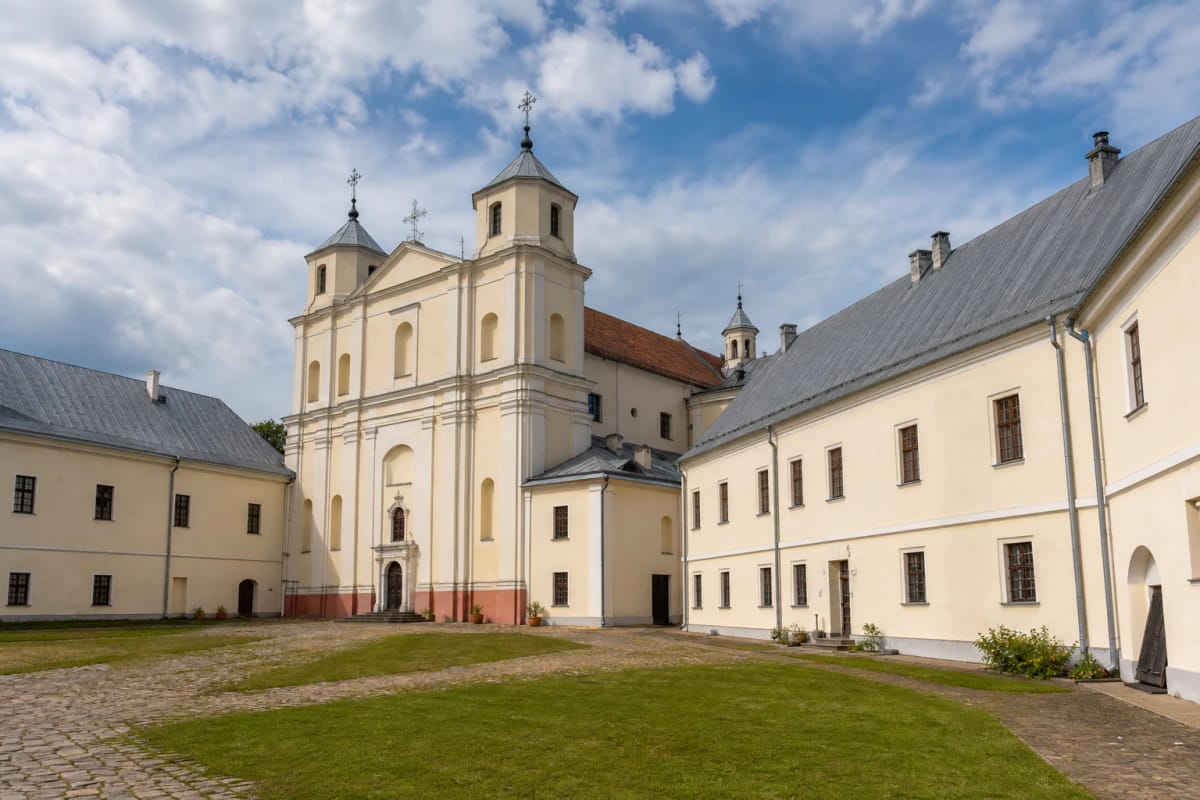
Linkuva Church of Our Lady of Mount Carmel and the former Carmelite monastery stand in the town of Linkuva, Pakruojis District, in North Lithuania. It is a unified sacred ensemble: a Renaissance church surrounded on three sides by a masonry monastery with a spacious courtyard, one of the largest surviving monastery ensembles in the region.
The ensemble matters both architecturally and as a living feast tradition. Linkuva has long been known as a pilgrimage place because of the Scapular feast.
The Carmelite monastery: 1634
The Carmelite monastery in Linkuva was founded in 1634 by Samogitian bishop Jurgis Tiškevičius, who gave the Carmelites the church, rectory, and land. The monks established a novitiate, maintained a parish school and library, and gathered laypeople into the Scapular Brotherhood.
The masonry monastery was built in 1754-1773: first the eastern wing connected to the church, later the southern and northern wings. This created a large three-wing ensemble enclosing the courtyard.
The Renaissance church
The church is Renaissance in style, on a Latin-cross plan, with two low towers and six small turrets; the interior has three naves covered by barrel vaults. After a fire in 1745, the church was rebuilt, preserving a solemn form associated with seventeenth-century construction.
Inside are seven eighteenth-century altars and valuable paintings, including an image of the Blessed Virgin Mary with silver fittings. Together with the monastery wings, the church forms a single sacred complex of the Baroque era.
The Scapular feast
Linkuva is best known for the Scapular feast of Our Lady of Mount Carmel. The main day is July 16, and the feast traditionally lasts longer, drawing many pilgrims and people returning to their home region.
The tradition reaches back to the Carmelite period and the Scapular Brotherhood. The most vivid time to visit the Linkuva ensemble is therefore mid-July, when the place comes alive during the feast.
From closure to revival
In 1832, after the 1831 uprising, imperial Russian authorities closed the monastery, confiscated its property, and removed the monks. In the Soviet period and later, parts of the ensemble were damaged and unsafe, so in recent years the monastery has been gradually repaired through heritage programmes.
Today the church functions as a parish sanctuary. Entry is generally free, and visiting is best coordinated with service times. Check the official diocesan or parish page for current information about feasts and visiting.