- Place
- Klaipėda City Municipality
- Region
- Klaipėda
- Type
- museum of Lithuania Minor and Klaipėda Region history
- Address
- Didžioji Vandens g. 2, 91246 Klaipėda
- Coordinates
- 55.70710, 21.13430
MLIM, Klaipėda Regional Studies Museum
History Museum of Lithuania Minor: what to see
The History Museum of Lithuania Minor is one of the best starting points in Klaipėda if you want to understand the city as more than a port or a weekend seaside destination. Its exhibitions bring together the experiences of Klaipėda Region, Lithuania Minor, the western Balts, and the Lietuvininkai at one compact old-town address.
The official museum introduction emphasizes a broad field: regional prehistory, Curonian and Skalvian tribes, the Teutonic Order period, the beginnings of Lithuanian printed books and periodicals, events of the first half of the twentieth century, and the traditional culture of the Lietuvininkai. It is worth visiting before going to the Castle Museum, Sculpture Park, Curonian Spit, or lagoon-side sites.
The 1774 house on Didžioji Vandens Street
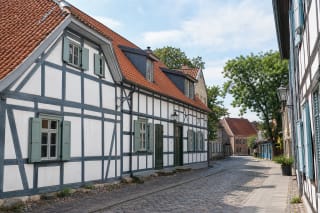
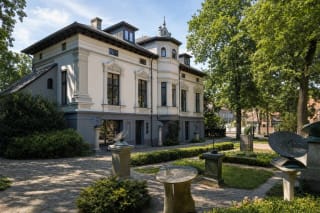
The museum operates in one of Klaipėda's oldest Baroque-style houses, built in 1774. The official museum page states that the building, with a vineyard, belonged to post director Johann Christian Witte. This detail matters because visitors see not a neutral hall but a layer of the old town's own history.
Didžioji Vandens Street lets you feel old Klaipėda close to the ground: narrower scale, old-town blocks, and the nearby castle site help explain why the museum's themes are not detached from the place. After the exhibition, it is worth stepping into the courtyard, walking around the surrounding blocks, and comparing the city history seen in the museum with the actual street fabric.
From Klaipėda Region Museum to MLIM
VLE states that the museum was called the Klaipėda Region Museum in 1924-1939, the Klaipėda Regional Studies Museum in 1949-1988, and in 1988 received the name History Museum of Lithuania Minor and moved into Klaipėda Old Town. This sequence of names also shows changes in the place's political and cultural memory.
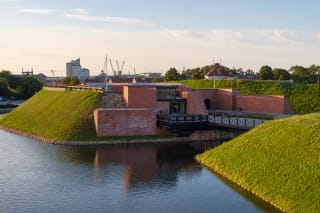
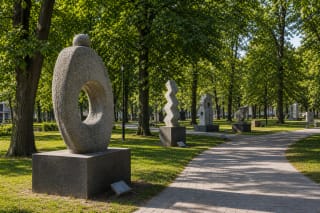
VLE also notes that the Klaipėda Region Museum Society, founded in 1924, operated until 1939; the museum was restored in 1949, and the first exhibition opened in 1950. Several separate institutions later grew from this museum's departments or branches: the Maritime Department founded in 1967 later became the Lithuanian Sea Museum, the Blacksmithing Museum opened in 1992, the Castle Museum began operating at the Klaipėda castle site in 2002, and in 2014 the Resistance and Deportation Exhibition was installed in the basement of the former territorial customs office. Since 1975, Martynas Mažvydas Sculpture Park has operated on the site of the old cemetery, and the museum has cared for its sculptures since 2006.
Collections and the memory of Lithuania Minor
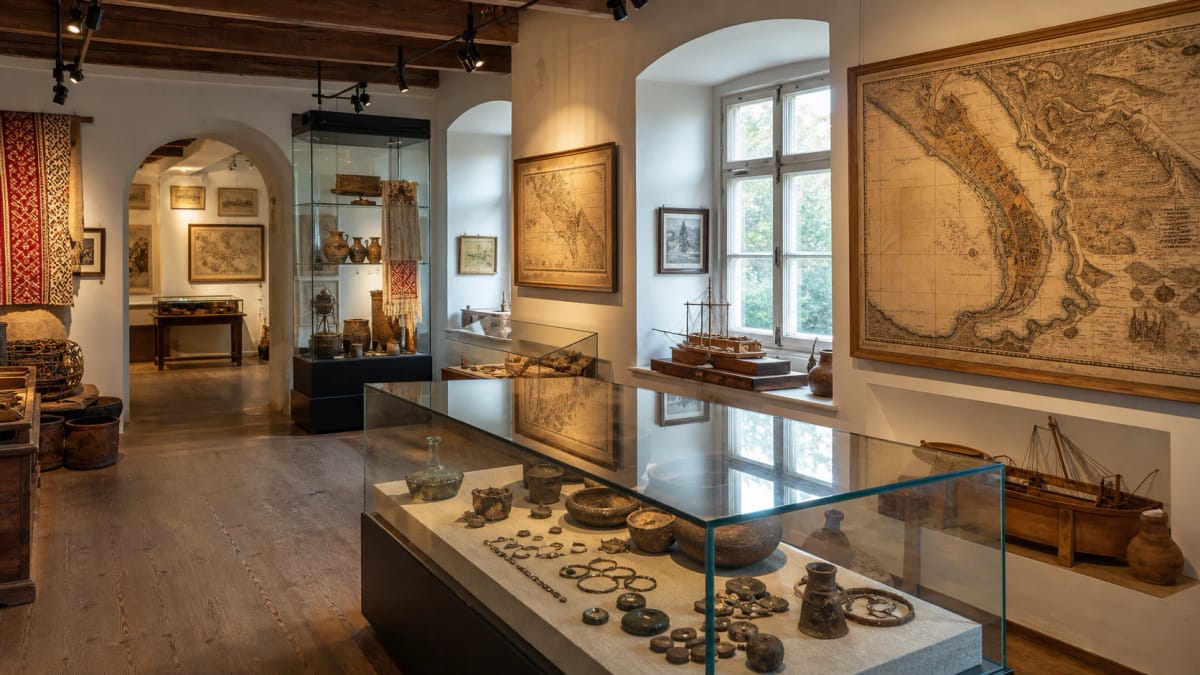
VLE writes that the museum collects, preserves, researches, restores, conserves, and exhibits historical collections related to Lithuania Minor. It is not only a city-history museum in the narrow sense: it preserves archaeology, ethnography, printed material, documents, iconography, cartography, numismatics, photography, and postcards.
In 2024 VLE listed more than 143,500 museum exhibits. These include finds from Bandužiai, Baitai, Slengiai, Vidgiriai, and Žardė; more than 11,000 ethnographic objects; more than 9,300 rare books and periodicals, including M. L. Rėza's Bible published in Königsberg in 1816; about 12,000 documentary exhibits; a numismatic collection of 1,338 coins and 819 banknotes; more than 9,000 photographs; postcards; and an art collection with views of the Curonian Spit, lagoon, and Lithuania Minor. The cartography collection also includes maps by Claudius Ptolemy and C. Hennenberger.
How to plan a visit
Give the museum at least an hour, and if you read the panels and want to understand the regional context, plan closer to an hour and a half. It combines well with Klaipėda Old Town, the Castle Museum, Blacksmithing Museum, Clock Museum, and Sculpture Park.
At the time of research, the official page listed summer-season hours, from June 15 to September 16, as Wednesday-Sunday 10:00-18:00, with tickets sold until 17:30; outside that season, from September 17 to June 14, the museum was open Tuesday-Saturday 10:00-18:00. The prices page then listed adult tickets at 4 EUR and concession tickets at 2 EUR, but check official pages before travelling because hours and prices can change.