- Place
- Ventė, Kintai Eldership, Šilutė District
- Region
- Nemunas Delta Regional Park
- Type
- ornithological station, lighthouse, and Curonian Lagoon viewpoint
- Address
- Marių g. 24, Ventė, Kintai, LT-99361 Šilutės r.
- Coordinates
- 55.34100, 21.19000
Ventė Cape Ornithological Station, Ventė Cape Lighthouse, Ventės ragas
Ventė Cape: why this place matters
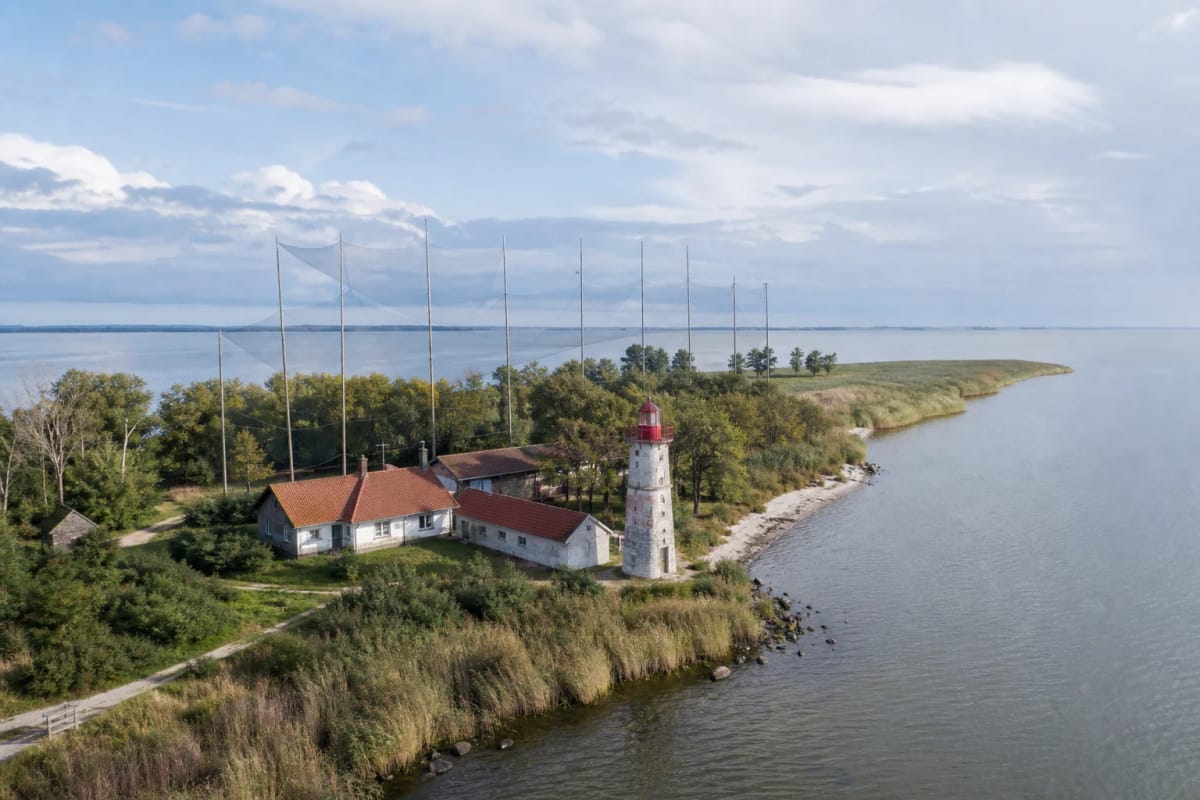
Ventė Cape is a narrow peninsula on the eastern shore of the Curonian Lagoon, by the Nemunas Delta and the mouth of the Atmata, south of Ventė settlement. VLE gives the peninsula's length as 4.6 km and maximum width as 2.2 km, and notes that it separates Kniaupas Bay from the rest of the Curonian Lagoon. This is an ideal geographical place for catching and ringing birds, because the Curonian Lagoon water edge, the eastern Baltic migration direction, and the Nemunas Delta landscape meet here.
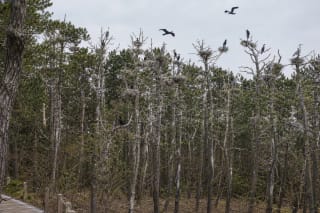
Huge flows of birds pass through in autumn and spring. VLE identifies Ventė Cape as the main bird-migration route in Lithuania, part of one of the most important northern European routes across the White and Baltic seas. Migration is especially intense in September and October: some birds turn across the Curonian Spit, while many continue along the eastern lagoon shore toward Ventė Cape.
Ventė Cape Ornithological Station and bird ringing
Ventė Cape Ornithological Station was founded in 1929 on the initiative of Prof. Tadas Ivanauskas, and regular bird ringing began here. VLE states that since the 1980s an average of 60,000-80,000 birds have been ringed per year, and in 2013-2015 the station was reconstructed; today a museum and bird-migration exhibition operate here. This is not only a museum object but a long-running scientific site.
One of the largest bird-migration routes passes through Ventė Cape, so on the most intensive days very large flows of birds fly over. The most visible station features for visitors are the large traps, but they should not be understood as entertainment: they are research infrastructure, so behave calmly nearby and follow staff instructions.
Why birds stop at Ventė Cape
The form of Ventė Cape creates a natural obstacle for birds. Small birds reaching the end of the peninsula and seeing the wide Curonian Lagoon waters often turn back, settle in trees and shrubs, and try to fly again. That is why very concentrated migration movement can be observed here.
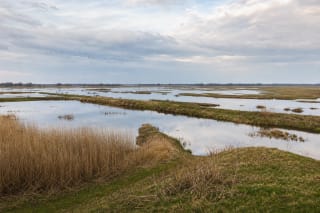
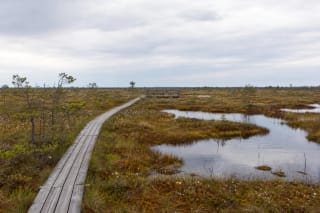
The Nemunas Delta strengthens the effect: channels, reedbeds, flooded meadows, polders, and the Curonian Lagoon shore create feeding and resting places for many water and land birds. Ventė Cape is therefore best understood as part of the whole delta bird system.
Ventė Cape Lighthouse and Curonian Lagoon panorama
Ventė Cape Lighthouse is another layer of the place. VLE states that the first wooden lighthouse here was built in 1837, while the present red-brick masonry lighthouse, 11 m high, was built in 1863 and is considered a technical monument; a viewing platform is installed at the top. The lighthouse belongs to the ornithological station.
From the viewing platform you see the Curonian Lagoon, the Curonian Spit, and the direction of Rusnė Island. VLE notes that in the 1970s and 1980s the tip of Ventė Cape was reinforced, and a 250 m mole protects it from lagoon ice, functioning as an icebreaker in winter. It is a small but very informative viewpoint: you see the same water space that becomes an important migration decision point for birds.
How to visit Ventė Cape
Plan at least an hour, and up to two if you want to see the museum, lighthouse, and lagoon shore calmly. During migration season, bring binoculars; even without them you can see bird movement, station infrastructure, and the Pamarys landscape clearly.
This is an active ornithological site, so noisy behaviour, drones, or trying to approach birds are inappropriate. If you want to see ringing, treat it as dependent on season, weather, bird flow, and station working conditions, not as a guaranteed demonstration.