- Place
- Vilkaviškis District Municipality
- Region
- Suvalkija
- Type
- parish church and historic church complex
- Address
- 45 Liepų Street, Keturvalakiai
- Coordinates
- 54.55223, 23.16597
- Visit duration
- 30-60 minutes; allow longer if your visit coincides with Mass or you want to walk around the churchyard
- Best time
- Sunday morning, planned around Mass times and the parish's rules
Keturvalakiai Church, Keturvalakiai Parish Church of the Nativity of the Blessed Virgin Mary
Keturvalakiai Church remains a living parish and town-centre place
The Church of the Nativity of the Blessed Virgin Mary stands at 45 Liepų Street in Keturvalakiai, Vilkaviškis District, 12 km west of Marijampolė. It is an active parish church, so a traveller arrives not only to look at a building but also at a place where worship, community life, and annual celebrations continue.
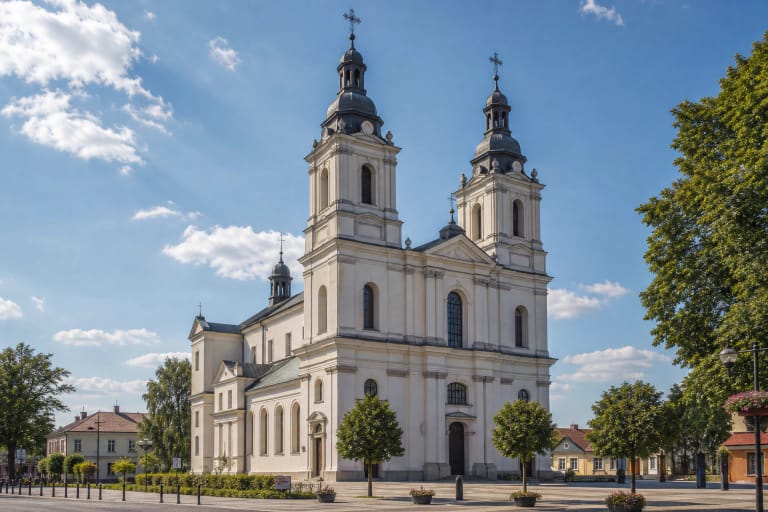
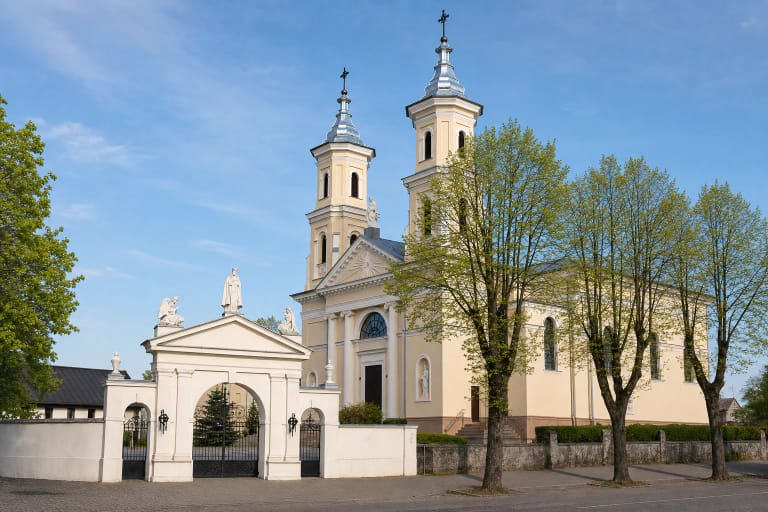
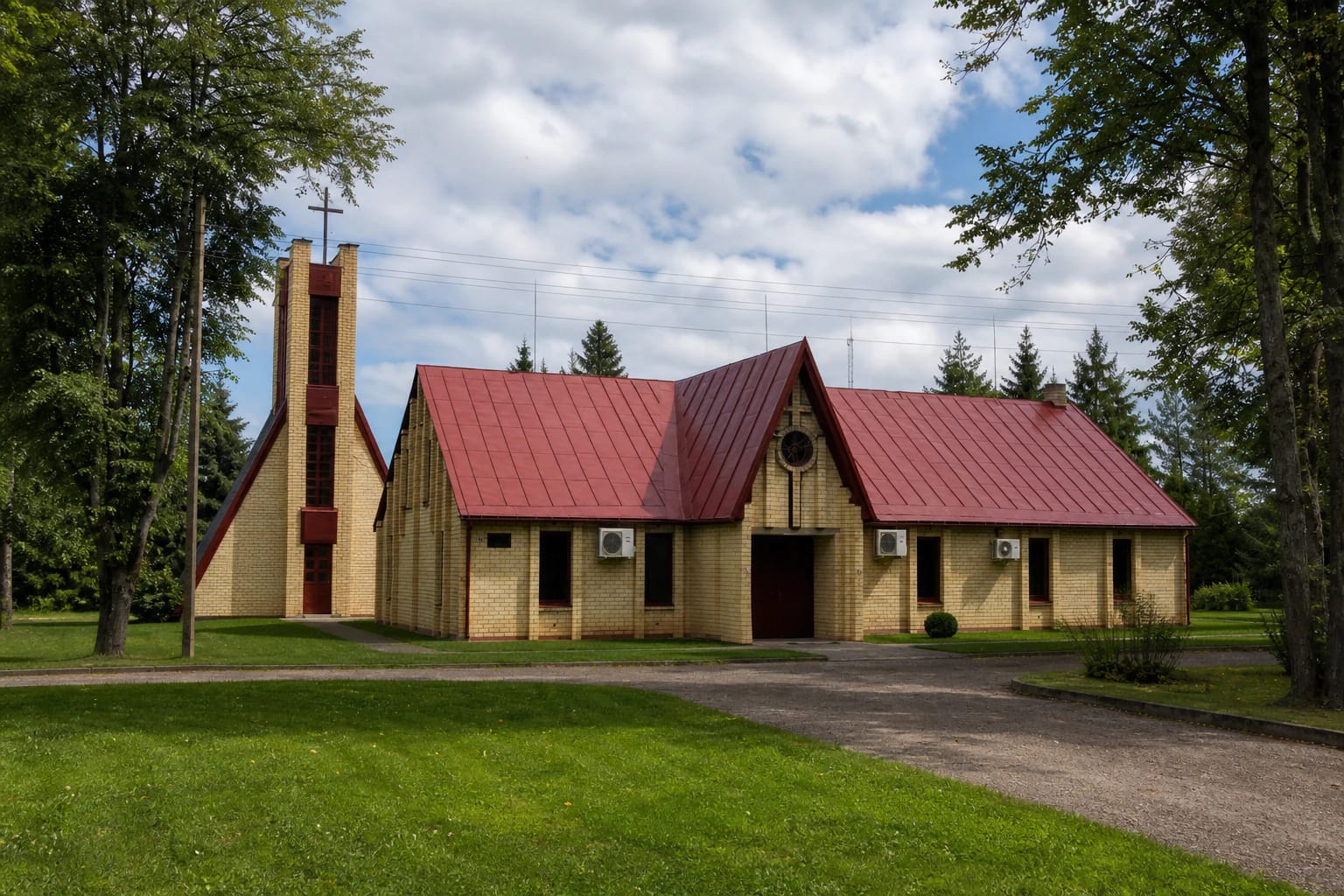
The church is rectangular and towerless, with a porch. The adjacent bell tower and cemetery complement its modest pale architecture, and the building remains an active place of worship.
The parish began in 1714, and a wooden church was built in 1786
In 1714, Bishop Konstantinas Kazimieras Bžostovskis allowed worship in a chapel at Keturvalakiai. A Saint Barbara fraternity was active there in 1765, an indulgence celebration was granted in 1769, and the parish was founded in 1777. A parish school operated by the late eighteenth century, making the site a local educational centre as well as a religious one.
In 1786, priest Andrius Adeika built a new wooden church. It was an earlier parish building; today's churchyard reflects several stages of construction, loss, and rebuilding.
The nineteenth century added a wider church complex
In 1848, priest Juozas Šipaila built a masonry bell tower and enclosed the cemetery; in 1861 he established a chapel with a crypt. He was buried there in 1879, while a masonry rectory was built in 1866. These elements show that the visitor is encountering more than one church wall: the setting is a historic parish complex.
Šipaila's circle was also connected with education and culture: he sent his sister's son Jonas Jablonskis to school. The connection shows how nineteenth-century parish clergy and households could form part of a local network of learning.
Keturvalakiai preserves memories of culture, war, and rebuilding
A Žiburys society branch was established in Keturvalakiai in 1906; in 1907 the village had a library-reading room and Lithuanian cultural evenings, and in 1914 a building with a hall, tea room, and library was erected. The parish environment was then also a place of Lithuanian cultural activity, not only Sunday liturgy.
On 5 August 1944, German forces burned the church, and worship moved to the parish house until 1950. Priest Vladas Pėstininkas was arrested and exiled to Siberia for 10 years. From 1986 to 1990, a new bell tower and a rebuilt church were completed under priest Juozas Gražulis and architect Vytautas Jakutis; the present appearance includes this layer of restoration.
Plan the visit around Mass and the rules of a living church
Mass is celebrated at 09:00 and 12:00 on Sundays, 10:00 on weekdays, and at a convenient time requested by donors on Saturdays. Confession is heard before every Mass; a rosary is said before the Sunday high Mass, and May and June devotions are attached to the day's Mass. Check the timetable again before travelling.
During worship, keep voices low, do not photograph without permission, and give priority to parishioners' concentration.
Allow 30-60 minutes for the exterior, bell tower, and churchyard. To enter outside worship, arrange a visit with the parish in advance; the Sunday Mass time alone does not guarantee that every part of the church will be available to visitors.