- Place
- Jūžintai, Rokiškis District Municipality
- Region
- Aukštaitija
- Type
- a state-protected late-eighteenth-century Catholic church with former monastic cells, a separate bell tower, and a walled churchyard
- Address
- Ateities g. 2, Jūžintai, LT-42263 Rokiškis District
- Coordinates
- 55.77345, 25.67533
- Visit duration
- 20-40 minutes for the exterior; 45-75 minutes if access to the interior and the museum in the cells has been arranged in advance
- Best time
- daylight after arranging access to the interior and the museum in the cells; recheck the Sunday Mass time on the official page before travelling
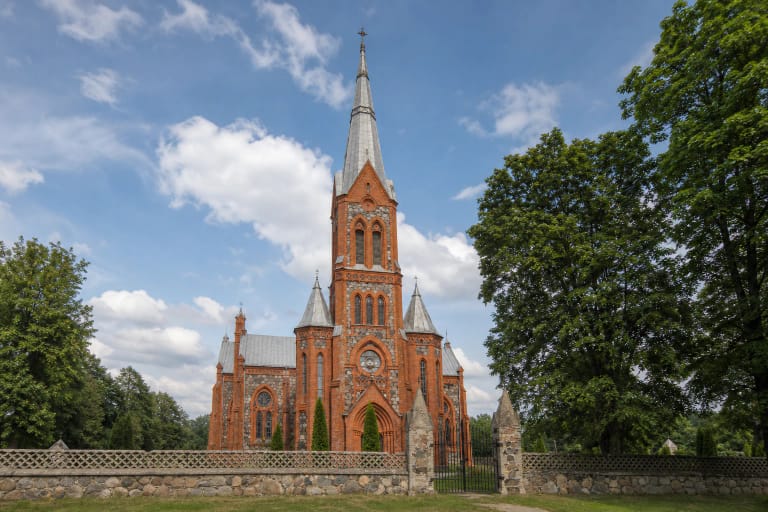
Jūžintai Church, Jūžintai St Michael's Church, Jūžintai Parish of St Michael the Archangel
Identifying Jūžintai Church and reconciling three construction dates
The church stands at Ateities g. 2 in Jūžintai, Rokiškis District, beside the Rokiškis-Užpaliai road. Its exact Google place entry marks 55.7734499, 25.6753345 and uses Place ID ChIJH4YobWsE6EYR9_bjLU8K32c. Some maps or data catalogues assign it to nearby Bajoriškės or the broader Panevėžys region, but both the parish and Rokiškis tourism centre give Jūžintai as the official address.
The Cultural Heritage Register protects the entire Jūžintai Church of St Michael the Archangel complex as code 23613, while the church itself is code 1587. The bell tower and the churchyard wall with gates are also individually registered components. These identifiers distinguish this place from the many other Lithuanian churches dedicated to St Michael.
The checked official sources do not agree on one construction year. The Diocese of Panevėžys gives 1792, VLE gives 1799, and the Rokiškis Regional Museum expedition text gives 1790. The most transparent description therefore calls the present masonry church a building of the final decade of the eighteenth century rather than treating either 1792 or 1799 as an uncontested date.
Eight cells were built into the church rather than beside it
A timber chapel was built in Jūžintai around 1600 and is recorded in 1669. Landowner Gedeonas Rajeckas built a timber church in 1695 and settled the Canons Regular of Penance there, donating the Nabagiškis estate to the community. The parish was established in 1783, and the Russian imperial authorities closed the monastery in 1832.
The site's defining architectural surprise is a group of eight cramped cells behind the high altar and within the apse walls. Rokiškis Regional Museum says they are stacked vertically in a chequerboard arrangement and connected by a 75-step spiral staircase. Tiny square windows reveal spaces that once held little more than a simple sleeping platform and a shelf in a wall niche.
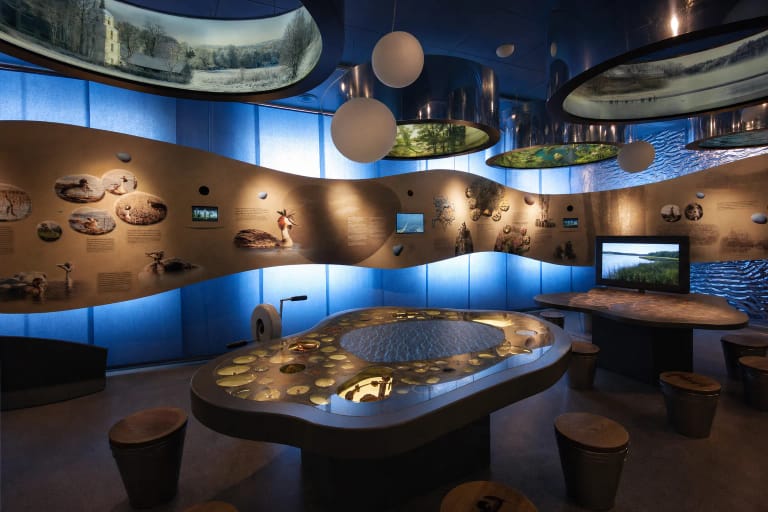
The cells now contain a small museum of prayer books, metal crosses, statuettes, and other devotional objects. Members of the founding Weysenhoff family are buried in crypts beneath the church. The Rokiškis tourism centre and museum describe this as the only church in the Baltic states in which a monastery operated. That remains their broad comparative claim; the safely verifiable distinction is the surviving eight-cell system incorporated into the church itself.
The late-Baroque façade conceals a 43 by 25-metre three-nave basilica
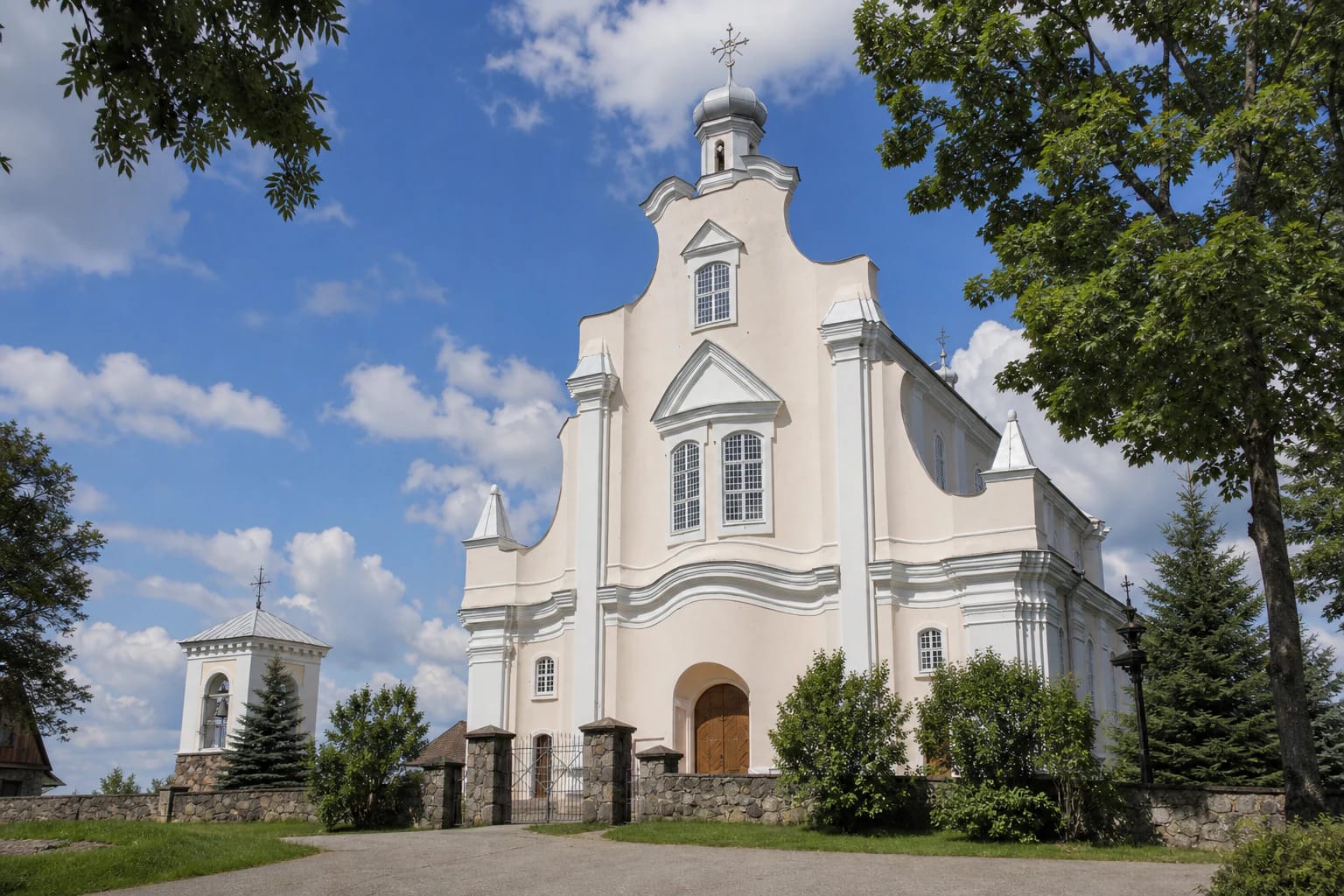
The Diocese of Panevėžys describes the church as late Baroque with Renaissance features. The rectangular basilica measures 43 metres by 25 metres, contains three naves under barrel vaults, and carries a small turret on the roof ridge.
From Ateities Street, the pale rendered façade appears broad and towerless. Rising and falling Baroque curves, strong horizontal cornices, tall central windows, timber doors, and the small cross-topped turret define its silhouette. The small windows in the façade and side walls become especially meaningful once visitors know that some light the former cells.
A fieldstone wall and gates enclose the churchyard. Set apart from the principal façade is a rendered bell tower that VLE identifies as Classical. Step far enough back from the street to read the curved church front, bell tower, gateway, and long side of the basilica as one protected ensemble.
Wood sculpture, the organ, and the layers left by war
VLE singles out valuable late-nineteenth-century wooden figures inside the church: the Virgin and Child, St Anthony, and the Three Magi. It attributes them to the maker A. Dagys. These are specific works to seek when the interior is accessible, not objects that can be expected in a locked porch or seen through a window.
The church bells were taken to Russia in 1915 during the First World War. Priest S. Žulys repaired the church in the 1930s and acquired a steel bell in 1938; the organ was repaired in 1938 and again in 1947. The sequence reflects continued parish care rather than a wholly unchanged eighteenth-century interior.
The church was damaged during the Second World War. The Diocese of Panevėžys says it was partly damaged and repaired in 1958, while VLE uses the stronger wording of destruction and reconstruction. The building seen today consequently combines a late-eighteenth-century plan, later art, twentieth-century repairs, and a post-war restoration layer.
Arrange access to the interior and cells before travelling
Rokiškis Tourism Information Centre explicitly says that a church visit must be arranged in advance. This is especially important for anyone hoping to see not only the nave but also the cells and their small museum. The opening times in the footer of the tourism page belong to the information centre itself, not to Jūžintai Church.
On 29 July 2026, the Diocese of Panevėžys page listed Mass at 13:30 on Sundays and on weekdays by arrangement. This is a parish schedule rather than guaranteed tourist opening hours. Recheck the official page before travelling or use the current contact details published by the parish or Rokiškis tourism centre.
The checked sources publish no separate admission price or guaranteed daily visitor hours. The exterior is visible from a public street, but open churchyard gates or church doors are not promised. Reaching the cells involves a tight 75-step spiral staircase, so that part of the visit is not barrier-free. Ask in advance about access to the main nave and any individual assistance as well.