- Place
- Rokiškis and Zarasai District municipalities
- Region
- Sartai Regional Park
- Type
- branched glacial-runnel lake and regional-park landscape
- Coordinates
- 55.82301, 25.83456
Sartai
A branched glacial-runnel lake
Lake Sartai, often simply called Sartai, lies north of Dusetos in Rokiškis and Zarasai districts. VLE gives its area as about 1332 ha, length north to south 14.8 km, maximum width about 1 km, and surface altitude 99.9 m.
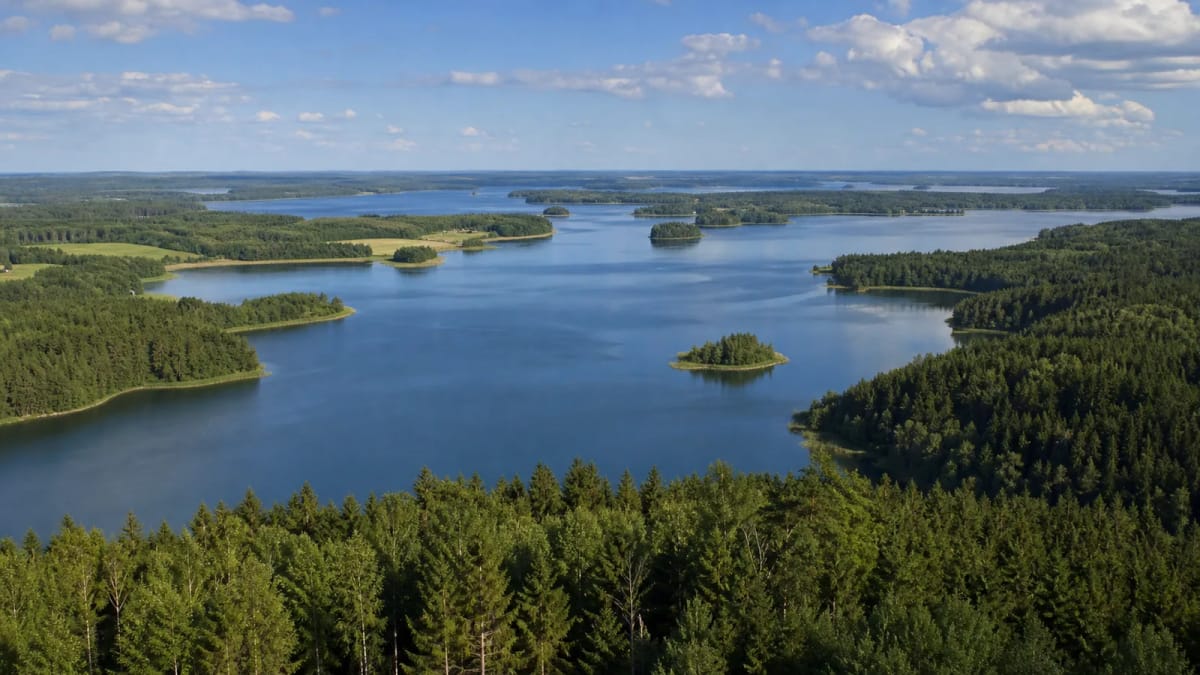
Sartai is of glacial-runnel origin: its basin consists of six intersecting runnels, so the lake is strongly branched and tree-like. Named parts include Dusetos, Gilinė or Gipinė, Kalbutiškiai, Audrakumpis, Kriaunakumpis, Bradesa, and Pasarčiai branches; together they reach about 30 km. Because of this form, completely different water corridors, bays, and shores are seen from different places, and one stop is not enough to understand the whole lake.
Lithuania's longest lake shoreline and islands
Sartai's main record is its shoreline. VLE states that it is very winding, with many bays and peninsulas, reaches 79 km, and is the longest among Lithuanian lakes. Maximum depth is 21.9 m in the northern part, average depth 5.7 m; northern basins reach 18-20 m and southern ones 8-10 m.
The lake has seven islands totalling about 13.2 ha. The largest are Didžioji Island at 6.5 ha and Dumblynė Island at 5.1 ha. VLE notes that remains of Neolithic, early Bronze Age, and first half of the first millennium settlements were found on Dumblynė Island, so Sartai is a place not only of nature but also of ancient human history.
Šventoji, regional park, and hillforts
The Šventoji flows through Sartai, with excess water draining through Kalbutiškiai Bay, so the lake is part of the wider Šventoji basin. Sartai and its surroundings belong to Sartai Regional Park, with the Sartai hydrographic reserve, Dusetos urban reserve, Ilgašilis landscape reserve, Vosyna nature reserve, and other protected areas.
Heritage is concentrated around the lake too: Velikuškės and Bradesiai hillforts stand by the Bradesa branch, and on the eastern shore is the Antanas Vienažindys memorial museum. For practical visiting, plan Sartai as a landscape and cultural whole and follow access points and protected-area rules.
Ice Battle and partisan memory
Sartai ice is connected with painful twentieth-century history. VLE states that on 8 January 1945, on Lake Sartai near Baršėnai, partisans of the Aukštaitija Lokys unit fought an NKVD detachment in the so-called Ice Battle. This was one of the episodes of early postwar armed resistance in this region.
This memory reminds visitors that Sartai regional history is not only nature and horse racing. The partisan-war context left a deep mark in Aukštaitija and is now remembered in local monuments and museums.
Dusetos and Sartai horse races
In Lithuania, Sartai is strongly linked with horse races near Dusetos. VLE states that races on the lake ice have been held since the early nineteenth century and became annual from 1905, making this one of Lithuania's oldest traditions of its type. For safety, in the twenty-first century the races were moved to Dusetos hippodrome, so the event does not always take place on the ice itself.
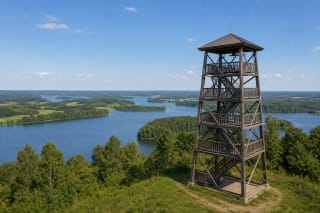
Visitor infrastructure also developed: in 2006 a 36 m metal observation tower was built on the northern lake shore, giving a good view of the branched lake pattern. Speak precisely: the racing tradition is important cultural memory, but visitors should not assume winter events always mean walking or driving on lake ice.
How to plan a visit
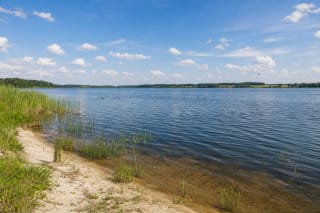
For a first trip, choose Sartai Observation Tower, Dusetos, and one or two safe shore access points. This shows the lake's scale and its relationship with the town without trying to drive the entire 79 km shoreline.
In winter, Sartai ice is not automatically safe just because the place is known for racing; go onto ice only with reliable conditions and official information. Sartai combines well with Dusetos Art Gallery, the Vienažindys museum, and a wider Sartai Regional Park route.