- Place
- Jonava District Municipality
- Region
- Aukštaitija
- Type
- Classicist Catholic church built in 1791-1793, with a former Trinitarian monastery and the Kossakowski family crypt
- Address
- 13 Vilniaus Street, Jonava
- Coordinates
- 55.06972, 24.27770
- Visit duration
- 30-60 minutes; 1.5-2 hours with Jonava Regional Museum and a walk beside the Neris
- Best time
- daylight for the exterior architecture; while interior work continues, contact the parish in advance about access to the main church
Jonavos Šv. apaštalo Jokūbo bažnyčia, Jonava Church of St James, St James the Apostle Church, Jonava
The church and former monastery form Jonava's oldest surviving masonry ensemble
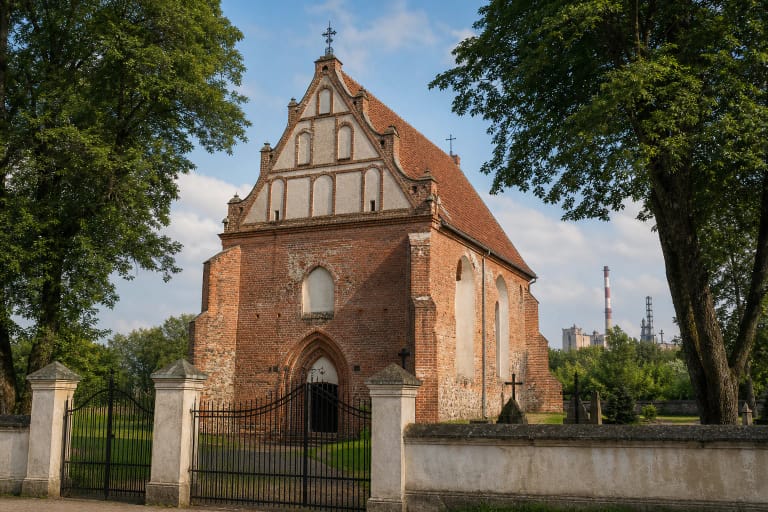
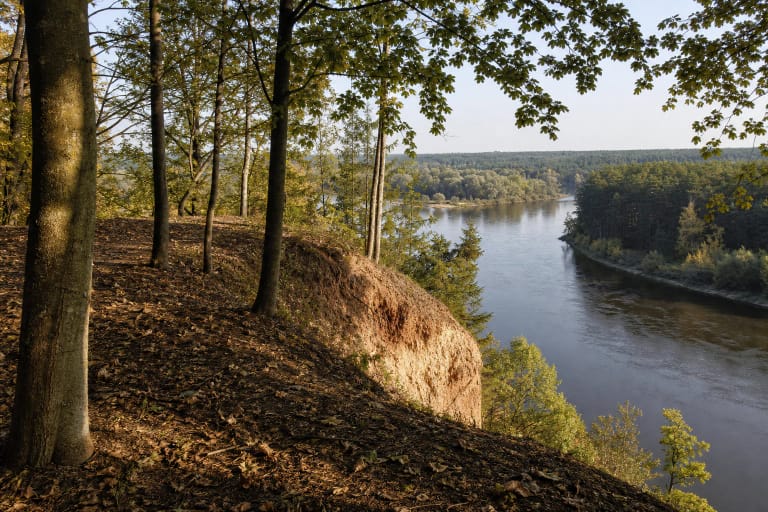
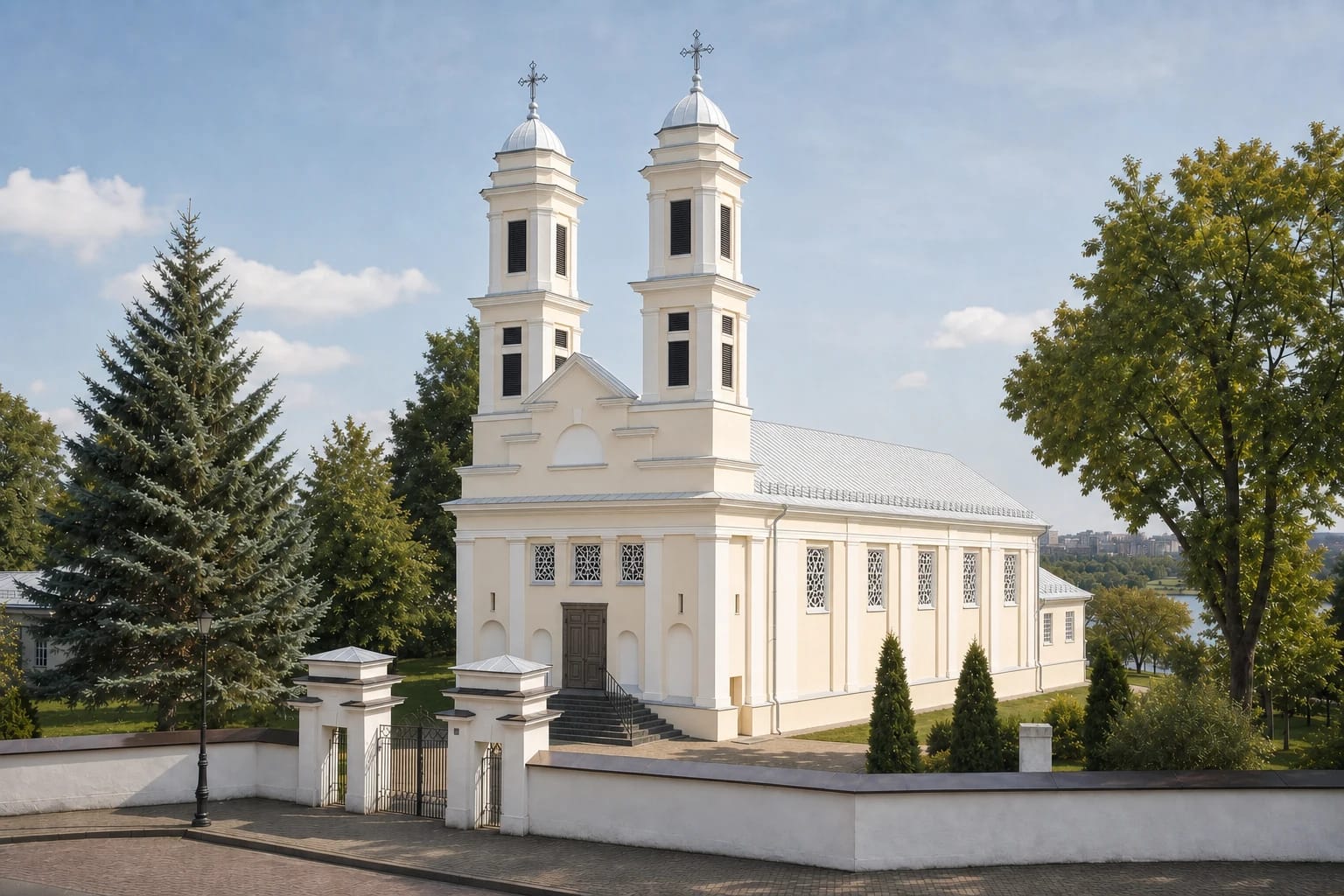
The Church of St James the Apostle stands at 13 Vilniaus Street on Jonava's lower terrace, close to the right bank of the Neris. It is within walking distance of the town centre, and its two towers are the clearest historic verticals when viewed from the river. Look beyond the front facade to the churchyard wall and gate, as well as the former Trinitarian monastery adjoining the northern side.
The church, monastery house, and surviving sections of the wall and gates form Cultural Heritage Register complex 31225. The ensemble was declared a state-protected cultural heritage property of regional significance in 2025. The former monastery is now the parish house, and its ground floor contains a chapel of Eucharistic adoration.
Much of this part of Jonava was destroyed during the fighting of 1941. The survival of an ensemble begun in the late eighteenth century therefore matters especially when trying to understand the scale of the old town. A useful short route begins at the church and follows Vilniaus and J. Basanavičiaus streets to the former post station, now Jonava Regional Museum.
The Kossakowski foundation replaced a wooden church built around 1750
Marijona Zabielaitė-Kosakovskienė, regarded as the founder of Jonava, had the first wooden church built here around 1750. In the same year, King Augustus III granted her the privilege to establish a town, hold markets, and settle free people of different faiths. That wooden church later burned and should not be confused with the masonry building seen today.
Marijona's son, Bishop Józef Kazimierz Kossakowski of Livonia, began building a new church and monastery in 1791. The work was completed in 1793, when the founder consecrated the church in honour of St James the Apostle. The parish history stresses that it was then the only masonry building in Jonava.
Józef Kazimierz Kossakowski died in 1794. His remains were brought to Jonava and buried beneath the church the following year. The church consequently became both the Catholic place of worship for the town and a centre of Kossakowski family memory. This chronology comes from parish and encyclopedic records, not from a local legend.
The original Classicist church had no towers, and its architect remains unproven
The church completed in 1793 was a rectangular, three-aisled hall. Pilasters and tall windows gave rhythm to the side elevations; the principal front had arched niches and a triangular pediment, while single-storey sacristies flanked the rectangular presbytery. Its two tall towers did not yet exist.
Some publications attribute the design to Laurynas Stuoka-Gucevičius. The AUTC architectural study is careful to say that the authorship has not been established: some scholars propose Gucevičius, while others find the proportions and early Classicist forms uncharacteristic of his work. His name should therefore be treated as a disputed attribution, not a confirmed credit.
The interwar transformation, by contrast, is documented. Karolis Reisonas prepared a tower project in 1933; it was approved in 1934, and two two-stage towers were built in 1934-1935. A stepped gable replaced the old triangular pediment, the separate masonry bell tower was removed, and the redesigned gate echoed the facade. Reisonas's project also enlarged the organ loft in 1936.
The monastery house preserves the Trinitarian chapter, although sources date its beginning differently
The two-storey building beside the church preserves the monastic phase of the ensemble. Sources do not give exactly the same date for the Trinitarians' arrival. VLE connects them with the church and monastery built in 1791, whereas the official parish history says the friars reached Jonava in 1802 and found the buildings neglected. It is more accurate to show that discrepancy than to present either year as uncontested.
The Trinitarians repaired the church and monastery, but their Jonava community did not endure. The friars left in 1827, administration passed for a time to Skaruliai Parish, and the monastery was formally closed in 1832. Soldiers were later quartered in the building, which underwent repairs and several changes of use.
The Jonava church became the seat of an independent parish in 1922. The former monastery building had been sold to the church in 1908 and was returned to the parish after the Soviet period in 1991. Its current religious and community uses make this a living ensemble rather than a monument preserved without a function.
The high altar, seventeenth- to nineteenth-century art, and Kossakowski mausoleum reward a closer look
Massive piers divide the interior into three aisles, and the high altar fills the full width of the presbytery. Among the significant works identified by VLE are a late-eighteenth-century portrait of Bishop Kossakowski, The Adoration of the Magi from the late eighteenth or early nineteenth century, nineteenth-century images of the Holy Trinity and a saint with a book, and the Stations of the Cross.
One unusually small and precious object is an ivory Crucifix from the second half of the seventeenth century. Its material and age set it apart from much of the nineteenth-century interior. Visitors should therefore look beyond the altar and tower architecture, while following parish rules and avoiding photography during worship.
The basement contains the Kossakowski family mausoleum. The parish history records that the burial place was damaged in the Soviet period. In 1974, parish priest Vincas Pranckietis gathered and reinterred scattered remains, leaving two principal coffins associated with founder Bishop Józef Kazimierz Kossakowski and General Józef Antoni Kossakowski, an aide-de-camp to Napoleon. The crypt has no published regular tourist opening hours, so arrange access with the parish or a local tour organiser in advance.
Research in 2025-2026 is still adding evidence, while visits follow the worship schedule
Investigation for interior conservation uncovered authentic twentieth-century wall painting beneath later finishes, and the Cultural Heritage Department's Restoration Council considered its conservation programme in 2025. Archaeological work in 2026 exposed fragments of a clay-brick floor, prompting a proposal in June to add them to the protected features recorded for the church. Research is continuing, so both the appearance of the interior and visiting conditions may change as work proceeds.
On 17 July 2026, the official parish website was still displaying a temporary arrangement caused by the church repairs. Mass at 8:00 on Sunday, 18:00 on Monday, 9:00 and 18:00 from Tuesday to Friday, and 18:00 on Saturday was being celebrated in the church basement. Sunday Masses at 10:00 and 12:00, and Saturday Mass at 10:00, had moved to the Church of St Anne in Skaruliai. These service times do not imply that the main nave in Jonava is open for independent tourist visits.
While work continues, call the parish office and check its latest notice before planning access to the main church, a group visit, or the crypt. The principal front approach has steps, and the parish publishes no detailed accessibility guide, so ask separately about the most suitable entrance. The facade and gates remain visible from public Vilniaus Street when the church itself is locked.