- Place
- Jonava District Municipality
- Region
- Aukštaitija
- Type
- classicist manor estate and contemporary art space
- Address
- Draugystės g. 33, Žeimiai, Jonava District
- Coordinates
- 55.18300, 24.23060
Žeimiai manor estate, Aikas Žado Laboratory
Classicism and Contemporary Art
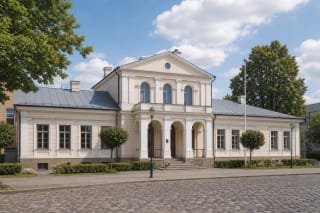
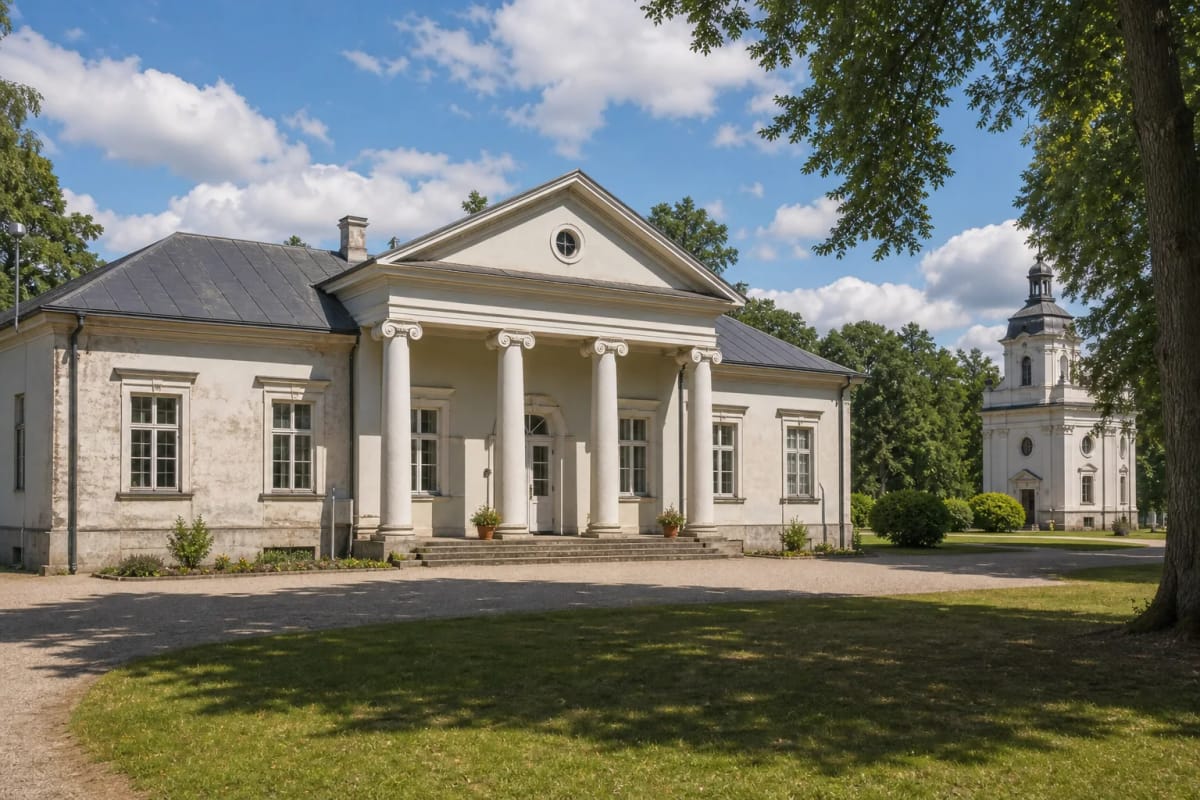
Žeimiai Manor in the town of Žeimiai, north of Jonava, is one of the best-preserved late classicist manor estates in Aukštaitija. The classicist palace, 1768 Baroque chapel, farm buildings, classicist gate, and geometric-plan park survive together, which is a rare degree of completeness.
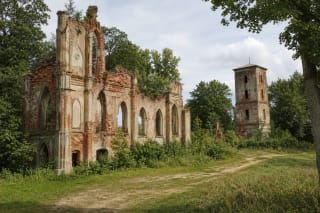
The manor is also special because it is not abandoned. A contemporary art and community space, Aikas Žado Laboratory, operates here. The old estate therefore lives not as a museum relic but as an active cultural place.
From the Medekša to the Kossakowski
Žeimiai is mentioned from the fourteenth century, and the manor from the late fifteenth century. In the eighteenth century, Grand Duchy of Lithuania figure Dominykas Medekša began creating the masonry estate ensemble. In 1780 he sold the manor to Bishop Juozapas Kazimieras Kosakovskis, and from then until the Second World War it belonged to the Kossakowski family.
Historic events are also linked with the manor: during the 1830-1831 uprising, General Antanas Gelgaudas' headquarters were in Žeimiai for a time. In the Soviet period the palace housed an agricultural technical school, and after independence it passed to private owners.
Architecture: Ionic Portico and 1768 Chapel
The palace was built at the end of the eighteenth century and later, in the nineteenth and early twentieth centuries, rebuilt in late classicist forms. Its most distinctive feature is a portico of four Ionic columns with a stepped attic on the western facade, a rare feature in Lithuanian classicism.
Beside the palace stands a 1768 Baroque chapel, built in memory of Teodoras Medekša. The estate complex includes several period buildings - palace, granary, stable, workers' house, icehouse, gate - and a park with a linden alley. The park was originally geometric and later reshaped in landscape style.
Aikas Žado Laboratory Today
Today the manor belongs to artist Domas Noreika, and the programme is curated with the Aikas Žado association by its head, Eglė Ambrasaitė. Aikas Žado Laboratory is a contemporary art space where exhibitions, art projects, creative residencies, educational activities, and community festivals take place.
Alongside artistic activity, the manor hosts heritage-preservation experiments: material tests, prevention and restoration work, and the gathering of historical collections. Žeimiai Manor has therefore become one of Lithuania's better-known artist-run heritage sites.
Visiting
The manor must be visited by advance registration; it is not a free-entry site. At the time of research, a tour of the estate and palace lasted about an hour and cost about 5 EUR per person, and photography was allowed only with permission. Opening depends on events, so arrange access directly with the manor.
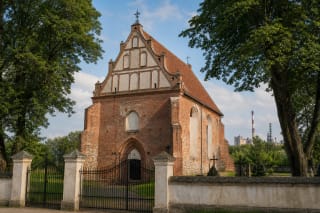
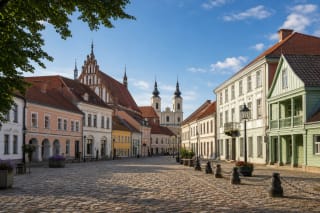
The best time to come is the warm season, when exhibitions and festivals take place. A visit combines well with the nearby Žeimiai Church of the Nativity of the Blessed Virgin Mary or a trip to Jonava and its regional museum.