- Place
- Jonava District Municipality
- Region
- Aukštaitija
- Type
- Jewish cemetery used from the late eighteenth century to 1941, with surviving matzevot reassembled in 1989
- Address
- Sodų Street, Jonava
- Coordinates
- 55.07495, 24.27103
- Visit duration
- 30-45 minutes; about 1.5-2 hours with Kauno Street and Jonava Regional Museum
- Best time
- daylight and dry weather, when the steps and uneven grass are safer and the forms of the matzevot are easier to read
Jonava Jewish Cemetery, Old Jewish Cemetery in Jonava, Sodų Street Jewish Cemetery
A memorial landscape on the Sodų Street hill
The old Jewish cemetery occupies a grassy hill off Sodų Street, beside Jonava Sports Arena and close to Joninės Valley. The coordinate on this page is a representative point within the cemetery territory, checked against Lithuania's official spatial-information portal. It is not a designated car park, gate, or verified step-free entrance.
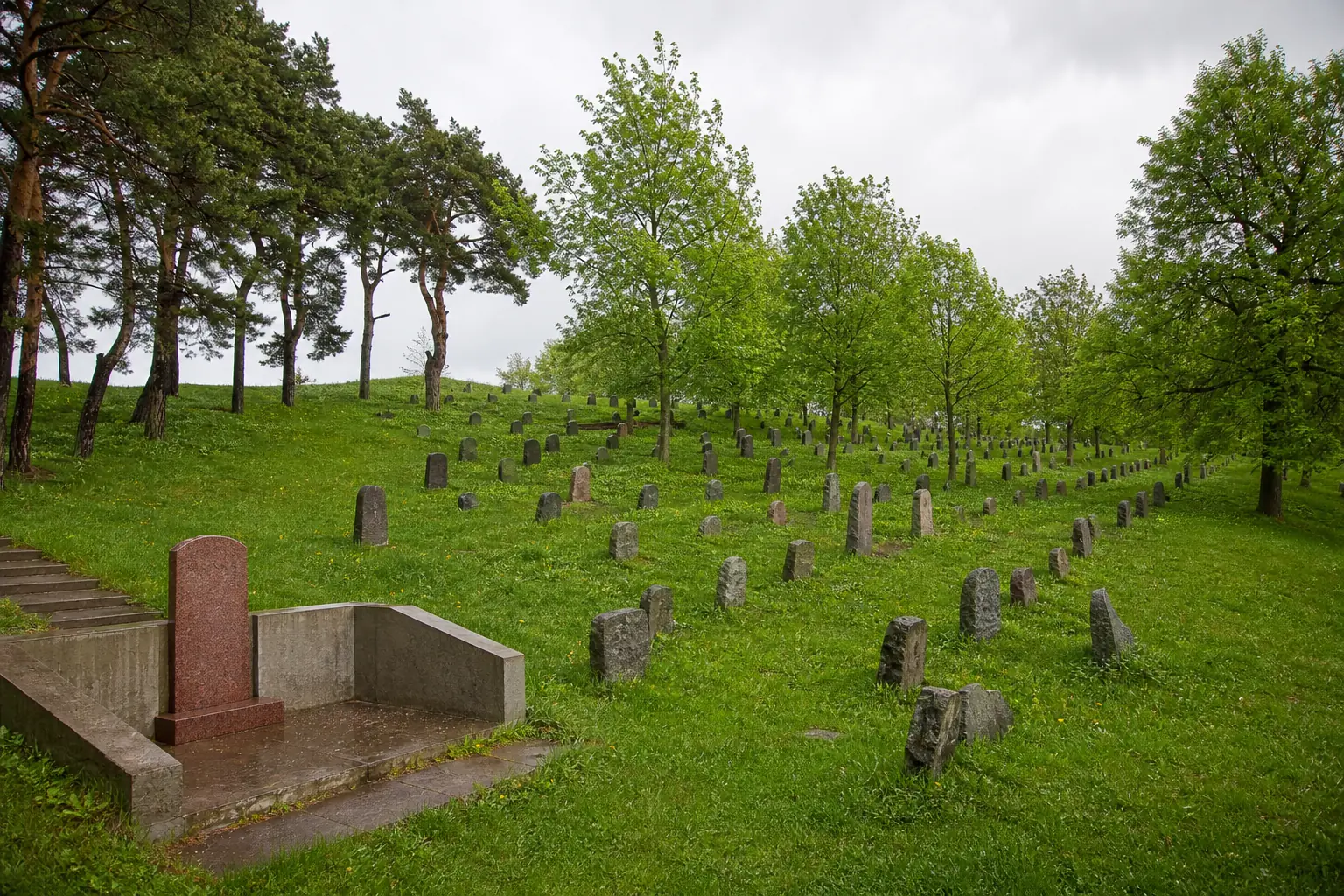
A broad concrete stairway climbs from the lower approach. A modest memorial stands near its foot, while rows of gray, charcoal, and muted reddish matzevot extend higher among mature deciduous trees and a few pines. The stones differ greatly in size and condition; some are low, leaning, or broken, and smaller fragments have been collected on a concrete platform.
Those orderly rows can resemble a functioning cemetery, but they do not preserve the original burial layout. The site must be read in two layers: a historic burial ground beneath the landscape and a late-twentieth-century memorial composition made from what could be recovered.
The cemetery grew with Jewish Jonava
The Vilna Gaon Museum of Jewish History records that Abraham Shmuilovich received the right to build a house, trade, and operate an inn in Jonava in 1777; about forty other families received similar rights. Roughly sixty Jewish families lived here by the end of the eighteenth century. Cemetery documentation likewise places the beginning of this burial ground in the late eighteenth century.
The community expanded rapidly in the second half of the nineteenth century, particularly after the Kaunas-Liepāja railway opened in 1871. Before the First World War, about 4,000 Jews made up roughly four fifths of Jonava's population. They worked in trade, furniture making, leatherworking, tailoring, transport, and many other crafts.
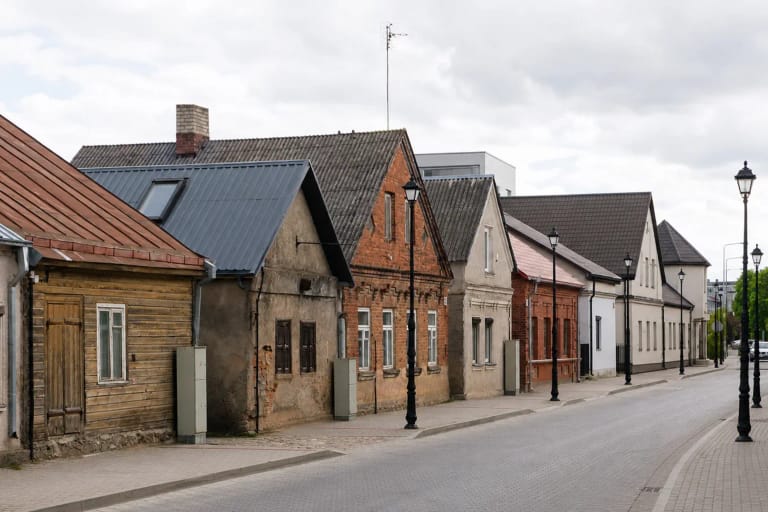
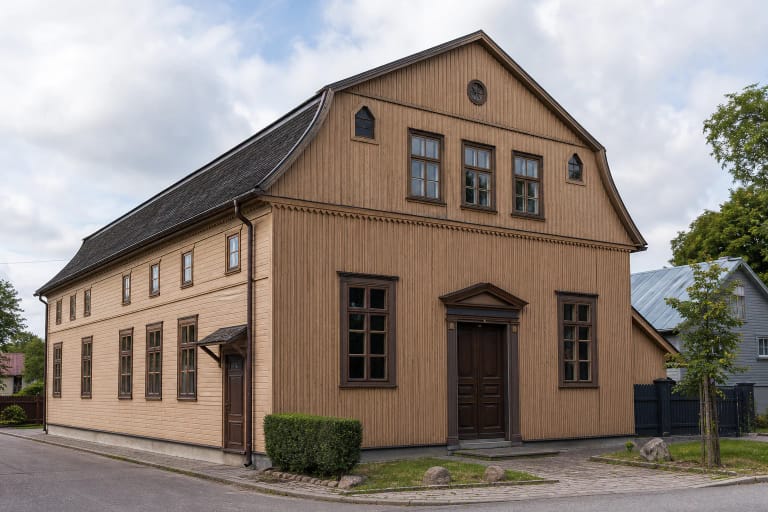
Seven Jewish prayer houses operated in interwar Jonava. The cemetery preserves a less visible but equally essential part of communal life: a burial place used across generations. Its story therefore begins long before the Holocaust and belongs to the history of families, religious practice, and the living shtetl.
Dispersed matzevot and the 1989 memorial arrangement
The cemetery was badly damaged during the Second World War and the Soviet period. Headstones were displaced, some were removed, and others ended up elsewhere in town as the grounds became overgrown. A stone's present position therefore cannot normally identify the grave beside which it originally stood.
In 1989, surviving and recovered stones were returned to the hill and set upright in symmetrical rows. This intervention saved important physical evidence of the community from further loss, but it also transformed the appearance of the cemetery. The regular rectangular rhythm is a product of memorial restoration, not traditional burial order.
Smaller pieces gathered on the concrete platform show how much survives only in fragments. Visitors should not try to match, lift, or return them to a chosen headstone. Without documentation, that would create a false association and could damage fragile surfaces.
Documentation in 2021 began reconnecting stones with people
In 2021, volunteers from Jonava Public Library and Jeronimas Ralys Gymnasium documented the cemetery. Kristina Jaskūnienė photographed the first one hundred matzevot, and Živilė Tamulionytė photographed the remaining stones. Joel Suldan and Ralph Salinger worked on transcription and translation of the inscriptions.
That process matters because a matzevah is more than an anonymous stone. A Hebrew epitaph may preserve a person's name, patronymic, date of death, and traditional memorial phrases. Reliable reading, however, must be tied to a specific photograph and catalogue record; guessing from a few weathered letters on site is not sound interpretation.
The project's division into a first hundred and a remaining group is not a count of everyone buried here. Many graves no longer have a surviving marker, and a re-erected matzevah need not stand above the person named on its face.
This is not the Girelė mass-murder site
During the summer of 1941, the Nazi occupation authorities, German forces, and local collaborators destroyed Jonava's Jewish community. The Vilna Gaon Museum documents two major murder actions on 14 August and from 31 August to 2 September; survivors were deported to the Kaunas ghetto.
Those mass murders are associated with a separate site in Girelė Forest. The old cemetery off Sodų Street is the community's historic burial ground, used until 1941, not the mass grave created by those actions. The two places belong to the same history of a destroyed community, but their locations and functions are different.
Keeping that distinction clear makes the cemetery's meaning broader, not narrower. Girelė records the crime and its victims; the cemetery hill also speaks of several generations of life structured by names, families, and religious tradition.
Visiting safely and with respect
The official sources checked for this page do not publish permanent opening hours, a ticket system, or a detailed list of visitor facilities. Allow 30-45 minutes and visit in daylight. Follow any signs on site, keep access routes clear, and do not treat the map point as a guaranteed parking space.
The visible approach includes steep steps, followed by uneven grass, roots, and stones. No official accessibility audit or confirmed step-free route was found, so visitors with mobility requirements should assess conditions on arrival or ask the municipality before travelling. Dry weather reduces the risk of slipping.
Speak quietly, do not stand on stones, rub inscriptions, clean surfaces, or move fragments. Men traditionally cover their heads in a Jewish cemetery; leaving a small pebble on a matzevah is a customary but optional sign of remembrance. Kauno Street and Jonava Regional Museum make a useful continuation into the history of the town.