- Place
- Jomantai village, Viešvėnai Eldership, Telšiai District Municipality
- Region
- Varniai Regional Park
- Type
- 4 km woodland nature trail with seven themed sections
- Address
- Jomantai Forest, Viešvėnai Eldership, Telšiai District Municipality
- Coordinates
- 55.87429, 22.35857
- Visit duration
- 2-3 hours for the full 4 km route with interpretation stops
- Best time
- May-October in daylight; forest ground and timber structures can be slippery after rain
Jomantų miško pažintinis takas, Jomantai Nature Trail, Jomantai Forest Trail
The official 4 km route begins at the forest-edge car park and forms two intersecting loops
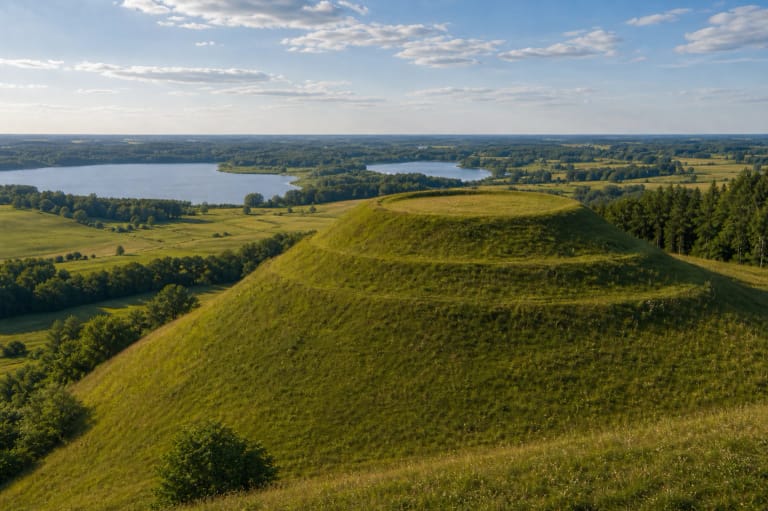
The Žemaitija Protected Areas Directorate gives 55.874293, 22.358573 as the trailhead. This page pins that entrance rather than an approximate centre of the forest. The starting area has a car park, shelter, general information board, and route plan. From road 160 between Telšiai and Varniai, turn near Vembūtai and follow the local signs towards Jomantai Hillfort and the nature trail.
Saugoma.lt currently gives a total length of 4 km. The official route plan shows two intersecting loops plus a linear spur to Jomantai Oak, so a general sense of direction does not always reveal which segment you have already completed. Photograph the map at the start and follow the arrows on the ground.
Allow 2-3 hours for an unhurried visit. Walking alone may take less time, but the route is designed around reading boards, trying selected activities, examining the two oaks, and taking the short approach to the spring. This is not one continuous boardwalk. Most of the route follows forest roads and paths, with only short purpose-built sections.
Seven themed areas turn a woodland walk into a route of activities and discoveries
The directorate's current description lists seven areas: the Abode of Forest Gods, the Medžiofonas clearing, the obstacle course, the swing clearing, the Trail of Dark Secrets, Birdhouse Avenue, and the Little Hare School. Saugoma.lt uses slightly different Lithuanian wording for two names, referring to an Abode of Forest Goddesses and a Dark Mysteries segment. These are alternate labels for the same themes, not an eighth and ninth attraction.
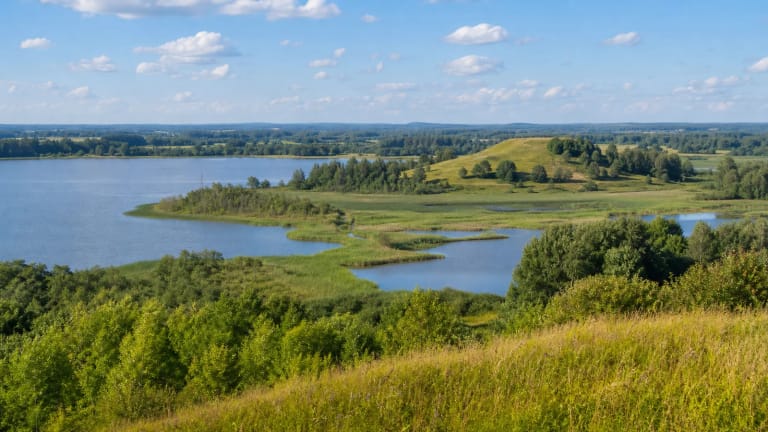
Beside Aklaežeris, an interpretive installation evokes older traditions through Medeinė, Žvėrūnė, and a Kaukas figure. Medeinė is presented as a guardian of the forest, Žvėrūnė as a ruler of hunting and wild animals, while the Kaukas sculpture works as a gauge for the lake's changing water level. Treat the figures as a modern educational interpretation of Baltic mythology, not archaeological proof that the site was a sanctuary.
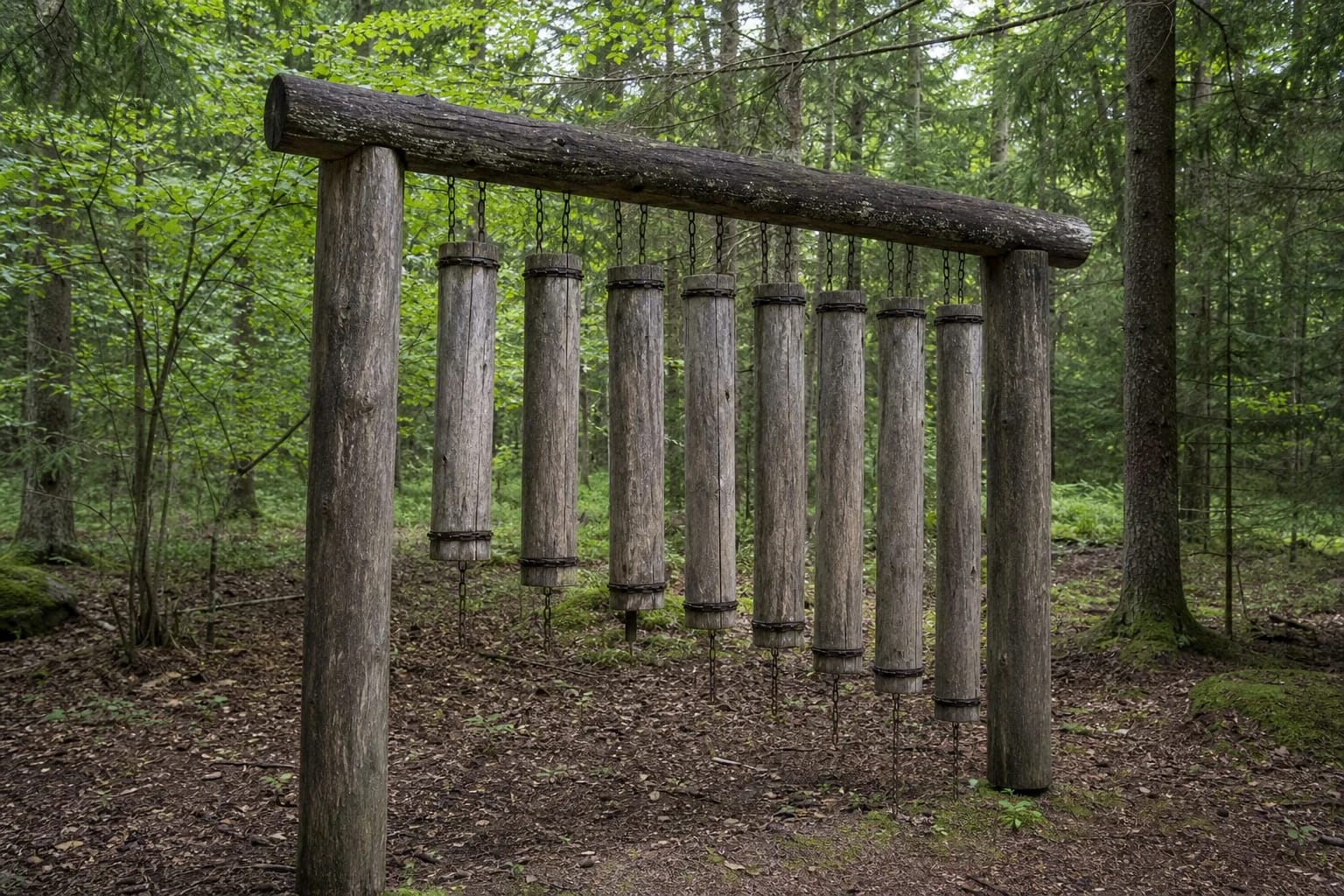
Medžiofonas uses suspended hollow timber elements of different lengths whose tones visitors can compare. The obstacle and secrets sections offer optional physical tasks, while Birdhouse Avenue explains which boxes suit different birds. A low observation platform is intended for understanding the vertical layers of the forest, not for a long-distance panorama. The trail has 23 boards with questions and tasks, culminating in a crossword at the Little Hare School.
Jomantai Oak and Triliemenis Oak reveal two very different forms of an old tree
The route connects Jomantai Stone, Aklaežeris, and two old oaks. Visitor information for the park generally calls them Jomantai Oak and Triliemenis Oak, while the State Forest Service inventory labels them the Great Jomantai Oak and the Three-Trunk Jomantai Oak. The different names do not indicate four separate trees.
In the 2017 inventory, the Great Jomantai Oak was estimated at about 193 years old, 25 m high, and 4.4 m in trunk circumference. The record notes an enormous hollow, decay and burning inside the trunk, and lightning damage. The Three-Trunk Oak was then estimated at about 196 years, 30 m high, and 5.5 m in circumference; it had a triple trunk, cavities near the roots, and a crown described as dense and vigorous. These are dated 2017 measurements and condition notes, not a live assessment.
Old hollow trees are valuable and vulnerable at the same time. Do not enter the hollow of the Great Oak, cross protective barriers, or pull at damaged timber. The better experience is to compare the trunks, crowns, and settings of the two trees from a safe distance.
Sydeklis Spring and memories of Kumetynas show that this forest has not always looked the same
The northern part of the route contains Sydeklis Spring, also called Jomantai Forest Spring or simply Forest Spring. The Lithuanian Geological Survey describes it as an extremely low-flow, possibly seasonal spring whose discharge was under 0.01 litres per second. A boardwalk of roughly 25-30 m leads from the main route to a timber spout and stone-lined basin. The water may only drip, so this is principally a geological observation point rather than a reliable place to fill a bottle.
On June 19, 2014, the sampled water was clear, odourless, 11.4 degrees Celsius, and of calcium-magnesium bicarbonate type, but the report also noted that water stood in the small dammed basin. An old chemistry test is not current certification of drinking-water safety. Do not rely on the spring for drinking water; bring your own supply.
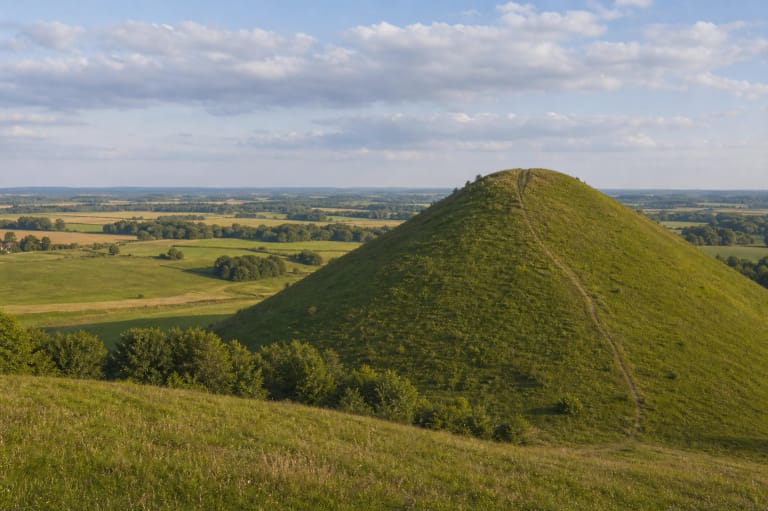
The Geological Survey account also records local oral memories claiming that the hills were not forested in the early twentieth century and became wooded after the war. Areas around Gegužinės Hill were called Kumetynas and Kumetinukas. According to the recollection, May dances for local gentry featured brass music for which ordinary people had to pay. This is meaningful local oral history, but its every detail is not presented as archival fact.
No gate hours are listed, and the visitor ticket is voluntary for individual visitors
The official trail descriptions list no ticket office, mandatory admission charge, or gate hours. For individual travellers, the protected-area visitor ticket is described as a voluntary way to support upkeep. Purchase methods and prices can change, so check the directorate's current information before travelling. In January 2026, the directorate reported that 2025 visitor-ticket funds had bought materials for repairs on the Jomantai trail. That documents active maintenance, but it does not guarantee that every timber structure will be in identical condition on every visit.
The route uses natural forest ground, roads, and short timber sections. Roots, mud, wet leaves, boards, and activity structures can become slippery after rain. The obstacle course is an optional activity and does not have to be completed to continue around the trail. Supervise children closely around the hollow oak, spring, observation platform, and physical installations.
No current accessibility audit for the full 4 km circuit was found during the 2026 review, so it should not be assumed reliably suitable throughout for a wheelchair or pushchair. If step-free access is essential, contact the Varniai Regional Park visitor centre before travelling and ask about ground conditions, timber approaches, and any repair work. Visit in daylight and follow the newest signs on site.