- Place
- Telšiai District Municipality
- Region
- Varniai Regional Park
- Type
- hillfort with a panoramic hill
- Coordinates
- 55.78400, 22.48600
Sprūdė Hillfort, Sprūdė
What makes Sprūdė Hill distinctive
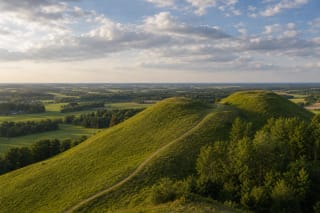
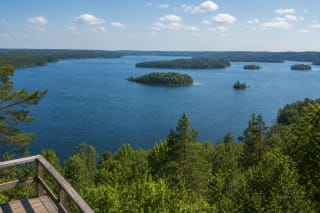
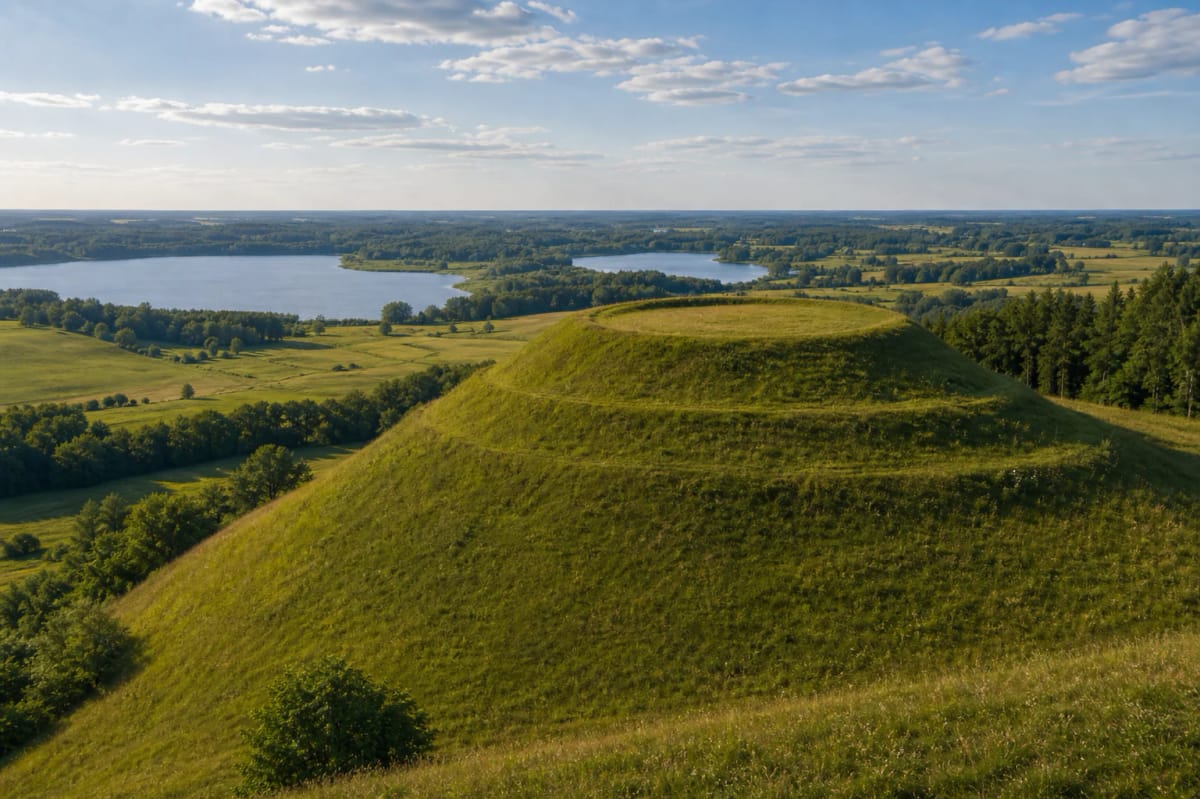
Sprūdė Hill is one of the best places to read the Samogitian landscape. Saugoma.lt states that from it there are views over the Varniai Basin, Lakes Biržulis and Lūkstas, Varniai, Luokė, and the hillforts of Šatrija, Girgždūtė, and Medvėgalis.
In describing Varniai Regional Park, VLE notes that the park protects the hillfort heritage of the Samogitian Uplands, including Sprūdė Hill. For that reason, the site should be understood not in isolation but as one point in a network of hillforts in the Samogitian Uplands.
The form of Sprūdė Hillfort
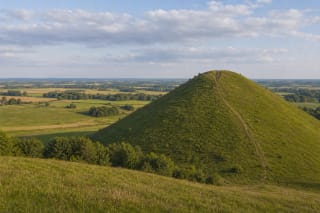
Saugoma.lt writes that the platform of Sprūdė Hillfort rises 216 m above sea level and is round. The hillfort is encircled by three rampart belts, up to 4 m high.
This form is very legible to visitors. Once on top, it is worth looking not only at the panorama but also at the relief underfoot. The rampart belts help imagine how the hilltop was fortified and why the place was chosen as a defensive position with wide visibility.
Sprūdė Hill and the Sprūdeikis tradition
Saugoma.lt gives a traditional story that Sprūdė Hillfort may have been the estate of Duke Sprūdeikis, brother of Lithuanian King Mindaugas. According to the story, Sprūdeikis angered his brother, fled to Samogitia, and built his castle here in a safe, easily surveyed place.
This story should be presented as a legendary layer of place. Its historical detail is not the same as an archaeological find, but it helps explain why the hill has a strong name and why visitors look here not only for panorama but also for Samogitian historical imagination.
Sprūdė, the gunpowder age, and finds
Saugoma.lt assigns Sprūdė Hillfort to the so-called gunpowder age, a later period of conflicts with the Teutonic Knights. This connects the site with a later defensive-history layer, not only an early settlement.
Stone axes and spearheads have been found in the area. Such finds do not turn the hill into an open-air museum, but they add context: Sprūdė was used and remembered for more than a beautiful view.
How to plan a visit to Sprūdė Hill
Choose a clear day for Sprūdė, because the long panorama is the main experience. If visibility is poor, the hill is still worth climbing for its relief, but part of the place's effect is lost.
Wear comfortable footwear and protect the slopes. Open Samogitian hills can be slippery after rain, and climbing straight up a slope damages grass and ramparts. Visit it as a heritage place, not only as a viewpoint.