- Place
- Telšiai, Šilalė, and Kelmė district municipalities
- Region
- Varniai Regional Park
- Type
- regional park of lakes, wetlands, and hillforts in the Samogitian Uplands
- Address
- Visitor centre: Dumbrių g. 3, Ožtakiai village, Varniai Eldership, Telšiai District
- Coordinates
- 55.73200, 22.38400
Varniai RP
Varniai Regional Park: core of the Samogitian Uplands
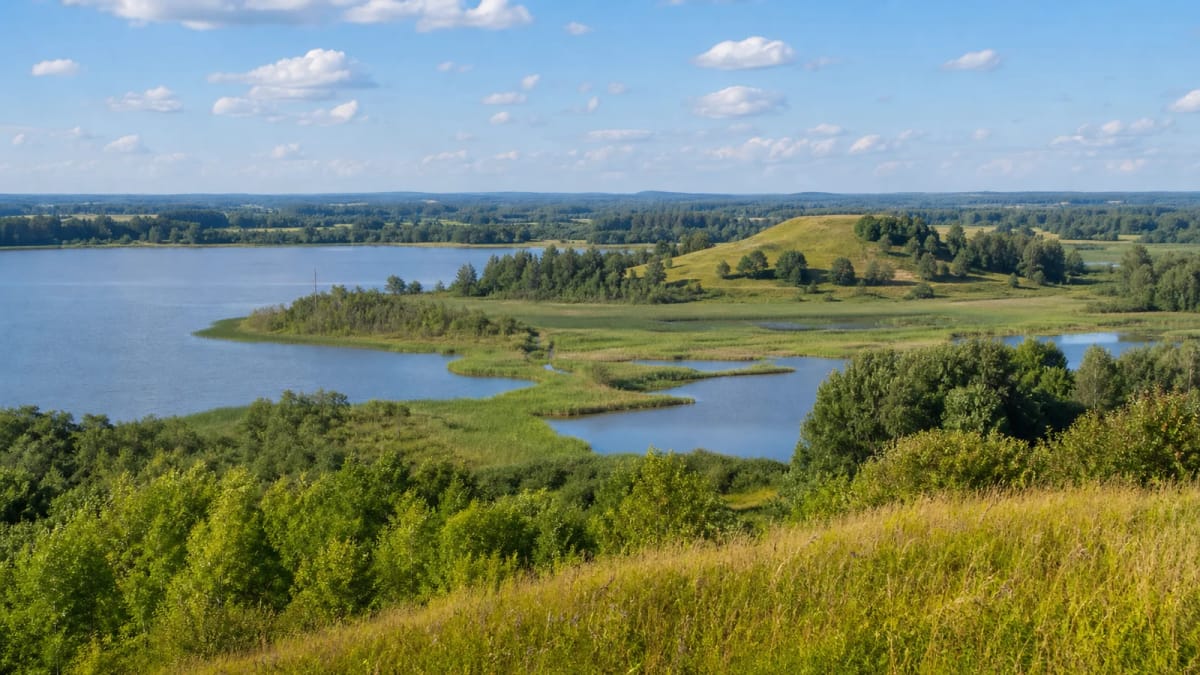
Varniai Regional Park covers one of the most expressive parts of the Samogitian Uplands. VLE describes it as a protected natural, cultural, and recreational area in Kelmė, Šilalė, and Telšiai district municipalities and gives its area as 33,475 ha. Saugoma.lt gives a slightly larger current administrative area, 33,731 ha. The park was established in 1992.
For visitors, the difference between those numbers is not crucial, but it shows that this is not one trail or one viewpoint. It is a large landscape region protecting the Samogitian lake-uplands landscape, where routes should be chosen by time and interest: lakes and wetlands, hillforts, nature trails, Varniai history, or a wider journey through Samogitia.
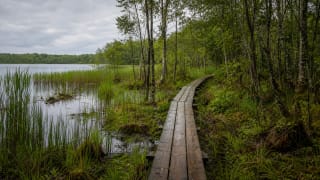
Lūkstas, Paršežeris, Biržulis, and wetlands
VLE states that forests make up about 30 percent of the park and that the park contains the wetlands of Biržulis, Stervas, Debesnai, Dubulis, and Paršežeris. The park has 33 reserves, including Biržulis Botanical-Zoological Reserve, Lūkstas Hydrographic Reserve, Medvėgalis Landscape Reserve, and Stervas Strict Nature Reserve, which protects Lake Stervas and its wet surroundings.
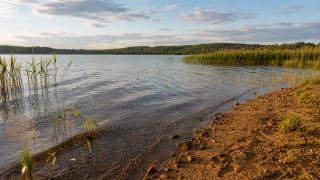
The most important water and wetland routes are connected with Lūkstas, the park's largest lake at about 1000 ha, as well as Paršežeris, Biržulis, Stervas, and the Sietuva landscape. Travel slowly here: distances are not large, but the environment is sensitive, and many objects are tied to wet meadows, bogs, or old water systems.
Natural heritage, plants, and animals
The park has impressive natural heritage objects. VLE mentions the geological stones Didieji Vankiai and Didysis Jomantas, the latter a natural monument; the hydrogeological spring Laumės Pėda; the hydrological alka lake Vokštelis; and botanical natural monuments such as Laumenai and Skliaustys oaks and the double-trunked lindens of Salotas.
The flora is especially rich. According to VLE, 77 plant species listed in Lithuania's Red Data Book grow in Varniai Regional Park, including Siberian irises, slender cotton-grass, and few-flowered sedges. Moose and otters live in the wetlands and forests, while great bitterns, black grouse, and cranes breed here, making the park important for nature observation.
Hillforts and Samogitian historical geography
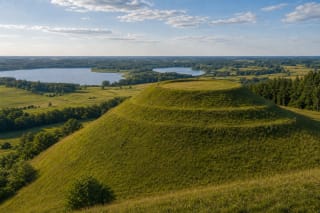
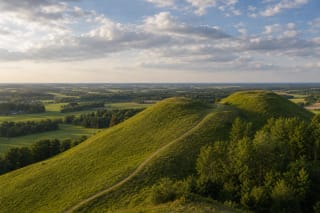
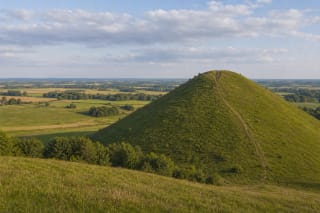
Varniai Regional Park is one of the densest Samogitian hillfort landscapes. VLE mentions the Pabiržulis archaeological complex, Burbiškiai, Medvėgalis, Moteraitis, and Sprūdė hills, as well as many roadside shrines and burial grounds. Medvėgalis is regarded as the highest Samogitian hillfort and one of the park's key historical points.
When visiting the park, think not of single hills but of a network. Medvėgalis, Sprūdė, Šatrija, and other heights show why the Samogitian Uplands were defensive, mythological, and panoramic landscapes at once. The Sietuva kūlgrinda between Lūkstas and Paršežeris recalls old routes through wetlands.
Varniai and the Samogitian Diocese
The cultural core of the park is Varniai town on the Varnelė River, near Lake Lūkstas. VLE states that in 1417-1864 Medininkai, later Varniai, was the centre of the Samogitian Diocese and received town rights in 1417. The Samogitian priest seminary operated here, Mikalojus Daukša and Bishop Motiejus Valančius lived and worked here, and 13 bishops are buried in the former cathedral.
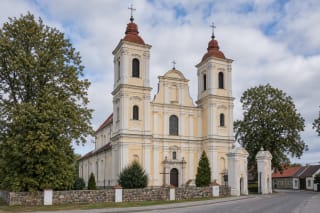
Today the late-Baroque seminary building from 1770 houses the Museum of the Samogitian Diocese, founded in 1999. Varniai also has the Baroque Church of Saints Peter and Paul, built in 1680-1691, and St Alexander's Church from 1719. Each year the international music festival Bliuzo naktys takes place by Lake Lūkstas, so Varniai connects heritage with living cultural life.
Visitor centre in Ožtakiai
The most practical starting point is the Varniai Regional Park visitor centre in Ožtakiai, Dumbrių g. 3. Saugoma.lt states that the centre has an exhibition and provides current information about trails, conditions, guided tours, and visiting rules.
Opening hours and services are seasonal, so check the official visitor-centre page before travel. This is especially important if you plan not only to walk outdoors but also to book a guided tour, visit the exhibition, or choose a trail that may be under maintenance.
How to build a route
For a one-day route, choose no more than 3-4 main points. For example, Lake Lūkstas and the Lūkstas Amber Trail, Sprūdė Hill, the Varniai visitor centre, and either Šatrija or Medvėgalis create a clear cross-section of the park.
If you want more nature and fewer car-linked stops, choose one longer trail, such as Paršežeris Nature Trail, but check its status first. In protected areas, camping is allowed only in designated places, and fires only in equipped fire sites.