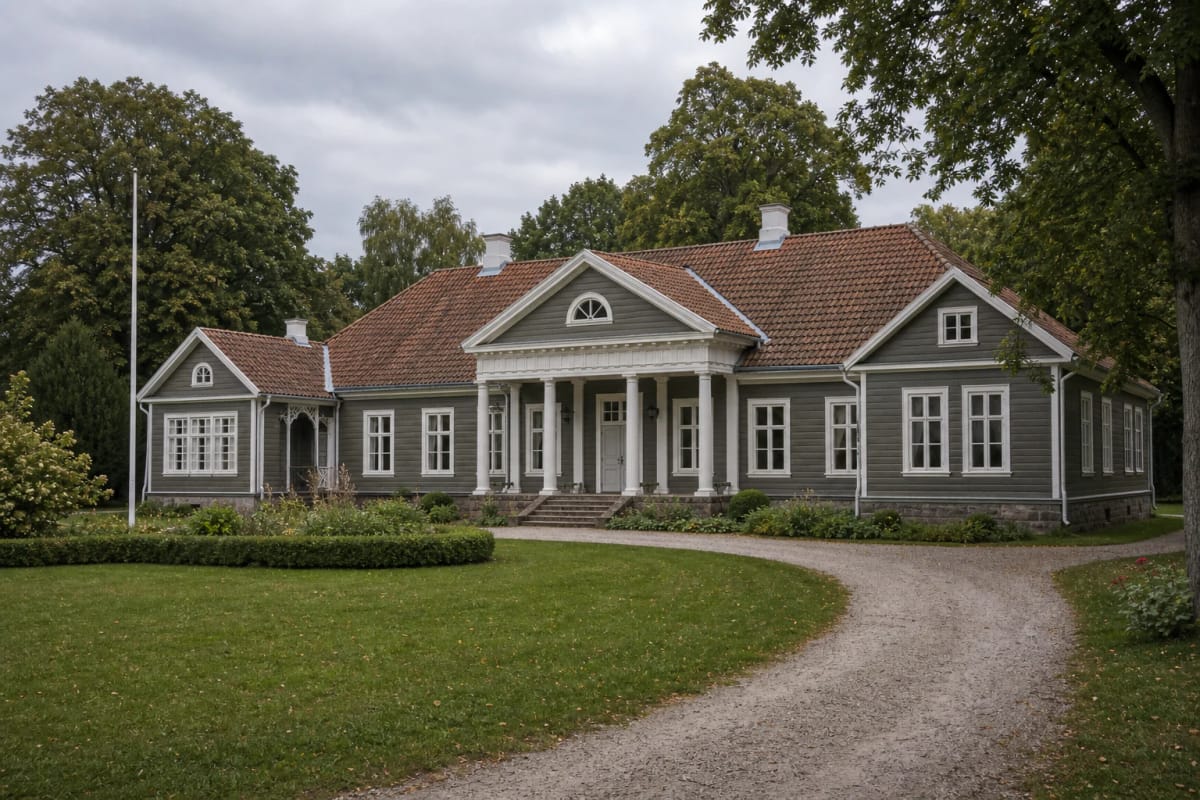
- Place
- Telšiai District Municipality
- Region
- Samogitia
- Type
- historic wooden Samogitian manor estate and ethnographic museum
- Address
- Dvaro g. 4, Biržuvėnai village, Luokė Eldership, Telšiai District Municipality
- Coordinates
- 55.89420, 22.45850
Biržuvėnai Manor
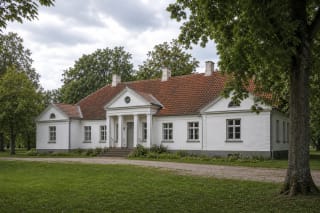
A wooden manor estate in Biržuvėnai
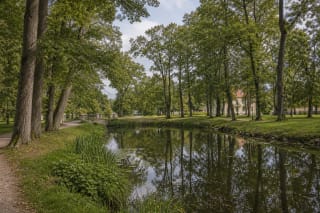
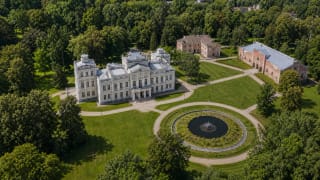
Biržuvėnai Manor Estate is one of the most valuable wooden manors in Samogitia and an important stop on Telšiai District manor routes. The whole complex by the Virvytė River matters, not only the main house: according to AUTC, the estate consists of about 20-22 buildings and structures, some in ruins, arranged in representative, farm, industrial, and workers' zones on both sides of the river.
The estate stands at Dvaro g. 4 in Biržuvėnai village, Luokė Eldership, about 12 km southeast of Telšiai. In the Cultural Heritage Register the Biržuvėnai Manor Estate code is 730; the protected complex includes buildings, the park, and the Gorskiai family cemetery.
From the 1253 name to the Gorskiai family
Biržuvėnai is mentioned in historical sources from 1253, in Teutonic Order chronicles, and a royal manor operated here in the 15th century. That early place name gives the estate a wider historical-landscape context than only its later wooden palace.
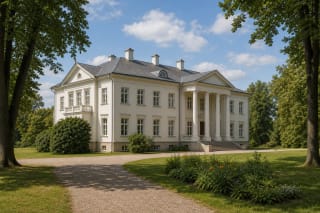
The decisive family in the manor's history was the Gorskiai. On 7 February 1670, Tverai elder Mykolas Gorskis acquired Biržuvėnai, and the manor belonged to the Gorskiai until its nationalization in 1940; the last owner was Ona Gorskienė. In the 18th to early 20th centuries, the Gorskiai shaped the present symmetrical wooden estate composition, with a Baroque-featured residential house, servants' buildings, and farm structures.
Mill, park, and cardboard factory
Biržuvėnai is also important as an economic and industrial manor. The Gorskiai dammed the Virvytė River, built a watermill and sawmill, and modernized the estate in the early 20th century: in 1907 the landscape park was renewed to a design by Antanas Zaleskis, also written Zaleckis, and in 1909 a cardboard factory with a power plant was established, operating roughly until 1938.
These objects explain why Biržuvėnai is not only a representative manor. It shows how one estate combined residential, agricultural, and industrial activity. Nearby are also Biržuvėnai Hillfort and its settlement, giving the place a deeper archaeological background.
The 2004 fire, porcelain find, and 2011 restoration
An ethnographic museum based on local collections opened in the manor in 1990. But on 24 December 2004 the manor palace burned down; the fire also destroyed 18th-century tiled stoves decorated with the Gorskiai coats of arms. That date became a turning point, because the manor's future could have ended in loss.
In 2005, Janina Gorskytė, daughter of the last owner, helped locate valuables hidden in the manor: about 290 porcelain dishes and two silver-plated champagne vases. The palace was restored in 2011, so today's visitor sees not an untouched antique, but a restored heritage object whose value lies in both authentic layers and preservation effort.
What to see and how to plan
On arrival, allow time not only for the palace but for the scale of the estate: servants' buildings, granary, mill remains, park, and its relationship with the Virvytė valley. Biržuvėnai works best at a slow pace, linking wooden architecture, Gorskiai family history, and landscape.
During research, official sources did not show a stable opening-hours and ticket system. Before going, check the official manor page or contacts, especially if you want to see the interior, attend an event, or book a guided visit.