- Place
- Pašatrija area, Luokė Eldership, Telšiai District Municipality
- Region
- Šatrija Reserve
- Type
- hillfort and landscape-reserve hill
- Coordinates
- 55.87271, 22.54910
Šatrija, Šatrija Hillfort
One of Samogitia's most recognizable hills
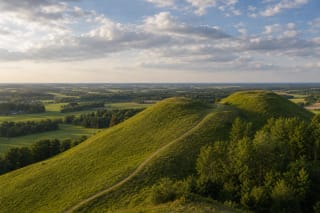
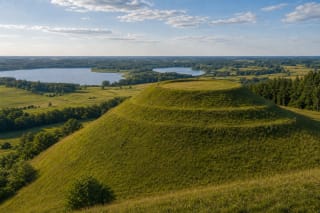
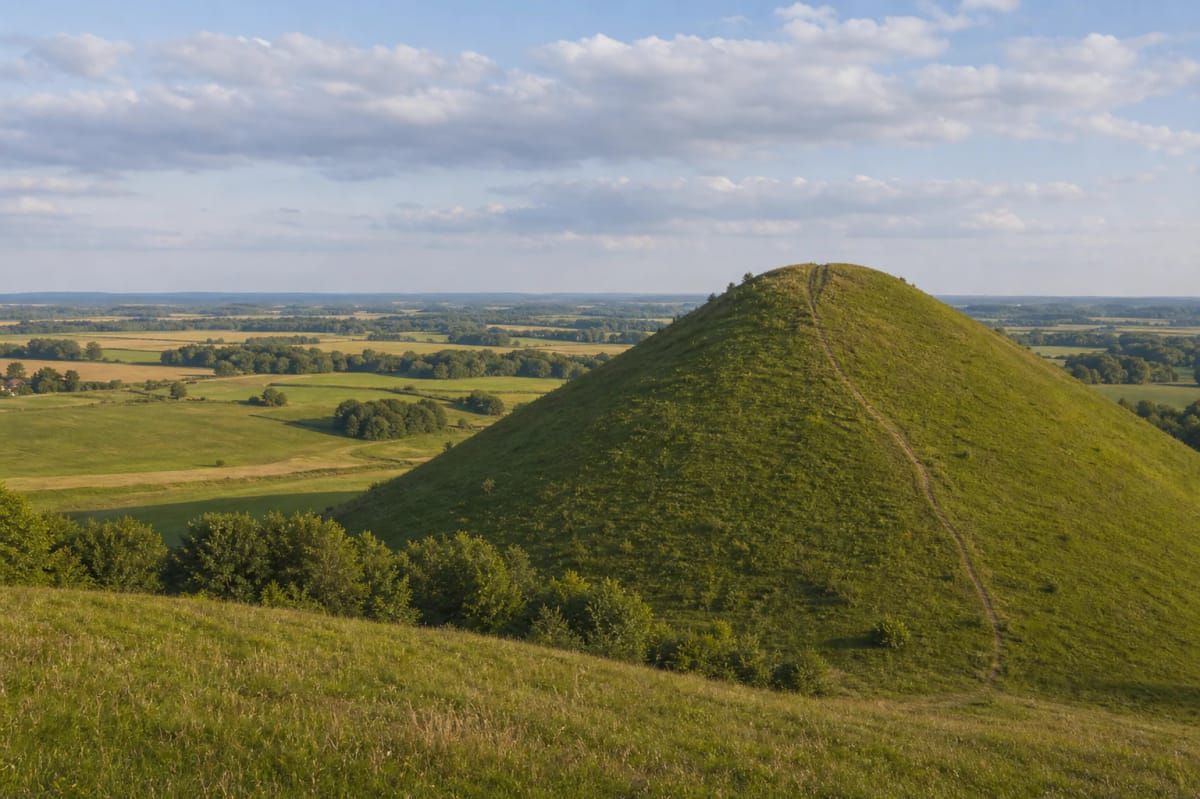
From a distance Šatrija Hill looks like a separate, sharply raised sign of Samogitia. Its shape, open slopes, and wide panorama explain why the place affects visitors so strongly: this is not a hillfort hidden in forest but a visible centre of the landscape.
VLE describes Šatrija Reserve as an 813 ha landscape reserve protecting an expressive moraine massif with Šatrija Hill and hillfort in the Samogitian Uplands. The VLE article on Luokė places the hill southeast of the town, so in practical terms Šatrija is easiest to combine with Luokė and routes through the Varniai region.
Archaeological finds
Saugoma.lt calls Šatrija one of the most famous archaeological monuments not only in Samogitia but in Lithuania. It lists 9th-12th-century cremation burials, burial urns, tear cups, cup-marked stones, amber and glass ornaments, and stone axes.
These finds make Šatrija a layered place. It is not only a hill with a beautiful view or an object of legend: archaeology here speaks about living, burial, crafts, belief, and long use of the site.
Castle, settlement, and old belief
Saugoma.lt states that archaeologists believe a wooden castle may have stood on the hilltop, while people lived at the foot of the hill already from the 2nd century BCE. That chronology helps explain why Šatrija is so often presented as an important Samogitian centre.
The same source writes that this is thought to have been one of the most important centres of the old Lithuanian religion, destroyed when Christianity was introduced in Samogitia. Saugoma.lt adds an important historical detail: Simonas Daukantas and Motiejus Valančius wrote that the first priests of the Samogitian Diocese resided in nearby Luokė rather than in the diocesan capital Varniai so they could watch over the pagan sacred site. This should be phrased carefully as a layer of tradition and interpretation, but it is central to Šatrija's cultural image.
Witch legends
Šatrija is widely known through legends about witches. For many visitors, those stories are the first association with the hill, even though the archaeological and landscape facts are just as important.
The best way to present this layer is as living local folklore: witches, mysterious gatherings, and the hill's magical force are stories that helped make Šatrija a cultural symbol. They complement, but do not replace, the hill's archaeological value.
How to visit Šatrija Hill
Šatrija is easiest to visit in dry weather, because the steep grassy slopes can be slippery after rain. Once on top, do not rush: look in more than one direction and walk around the summit, because the hill works best as a 360-degree view over the Samogitian landscape.
Use existing paths, protect the slopes, and do not damage the grass cover. This is both a reserve and an archaeological heritage site, so the visit should stay light: a walk, a panorama, local history, and respect for the landscape.