- Place
- Ignalina, Ignalina District Municipality
- Region
- Aukštaitija
- Type
- municipal regional museum with exhibitions on local history, ethnography, fishing, railways, and weddings
- Address
- 43 Ateities Street, Ignalina
- Coordinates
- 55.34295, 26.15982
- Visit duration
- 1-1.5 hours; allow 1.5-2 hours with a tour, educational session, or temporary exhibition
- Best time
- in the morning from Tuesday to Friday, or on Saturday, avoiding the final day of the month
Ignalina District Museum, IKM
The main museum is in central Ignalina, not Rojus village
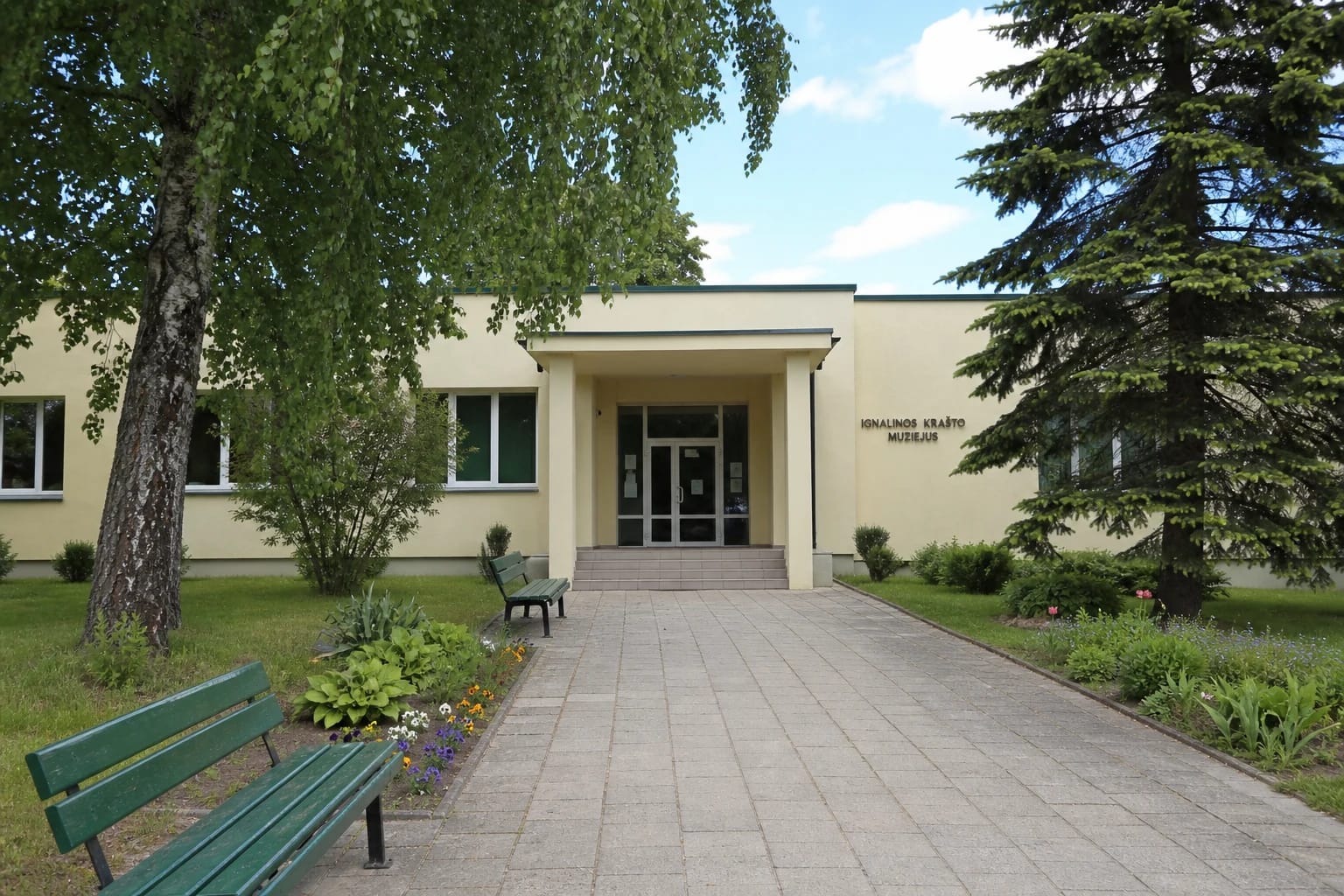
Ignalina Regional Museum occupies a light-coloured, low-rise building at 43 Ateities Street in the town centre. Identify the entrance by the museum name on the facade, a straight paved path, and a small portico supported by columns. The building is neither an old manor house nor a protected historic exhibit; the local history is presented inside it.
Coordinates 55.342946, 26.159818 are a representative arrival point. A municipal document assigns them to the car park at 43 Ateities Street opposite the cultural centre, so they do not mark a particular museum door or a guaranteed accessible bay. Navigate to the street address, then follow the building sign for the final approach.
The same institution also operates the Professor Adomas Hrebnickis Memorial Museum at Rojus near Dūkštas. Its orchard, memorial rooms, and limited seasonal visiting dates in 2026 do not apply to the main museum in Ignalina. If visiting both, check each address and schedule separately.
A museum opened in 2012 grew from borrowed objects into a regional collection
VLE records two useful founding dates: the institution was established on 27 June 2012 and opened to visitors on 6 October. A municipal account of its tenth anniversary recalled that there were no major permanent exhibitions on opening day, so borrowed objects filled the rooms. This beginning explains why objects and stories donated by local people became essential to the museum's development.
The museum collects material relating to the history, ethnography, daily life, numismatics, art, written culture, and photography of Ignalina District. VLE recorded about 5,900 objects in 2020; the Ministry of Culture's 2024 statistics list 8,653 objects in the institution's collections. That is the size of the holdings, not the number displayed in public at one time.
Owned by Ignalina District Municipality, the museum mounts temporary exhibitions, educational programmes, and local-history projects. It is therefore more than a static room of regional antiques: permanent displays form the core, while themes in the exhibition hall and events calendar change. Check the closing date if travelling for one temporary show.
From a fishing model and coin hoard to flax, weddings, and the cimbalom
The permanent Historic Ignalina exhibition traces the town through plans, photographs, and thematic panels. It addresses Ignalina's urban form, medical and educational institutions, and the history of its Jewish community. Games sit beside the information, including water-lily and fish activities, soft-block puzzles, and a puzzle map of Ignalina District.
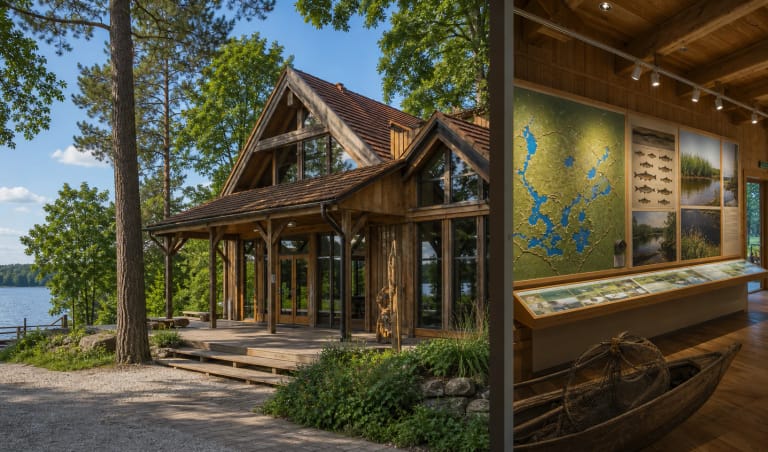
An interactive model of Palūšė is the centrepiece of the traditional fishing display. It presents fishing as a craft embedded in lake-country life, not simply as a row of nets. A separate Journey Along the Rails of Railway History exhibition explains how railway heritage relates to Ignalina's growth and connections.
The numismatic display contains a hoard of 84 copper coins of the Russian Empire found in Keižiai village. VLE dates them to 1730-1795. The findspot matters as much as the number: this is archaeological evidence from Ignalina District, not an unrelated world-coin collection bought for display.
The ethnographic gallery displays nineteenth- and twentieth-century household objects, tools, furniture, and textiles. The route of flax is followed from sowing and fibre preparation to a woven bedspread, giving individual implements a clear purpose. This is a selection from the museum's richest collecting area, not the entire reserve collection.
Weddings in the Ignalina Region reconstructs a civil registry room used from 1991 to 2010. Period furniture and wedding clothes remain, while photographs compare ceremonies across generations. The exact dates are important: this is not merely a Soviet interior, since the room continued operating for two decades after restored independence.
Upstairs, musical instruments extend the wedding theme. They include the cimbalom, a struck string instrument whose playing tradition remains associated with the Ignalina and Švenčionys regions. Children and hurried visitors may favour models and games, but adult visitors gain more by reading the places of origin and dates attached to objects.
The new interactive exhibition is still being installed in 2026
The MATOMI project is modernising displays in museums across Ignalina, Utena, Zarasai, and Latvia's Latgale region. Eight interactive installations are planned for Ignalina, including a timeline of regional history, a Through the Keyhole feature opening individual themes, and an approximately five-metre-high walk-around installation about crafts and household work. These are planned project outcomes, not a list of exhibits already open.
In April 2026, the museum announced that it had signed the installation contract and moved from planning into physical implementation. The official completion date for the full MATOMI project is 28 February 2027. On 19 July 2026, it would therefore be misleading to promise that every new screen and installation was operating, even though older exhibitions remained listed on the website.
The museum continued to publish events and normal visiting hours in 2026, but works may alter a particular gallery route, noise level, or temporary object arrangement. If the fishing model, coin hoard, or wedding room is the purpose of your trip, ask whether that exact display is open on the intended day.
Opening hours, €4 admission, and a realistic visit plan
On 19 July 2026, official exhibition hours were Tuesday to Friday 09:00-17:00 and Saturday 10:00-16:00. Visitors were not served on Monday, no Sunday visitor hours were published, the final day of each month was a sanitary closure, and the museum closed one hour early before public holidays. Check the latest schedule before setting out.
Prices approved by Ignalina District Council on 19 December 2024 set standard admission at €4. A Lithuanian-language guide for a group of 10-25 people was €25, and a foreign-language guide €35. Discounts and free-admission categories apply, so confirm the relevant concession and the current price of an educational session in the official tariff.
Allow 1-1.5 hours for the permanent exhibitions independently. A guided tour, educational session, or temporary exhibition makes 1.5-2 hours more comfortable, and arrival at least an hour before closing is sensible. Arrange a group activity in advance by telephone at +370 682 13864 or email at muziejus@ignalina.lt.
Games and the virtual tour help families, while physical access needs confirmation
The museum works well for families when a visit is organised around concrete tasks: find Palūšė in the model, assemble the district map, identify an old fishing implement, or compare wedding clothes. Educational sessions have defined age groups and booking conditions and are not automatically included with every individual admission ticket.
The authoritative sources reviewed do not provide a complete physical-access audit confirming a route from the car park to every floor, WC, and gallery. Photographs show steps at the principal doors, but an image cannot establish whether another entrance or lift is available. Discuss wheelchair, pushchair, or other specific access requirements with museum staff.
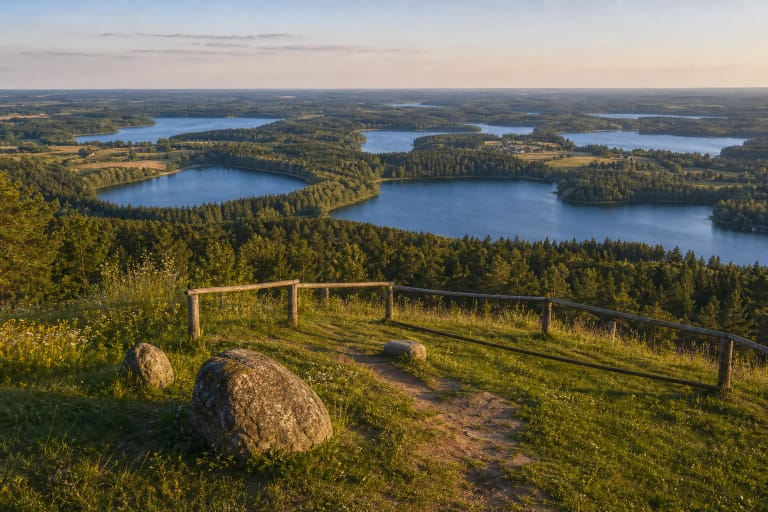
For those unable to attend, the official virtual tour offers panoramas, interactive object points, and audio for part of the information. A physical museum visit pairs naturally with Palūšė, where visitors can see the place recreated in the fishing model, the Aukštaitija National Park Visitor Centre, and the wooden Church of St Joseph.