- Place
- Visaginas Municipality
- Region
- Aukštaitija
- Type
- closed nuclear power plant with information centre and reactor-control simulator
- Address
- Elektrinės g. 6, Drūkšiniai village, Visaginas Municipality
- Coordinates
- 55.60440, 26.56000
INPP, Ignalina NPP
What Ignalina Nuclear Power Plant is
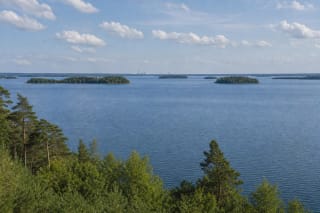
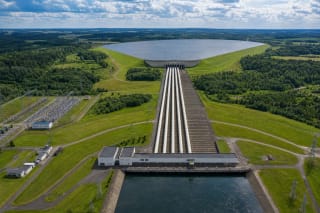
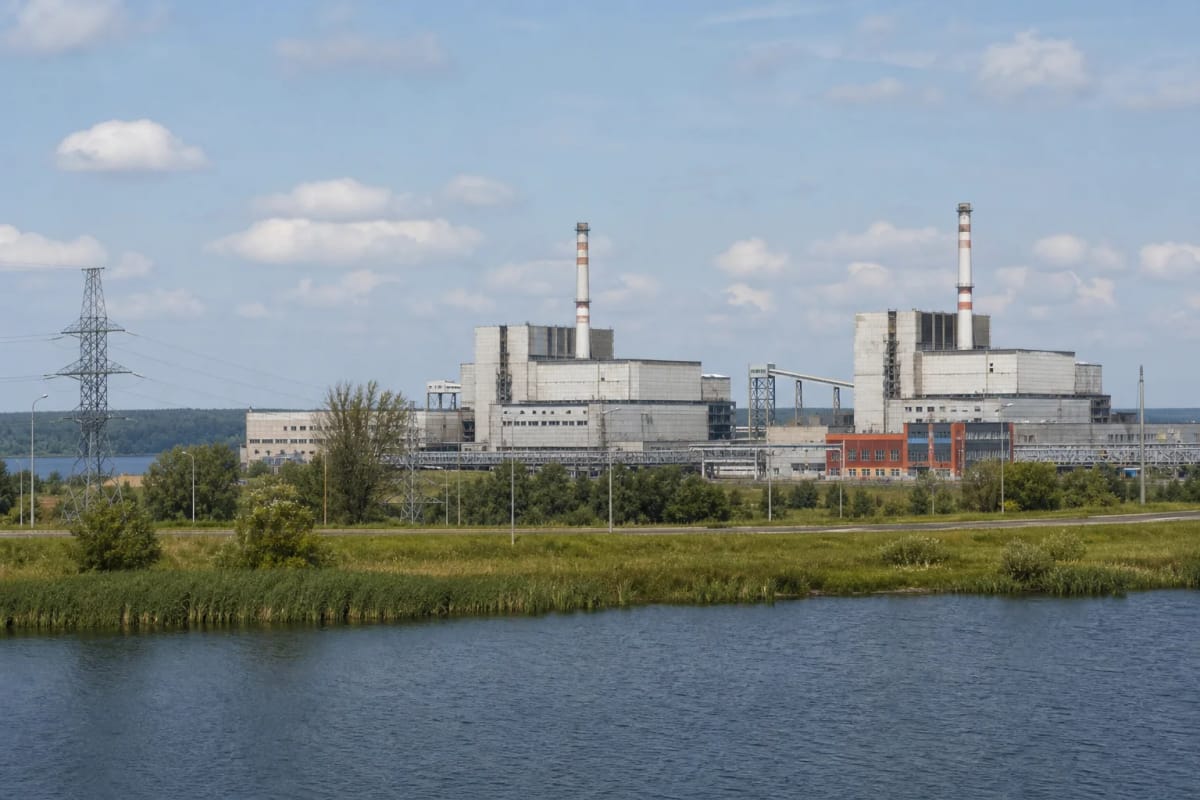
Ignalina Nuclear Power Plant stands by Lake Drūkšiai in Visaginas Municipality, about 6 km from Visaginas and roughly 39 km from Ignalina town. VLE states that it had two RBMK-1500 channel-type, graphite-moderated, water-cooled reactors, the most powerful in the world at the time. One unit had 4800 MW thermal and 1500 MW electrical capacity.
Despite the name, the plant is not by Ignalina but by Visaginas, the city built for its workers. The popular term 'Visaginas nuclear plant' is imprecise and is often confused with a separate new-build project that was never constructed. The closed RBMK plant is historically called Ignalina Nuclear Power Plant.
Operation and closure
Unit 1 began operation on 31 December 1983, and Unit 2 in 1987, later than planned because construction was affected by the Chernobyl disaster. Over 26 years the plant generated 307.9 billion kWh and for a time supplied about 80 percent of Lithuania's electricity. A four-reactor, 6000 MW plant had originally been planned, but Unit 3 reached only about 60 percent construction before work stopped in 1989.
Under Lithuania's European Union accession treaty, the country committed to closing Ignalina because RBMK reactors were considered unreliable. Unit 1 stopped on 31 December 2004 and Unit 2 on 31 December 2009. The closure turned Lithuania from an electricity exporter into an importer and became one of the country's largest industrial transitions.
Decommissioning
Since 2010 a long-term decommissioning process has been under way, one of Europe's largest projects of this kind. VLE notes that a new spent nuclear fuel storage facility opened in 2017, dismantling of buildings began after 2020, and all work is planned to finish around 2038. The process is funded by European Union funds.
Nuclear safety supervision in Lithuania is carried out by the State Nuclear Power Safety Inspectorate, VATESI. For visitors, decommissioning matters because it is part of why areas of the plant can be seen on educational expeditions, showing how a nuclear facility is safely dismantled.
What visitors see
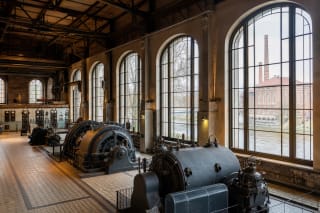
The core visitor point is the information centre, with models of the reactor unit, fuel assemblies, spent-fuel containers, and waste-storage facilities, plus interpretation of RBMK operation and decommissioning. A separate highlight is the full-size Unit 2 control-room simulator, once used to train operators.
Ignalina became widely known internationally as a filming location for HBO's Chernobyl (2019), because of its authentic RBMK environment. It is one of the few nuclear facilities in the world that can be visited with a guide, attracting both technology-history visitors and dark-tourism audiences.
How to visit
Ignalina Nuclear Power Plant can be visited only with advance registration. It remains an operating, protected nuclear site, so personal data, an identity document, and compliance with safety rules are required. Tours are offered in Lithuanian, Russian, and English; a shorter information-centre visit takes about an hour, while longer expeditions through the complex take several hours.
Tour times, prices, and registration requirements change, so check the official plant website before travelling. Combine the visit with Visaginas and Lake Drūkšiai for a north-eastern Lithuania route joining energy history and lake landscape.