
Things to do in Lithuania
Things to do in Anykščiai
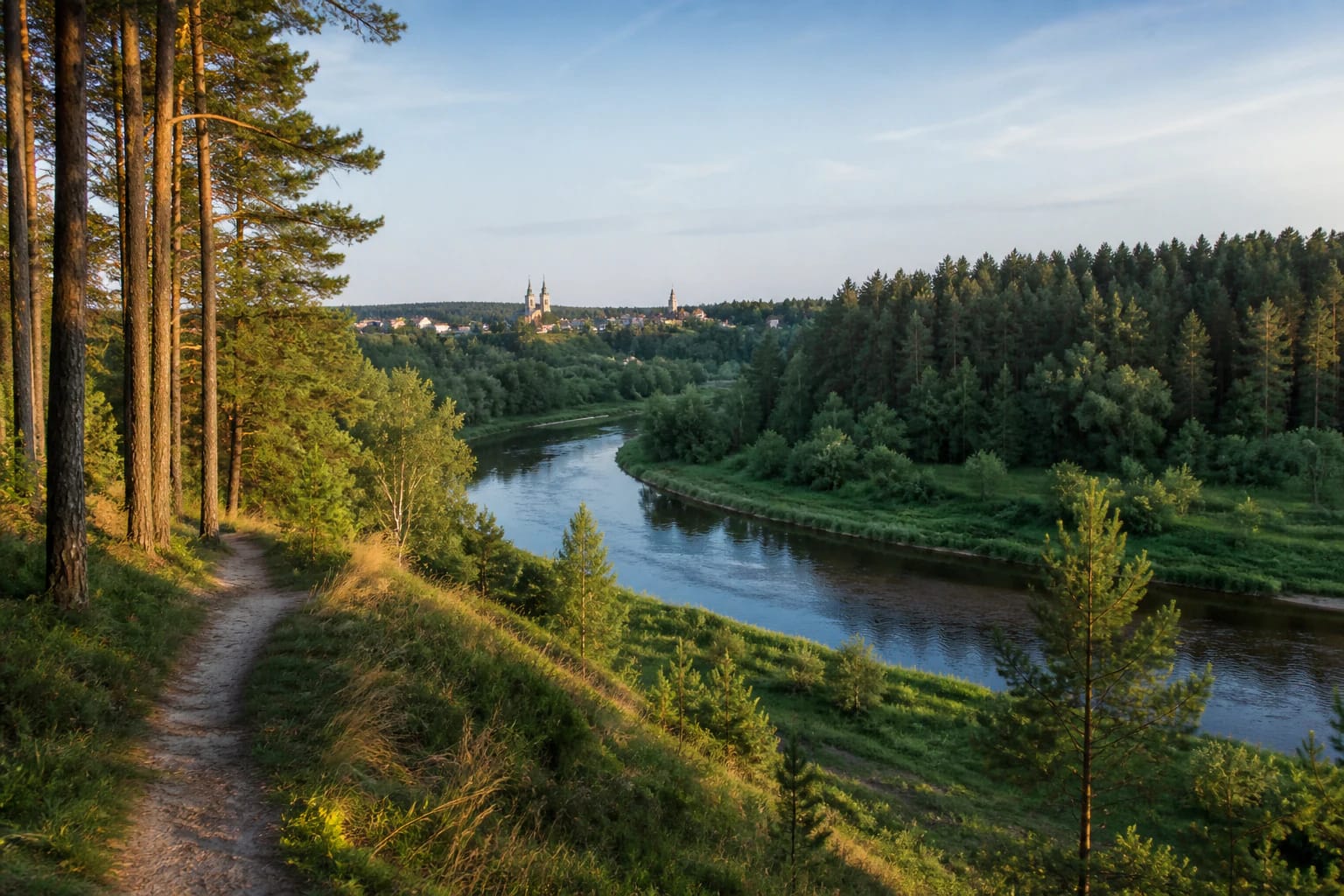
Anykščiai is an Aukštaitija town by the Šventoji and Anykšta rivers, known for Anykščių šilelis, the canopy walk, the narrow-gauge railway, Puntukas, and writer heritage.
Anykščiai
Where to start
Choose a place, compare visiting times or explore the area on the map.
Key places to visit in the Anykščiai area:
Puntukas Stone
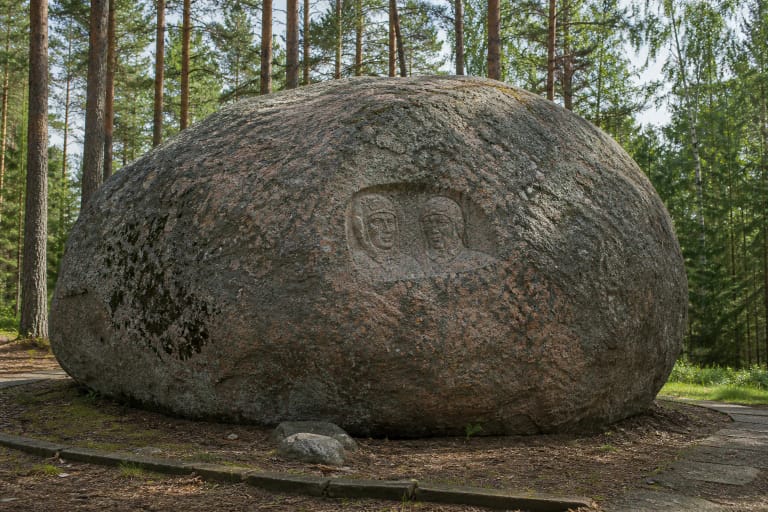
Puntukas Stone is one of Lithuania's most famous boulders: a glacier-carried rapakivi granite near Anykščiai, known for its Darius and Girėnas…

Mikieriai Outcrop
Mikieriai Outcrop, also presented as the Skardis viewing platform, is one of the most scenic places in the Šventoji River valley within Anykščiai…
Anykščiai Tree Canopy Walk
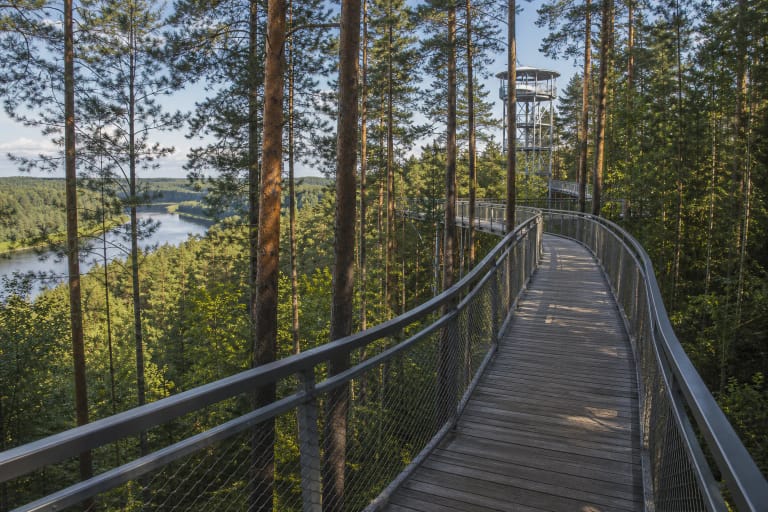
The Anykščiai Tree Canopy Walk is a 300 m route in Anykščių šilelis, rising to 21 m above the forest floor and ending at a 34 m observation platform.
Bijeikiai Observation Tower
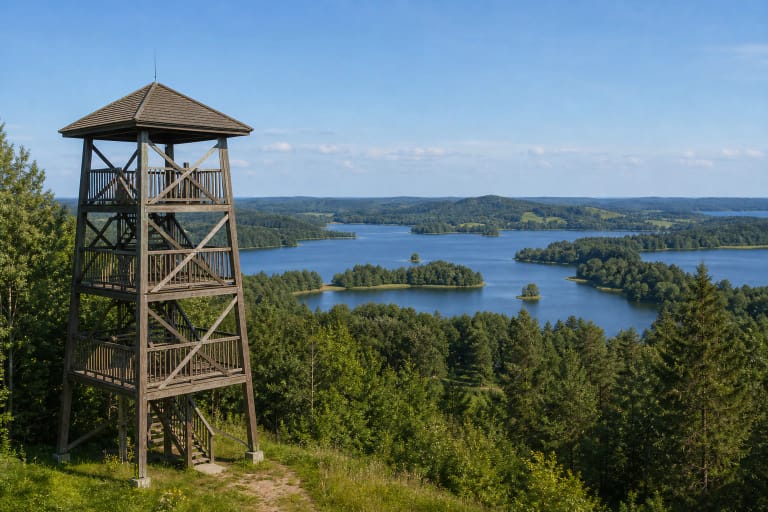
Bijeikiai Observation Tower stands on a 163 m hill in Anykščiai Regional Park and opens a panorama of Lakes Rubikiai and Dusynas.
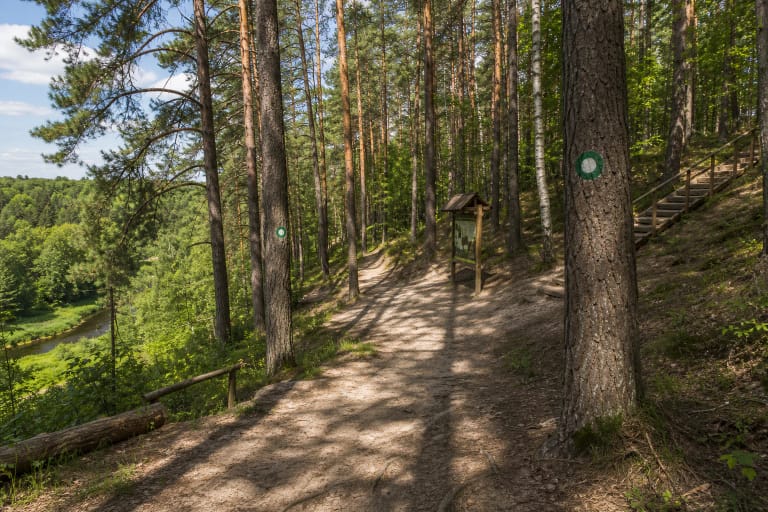
Šventoji Nature Trail in Anykščiai
The Šventoji Nature Trail in Anykščiai leads through Anykščių šilelis, river-valley themes, and 17 educational stops, and naturally connects with…
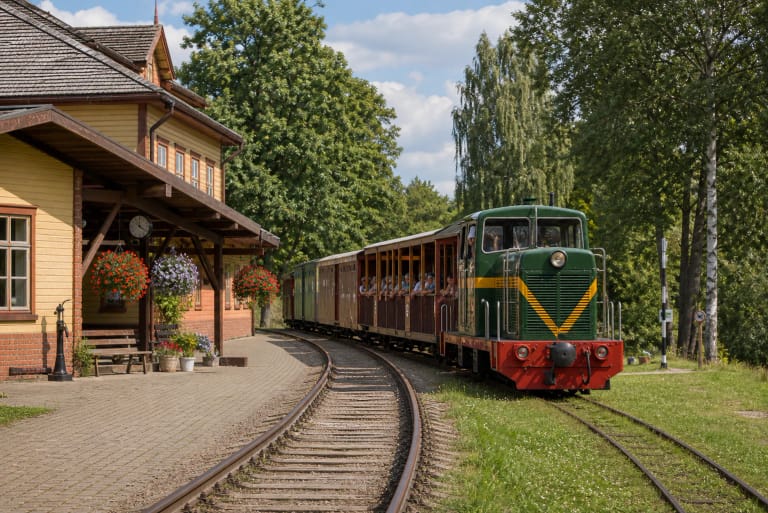
Anykščiai Narrow-Gauge Railway
The Anykščiai Narrow-Gauge Railway, popularly called the Siaurukas, is living Aukštaitija technical heritage, with regular, short, educational,…
All places in this guide
Places on the mapPuntukas Stone30-60 minutesMikieriai Outcrop30-60 minutesAnykščiai Tree Canopy Walk1-1.5 hoursBijeikiai Observation Tower30-60 minutesŠventoji Nature Trail in Anykščiai2-3 hoursAnykščiai Narrow-Gauge Railway1-3 hours, depending on route and eventHorse Museum1.5-3 hoursŠeimyniškėliai (Voruta) Hillfort1-2 hoursPuntukas' Brother20-45 minutesPresident's Oak in Debeikiai10-20 minutesKavarskas St. John Spring and Lourdes20-40 minutes; longer with the church and cemetery Lourdes grottoAnykščiai Church of St. Matthew the Apostle and Evangelist30-45 minutes with the tower climbJonas Biliūnas' Grave "Laimės žiburys"20-40 minutesRaguvėlė Manor1-1.5 hoursPienionys Manor30-45 minutes for exterior views of service buildings and parkTroškūnai Church and Monastery30-45 minutesVetygala Outcrop30-45 minutesAnykščių vynas2-2.5 hours for a tour with tastingAngel Museum and Sacred Art Centre60-90 minutes; 2-3 hours with St Matthew's Church, its tower viewpoint, and Bishop's SquareAntanas Baranauskas and Antanas Vienuolis Memorial Museum1-1.5 hours; approximately 2 hours for an unhurried visit to the writer's house, granary, and Stanislovas Petraška exhibitionAnykščiai Arts Incubator - Art Studio45 minutes to 2 hours; longer for an exhibition, workshop, or eventAnykščiai Regional Park Visitor Centre45-75 minutes for the exhibition and route planning; longer with a pre-booked educational activity or guided walkLABI Park4-7 hours; allow a full day if you want to explore the different zones without rushingKalita Hill1-2 hours for summer activities; 2-4 hours for a ski session when the slopes are openSafari Park Anykščiai2-4 hours; a shared or Defender tour lasts about 45 minutes, with additional time needed for the Mini Zoo and leisure areasDainuva Adventure Valley2.5-3 hours for the adult course package including the briefing; about 1-1.5 hours for the children's coursesDaumantai Outcrop45-75 minutes for the upper platform and constructed stairway; longer if the entire lower trail is open and safeAnykščiai Chapel25-45 minutes for an exhibition; longer for a concert, lecture, or workshopSvėdasai Church of St Michael the Archangel30 minutes-1 hour; longer if Mass or a full complex walk is part of the visitMuseum of Feelingsabout 45 minutes; longer with a workshop or creative activityBarbora Boulder45-90 minutes from the nearest safe stopping point; a longer route depends on the chosen forest roadAnykščiai City Park30-60 minutes for a quiet walk; longer during a town festival or when combined with central Anykščiai sightsBurbiškis Manor in Anykščiai Districtabout 1 hour for a tour; 2-3 hours when combining the house, park, and a pre-booked restaurant visitLake Rubikiai1-2 hours for one shore or viewpoint; half a day for swimming or boating; a full day for a wider lake-district circuitLiudvika and Stanislovas Didžiuliai Memorial Homestead Museum45-75 minutes; about 1.5-2 hours with an education session and a separate stop at the Didžiuliai graves in PadvarninkaiMikieriai Suspension Bridge20-40 minutes for the bridge and both approaches; 1-2 hours when combined with Mikieriai OutcropWooden Sculpture Park – Praeities takas45-90 minutesOkuličiūtė Manor House30-60 minutesElmė Six-Trunk Oak30-60 minutes; longer if you arrive by bicycle or join a Regional Park routeTroškūnai Forestry Nature Trail1-2 hours for the trail with stops; allow extra time for the museum, arboretum, and sculpture parkAnykščiai Regional Park1-3 days, depending on the trails, sites, and visitor-centre programme you chooseAnykščiai Pine Forest2-4 hours for a chosen forest, valley, or interpretive route; longer when combining several Anykščiai sitesStoriai Nature Trail1-2 hours, including the 1.2-kilometre walk out, return, and stops at the interpretation panelsKavarskas St John the Baptist Church30-60 minutes; longer if your visit coincides with worship or you walk around the whole churchyard
About this area
Anykščiai is one of the most visited towns in Aukštaitija, set near the confluence of the Šventoji and Anykšta rivers and beside the much-sung Anykščių šilelis forest. This is a region of literature, nature, and active leisure: Antanas Baranauskas wrote the poem "Anykščių šilelis" here, the narrow-gauge train still puffs through the landscape, the legend-wrapped Puntukas Stone lies in the pine forest, and a nature trail rises above the treetops. The whole Anykščiai area is tied together by Anykščiai Regional Park, making it easy to combine the town with nature routes.
Why visit Anykščiai
Anykščiai is a town in north-eastern Lithuania, at the confluence of the Šventoji and Anykšta rivers. VLE states that in 2023 it had 8,638 residents. It is the centre of Anykščiai District Municipality, elderate, and parish, long known as a summer resort and, by the twentieth century, one of the region's most popular tourism destinations.
The town's appeal comes from a mix few Lithuanian places have in one compact area: literary heritage, a living narrow-gauge railway, and rich nature and leisure infrastructure. The famous Anykščių šilelis pine forest spreads along the south-western edge, while the river confluence and hilly relief give the town a distinctive character.
Writers Konstantinas Sirvydas, Antanas Baranauskas, Jonas Biliūnas, and Antanas Vienuolis lived or worked in Anykščiai and its surroundings. For that reason the town is often called a land of writers, and this memory is visible in museums, monuments, and even local institution names.
Anykščių šilelis, the canopy walk, and Puntukas
Anykščių šilelis is the pine forest celebrated in the nineteenth century by Antanas Baranauskas in the poem "Anykščių šilelis", one of the first Lithuanian nature poems. A walk in the forest works like an introduction to the whole Anykščiai region, joining literature with living nature.
The forest contains the Tree Canopy Walk, a nature trail at treetop height with an observation tower that lets visitors see the pine forest from an unusual perspective. It is one of the region's most visited sites and is especially attractive for families with children.
In the same forest lies Puntukas, one of Lithuania's largest stones, a boulder that legends say was brought by the devil or a glacier. In 1943 sculptor Bronius Pundzius carved a bas-relief of pilots Steponas Darius and Stasys Girėnas and an excerpt from their testament into the stone, so Puntukas became both a natural monument and a place of memory.
The narrow-gauge railway and literary heritage
A narrow-gauge railway was laid through Anykščiai in 1898 as part of the Panevėžys-Švenčionys connection. Today it survives as living heritage: in summer, a narrow-gauge train, affectionately called the Siaurukas, carries tourists. Anykščiai station, its water tower, and the old railway bridge over the Šventoji recall the late nineteenth-century construction period.
The literary face of the region is preserved by the A. Baranauskas and A. Vienuolis Memorial Museum. Its core is A. Baranauskas' granary, a small wooden storehouse where, according to tradition, the poem "Anykščių šilelis" was written. It is one of the oldest memorial objects in Lithuania.
Near Anykščiai, in Niūronys village, the Horse Museum presents the horse's place in Lithuanian life and farming. It pairs naturally with literary routes, because these surroundings are connected with Antanas Baranauskas' home region.
The town church, museums, and Anykščiai wine
The main landmark in the centre is the Neo-Gothic twin-towered Church of St. Matthew the Apostle and Evangelist, completed in 1909 and known for some of the highest church towers in Lithuania. One tower has a viewing platform with views over the town and the Šventoji valley. A monument to Antanas Baranauskas stands nearby.
Anykščiai is also known for winemaking. A wine company began operating in the town in 1926, and berry and fruit wine became a kind of local brand. Exhibitions and tastings connected with Anykščių vynas introduce this tradition.
For active leisure, Anykščiai offers Kalita Hill with tracks, Šventoji nature trails, and cycling routes in the regional park, so culture, nature, and recreation are easy to combine in one visit.
Practical tips: how to get there and when to visit
Anykščiai sits at an important road junction, with roads leading toward Panevėžys, Rokiškis, Molėtai, and Ukmergė, so it is easy to reach by car from Vilnius, Kaunas, or Panevėžys. In summer, the narrow-gauge railway can also become part of travel to or around the area.
Most attractions, including the canopy walk, narrow-gauge train, museums, and church-tower viewpoint, are most active in the warm season, so the best period is May to October. Golden autumn in Anykščių šilelis is especially photogenic.
Tickets are usually needed for the canopy walk, tower viewpoint, narrow-gauge train, and museums, and on popular days it is worth booking places or checking opening hours in advance. In the forest and near Puntukas, stay on marked paths and protect both the natural and memorial heritage.
Anykščiai: frequently asked questions
How do you get to Anykščiai?
The easiest way is by car: roads through Anykščiai lead toward Panevėžys, Rokiškis, Molėtai, and Ukmergė. In summer, the narrow-gauge train also runs as a heritage experience in the Anykščiai area.
What is the Anykščiai Tree Canopy Walk?
It is a treetop nature trail in Anykščių šilelis, with an observation tower. It lets visitors see the pine forest from an unusual perspective and is one of the area's most visited places.
Why is Puntukas Stone famous?
Puntukas is one of Lithuania's largest boulders, lying in Anykščių šilelis. In 1943 a bas-relief of pilots S. Darius and S. Girėnas was carved into it, making it both a natural monument and a memorial site.
Where does the Anykščiai narrow-gauge railway go?
The Anykščiai narrow-gauge railway is part of a line laid in the late nineteenth century. In summer, the tourist train carries passengers along a historic narrow-gauge section in the Anykščiai region.
Why is Antanas Baranauskas important to Anykščiai?
Antanas Baranauskas wrote the poem "Anykščių šilelis" here. His memory is preserved by A. Baranauskas' granary and the A. Baranauskas and A. Vienuolis Memorial Museum, and a monument to him stands near St. Matthew Church.
Can you climb the tower of Anykščiai St. Matthew Church?
Yes. The Neo-Gothic Church of St. Matthew, completed in 1909, has some of Lithuania's highest church towers, and one tower contains a viewing platform over the town and the Šventoji valley. Check visiting times before going.
What can you do in Anykščiai with children?
Children usually enjoy the canopy walk, the narrow-gauge train, the Horse Museum in Niūronys, Kalita Hill, and the Šventoji nature trails. These can be combined into a realistic one-day route.
When is the best time to visit Anykščiai?
May to October is best for the canopy walk, narrow-gauge railway, and museums. Autumn is especially beautiful in Anykščių šilelis, while winter suits Kalita Hill activities.
How much time should you spend in Anykščiai?
The main sights can be seen in a day, but if you want to visit the forest, canopy walk, Puntukas, museums, and ride the narrow-gauge train at an unhurried pace, stay for two days.
Anykščiai: what else to see
Anykščiai Tree Canopy Walk
A treetop nature trail with an observation tower in Anykščių šilelis.
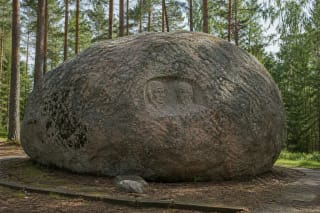
Puntukas Stone
One of Lithuania's largest boulders, carved with the Darius and Girėnas bas-relief.
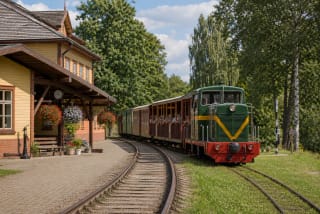
Anykščiai Narrow-Gauge Railway
Living late nineteenth-century narrow-gauge railway heritage with a seasonal tourist train.
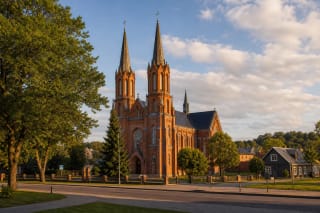
Anykščiai Church of St. Matthew
A twin-towered Neo-Gothic church from 1909, with a viewing platform in one tower.
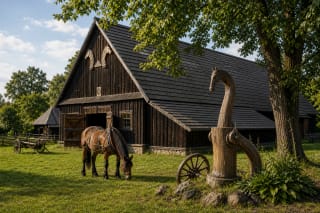
Horse Museum
A Niūronys museum about the horse's place in Lithuanian life and farming, near Anykščiai.