- Place
- Raseiniai District Municipality
- Region
- Raseiniai District
- Type
- forest history educational trail
- Address
- Daugėliškiai Forest, Daugėliškiai Village, Ariogala Eldership, Raseiniai District
- Coordinates
- 55.22957, 23.56108
- Visit duration
- 2-3 hours
- Best time
- a bright, dry part of the year, when the forest path and its signs are easier to follow
Educational Partisan War Trail in Daugėliškiai Forest, Daugėliškiai Forest Lithuanian Partisans' Headquarters
The trail's identity and forest route
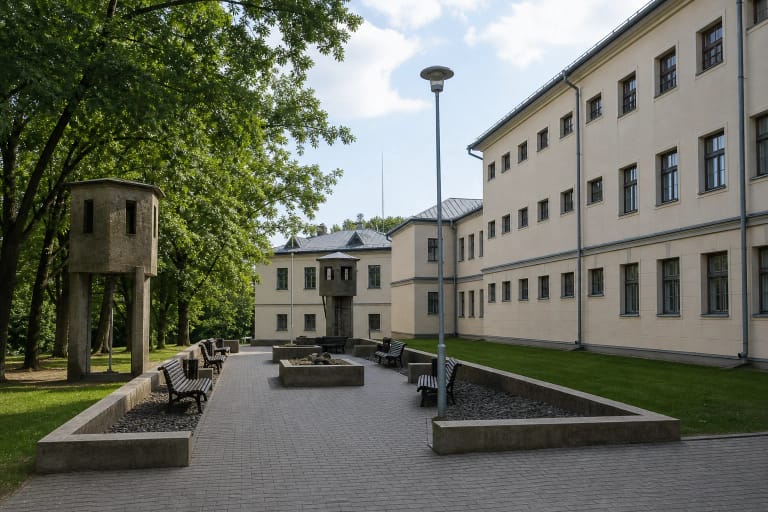
Daugėliškiai Forest Bunker Educational Trail leads to a forest site in Ariogala Eldership, Raseiniai District, connected with the Union of Lithuanian Freedom Fighters headquarters bunker. It is also called Educational Partisan War Trail in Daugėliškiai Forest; both names refer to the same route.
The educational route is more than 4 km long and visits several historical points. The coordinate marks a forest access site rather than the centre of the entire route, so follow signs and actual ground conditions after arrival.
The Prisikėlimo District headquarters story
The bunker was established in spring 1948 in Daugėliškiai Forest and became a headquarters of the Prisikėlimo District. On 22 July 1950, an MGB operation liquidated the bunker; five partisans were killed and one was captured alive. The history deserves a respectful account without romanticising armed conflict.
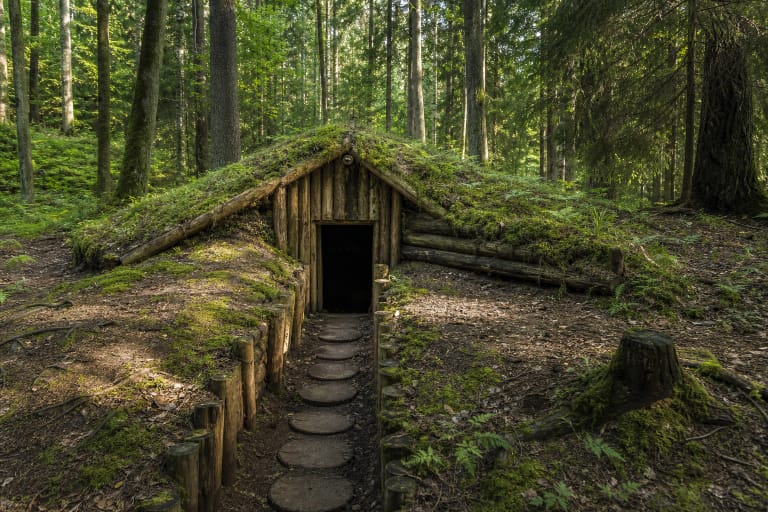
The 2010 archaeological investigation found wooden bunker structures and a ventilation opening; the publication gives the bunker as about 2 × 3 m and 1.5 m high. Cultural-heritage documents record the site as the Lithuanian Partisans' Headquarters, register code 33152. That context shows that the trail reaches a documented resistance-heritage site rather than an arbitrary forest cellar.
Reconstruction and memorial markers
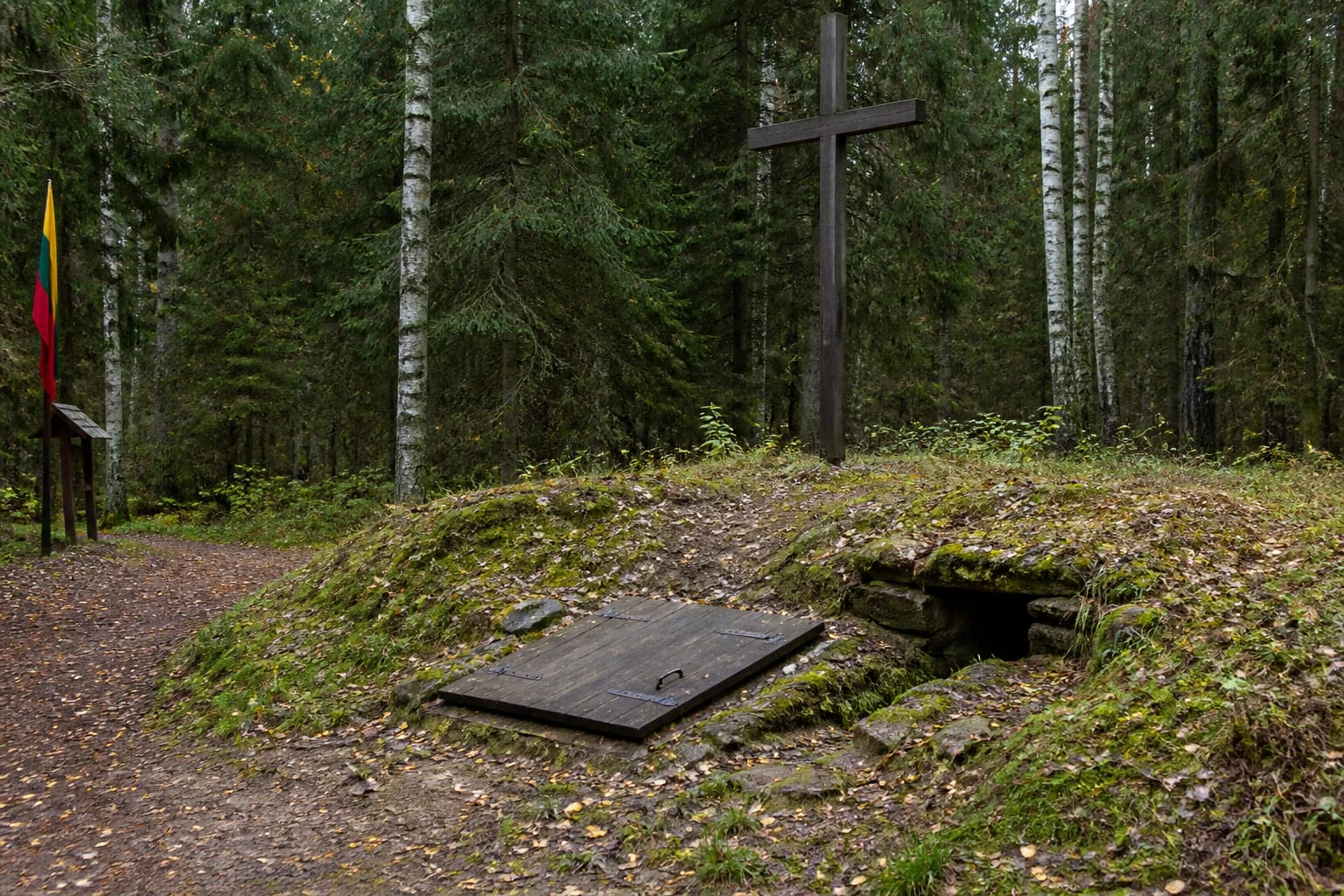
The bunker site was reconstructed and arranged in 2010 so visitors could understand the scale of the underground shelter and its relationship to the forest terrain. The Centre describes the restored headquarters as the educational trail's core, but a reconstruction should not be mistaken for a surviving furnished living interior.
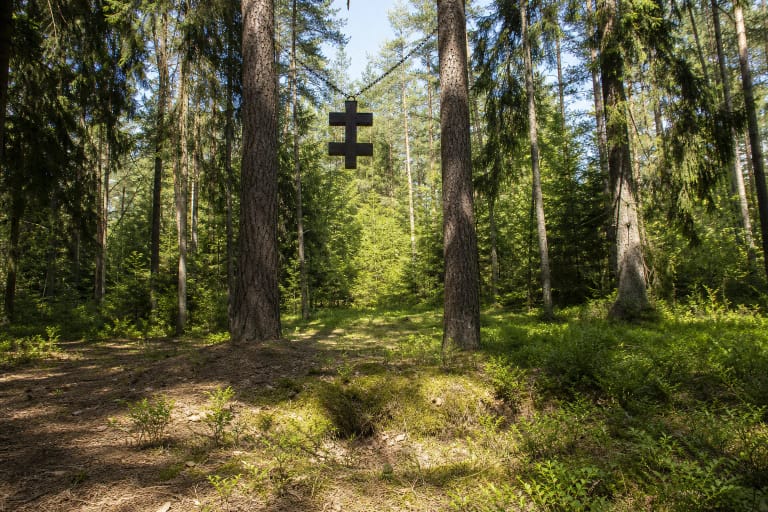
A memorial sign was erected at the site in 2000 for partisans killed on 22 July 1950. One was Leonardas Vilhelmas Grigonis-Užpalis, a signatory of the 16 February 1949 Declaration of the Council of the Union of Lithuanian Freedom Fighters. Read the information boards and honour the people named there.
Documents, a discovery, and an educational route
In 2014, young members of the Ariogala gymnasium riflemen's organisation found a metal capsule containing headquarters documents while maintaining the bunker surroundings. The documents were transferred for conservation, and the discovery added new detail to the story of resistance traces preserved in the forest.
In 2015, Ariogala gymnasium implemented an educational partisan-war route. The route of more than 4 km visits the bunker, the document-capsule discovery point, liaison officer Albinas Kęstutis Bersėnas' homestead, and the death site of Antanas Jaugelis' unit, so plan it as a connected story rather than a single photo stop.
Practical walking and respect for the site
The forest track may not be equally clear in every season, and wet weather can make the ground slippery and muddy. Wear firm footwear, walk in daylight, follow existing arrows, and do not disturb the bunker, memorial, earthworks, or forest floor.
The coordinate is an access point, so judge route time and ground conditions by weather and local conditions. Bring water and firm footwear for the route of more than 4 km.