- Place
- Raseiniai District Municipality
- Region
- Raseiniai District
- Type
- spring and arranged natural site
- Address
- By the Žemaičiai Highway, Pataklėliai, Ariogala eldership, Raseiniai District
- Coordinates
- 55.28059, 23.44372
- Visit duration
- 20-40 minutes for the spring and its setting
- Best time
- in daylight, when stopping by the road and viewing the valley surroundings is safest
Mary's Tears Spring
A small site by the Žemaičiai Highway
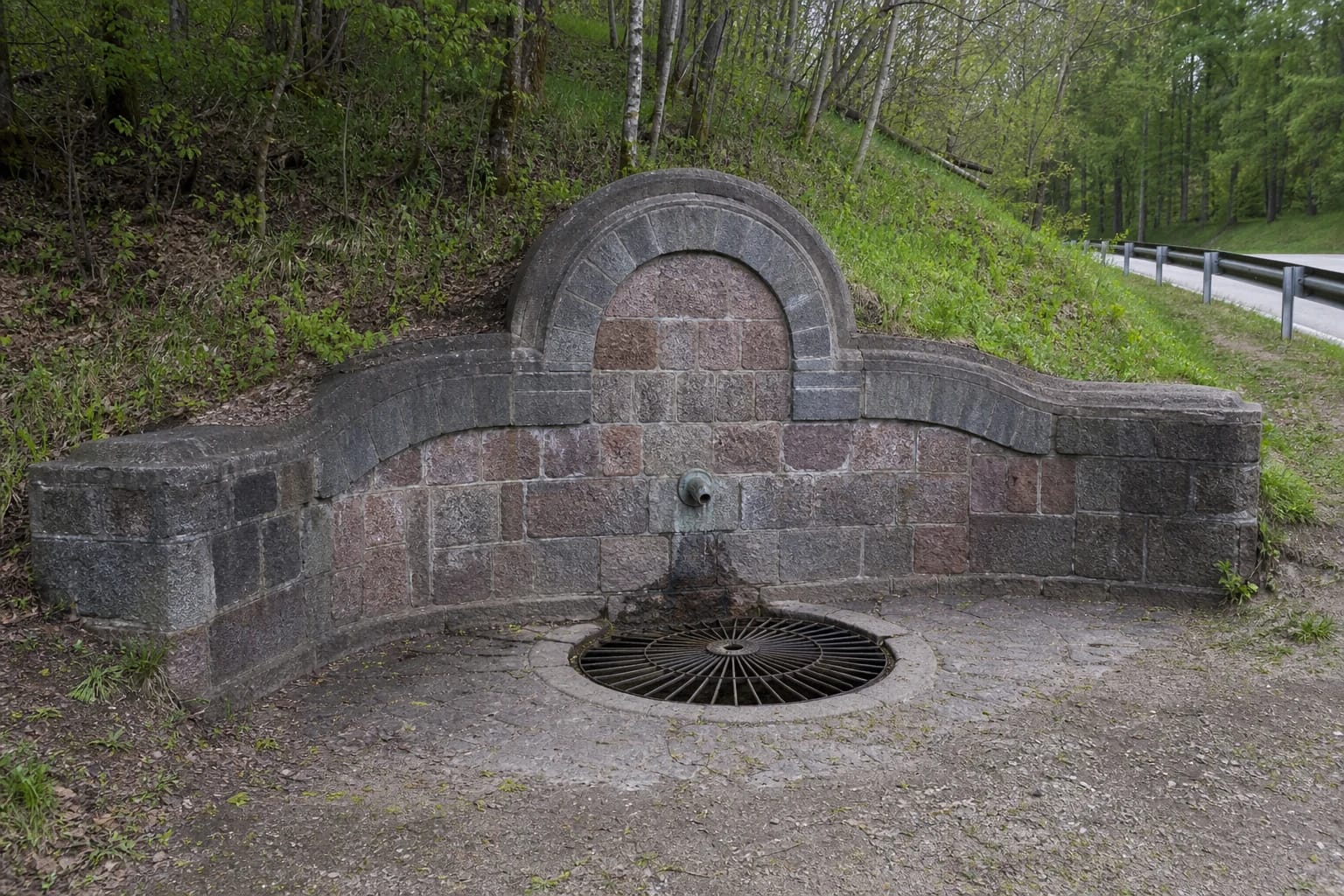
Ariogala Spring is at Pataklėliai by the Žemaičiai Highway, on a wooded slope of the Dubysa Valley. It is a small stone-arranged spring reached from the road side, not a large recreation area or the beginning of a long independent trail.
Its value comes in layers: natural water, the history of highway construction, local devotional memory, and the Dubysa Valley landscape meet here. A short stop becomes more meaningful when you look beyond the water to the details of the setting.
The 1936 arrangement
Saugoma.lt says the spring's surroundings were arranged in 1936 while the Žemaičiai Highway was being built. The stone wall, steps, and place to sit are not random modern decoration but part of the road's history, showing how small natural features were incorporated into a travelling landscape.
The nearby Gediminaičiai Pillars were cast in 1937. They mark the site and provide a clear historical sign, but they should not be confused with an ancient archaeological monument. They are a twentieth-century landscape feature connected with the road and the improvement of the spring setting.
Water and local tradition
Local stories call Ariogala Spring Marijos ašarų šaltinis, or Mary's Tears Spring. The name reveals a devotional relationship with water and landscape, but it is best presented as local tradition rather than as a documented event or an official religious title.
The water is sometimes said to have healing qualities. That belief can be mentioned as folklore, but safety and drinkability are not proved by a name or clear appearance. If you hope to taste it, first look for current quality information and confirm that the water is intended for drinking.
The Dubysa Valley setting
The spring is part of the Dubysa Regional Park landscape, so it is best understood as a small point in the valley rather than an isolated fountain. The wooded slope, road embankment, guardrail, and greenery beyond it show how a natural site has been placed within travel infrastructure.
Combine it with Ariogala Dubysa Valley, the town church, or other Raseiniai District sites. Do not climb on the stone wall, disturb the spring channel, or leave litter. Take special care by the road: the spring is beside a traffic route, not in a secluded pedestrian square.
Planning a safe short stop
Ariogala Spring has no ticket office or ordinary museum opening hours. Visit in daylight, when it is safe to pull in and walk to the stone spring, and park only in a place that is safe and permitted by traffic rules. The map pin indicates the spring itself, not a dedicated car park.
The steps and edge of the spring can be slippery after rain, and winter conditions make water and road surfaces less predictable. Wear shoes with good grip, keep children away from the guardrail, and do not treat a roadside spring as a long picnic stop. A little care keeps the visit pleasant and respectful.