- Place
- Raseiniai, Raseiniai District Municipality
- Region
- Raseiniai District
- Type
- main regional history museum in a former arrest-house and prison complex
- Address
- 3 and 5 Muziejaus Street, Raseiniai
- Coordinates
- 55.38553, 23.13327
- Visit duration
- 1-2 hours; longer with a pre-booked workshop or temporary exhibition
- Best time
- the first half of a Tuesday-Friday opening day, after checking current exhibitions and timetable exceptions
Raseinių krašto istorijos muziejus, Raseiniai Museum, Raseiniai arrest house, Raseiniai Prison No. 9
This is the main museum in Raseiniai, while four branches occupy separate locations
The complex at 3 and 5 Muziejaus Street is the principal venue of Raseiniai Regional History Museum. It contains the regional-history and former-prison displays, hosts temporary exhibitions and workshops, and stores the museum collections. The official visitor page gives both street numbers, while the main contact line and the Cultural Heritage Register associate the complex with number 3. The map point at 55.385531, 23.133268 marks the museum site, not a particular doorway, parking bay, or surveyed step-free entrance.
The museum's current branch menu lists four separate places: the Simonas Stanevičius Homestead Museum, Betygala Museum, Pasandravys Historical Reserve and Maironis Homeland, and the Šiluva Pilgrim Information Centre Museum. An older paragraph on the About page still says there are three branches, even though the menu on that same page now shows four. For practical planning, use the newer menu and check each branch independently.
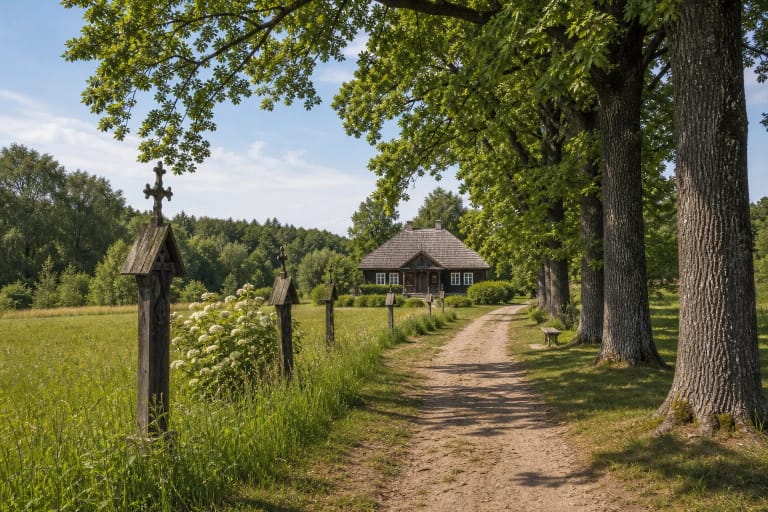
Admission, address, and hours for the main museum do not automatically apply to Pasandravys, Betygala, Šiluva, or the Stanevičius homestead. Pasandravys is especially easy to mistake for another room in Raseiniai, but the Maironis birthplace and childhood landscape are a rural destination requiring a separate journey.
No single construction date accounts for the whole complex
A detailed history published by the museum in 2025 says the first Raseiniai arrest-house building opened on 7 May 1930 with capacity for up to 70 prisoners. It states that an extension was designed in 1935 but, because funding took time, the new block was completed only in 1939. Civil engineer Kazys Kriščiukaitis designed the addition, and the town borrowed 40,000 litas from the State Savings Banks for the work. This account is more precise than the museum's short chronology, which places the 1935 expansion work and a new 60-cell block together without giving the later completion date.
The Cultural Heritage Register supplies an older chronology. Its record traces a prison in Raseiniai to the 1870s and describes the listed main prison building as late nineteenth-century fabric extended in 1935. The public summaries do not reconcile whether these dates refer to an earlier institution, surviving older masonry, the design stage, or a later public opening. The responsible description is therefore a complex formed in several stages, with each precise date attributed to the source that gives it.
The architecture makes those stages legible. The museum's detailed account distinguishes an earlier two-storey block with restrained Historicist ornament, imitation rustication at ground level, and a cornice from the taller, plainer addition. Small window openings, types of surviving cell doors and grilles, and the arrangement of the blocks are protected KVR features. The registered complex is not one prison volume alone: it also includes an administrative-service building and a cellar.
From an interwar arrest house to prisons operated under two occupations
From 1930 to 1940 this was an arrest house of independent Lithuania, so the entire period through 1952 cannot accurately be called the life of a Soviet prison. The museum says that from 1932 young prisoners from across Lithuania, many described as holding communist views, were concentrated here and that crowding drove the expansion. These statements are presented as the museum's institutional chronology, not as an independently reconstructed census of every prisoner's case.
In 1940 the arrest house was incorporated into the Soviet prison system as Prison No. 9. Nazi occupation from 1941 to 1944 interrupted the Soviet institution's administrative continuity. The museum's short account says the prison was used under both Soviet and Nazi occupations, but its public timeline does not document every change of authority or prisoner population in detail. This page therefore does not apply one regime label across all the occupation years.
The museum's fiftieth-anniversary narrative says the complex was damaged during the Second World War, rapidly repaired by Soviet authorities, and back in prison use by the end of 1945. Official museum texts use both NKVD-MVD and NKVD-MGB Prison No. 9 for the relevant Soviet phases. The prison closed in 1952; a young-offender re-education institution and then a vocational-technical school followed.
The museum began in 1975, but its first five full exhibitions opened in 1992
The museum institution dates its foundation to 1975, although it initially received only several rooms still associated with the vocational school. Founding year, possession of the whole renovated complex, and opening of today's exhibition route are therefore different milestones. Reconstruction in 1985-1987 made the central building the permanent museum base, and the first five exhibitions on regional history, folk art, and traditional crafts opened in May 1992.
According to the museum's anniversary history, the courtyard, administrative-service building, and main building were reconstructed between 2007 and 2014. In 2025 the museum reported holdings of more than 55,000 museum objects. That is the collection of the institution, not the number of objects simultaneously displayed, and the visitor value lies less in the total than in the range of regional themes interpreted within this particular historic site.
The exhibition index updated in 2026 places arrest-house history beside traditional culture and a play space, sacred art, Valeras Kuzas's clay encyclopaedia, dates from the Sąjūdis movement in Raseiniai, regional volunteers and Defenders of Freedom, the 1863 uprising, biologist Pranciškus Baltrus Šivickis, and graphic artist Jonas Kuzminskis. The index combines physical rooms, thematic presentations, and virtual shows, so every title should not be read as a separate permanent gallery.
The prison route, town history, and workshops reward different kinds of attention
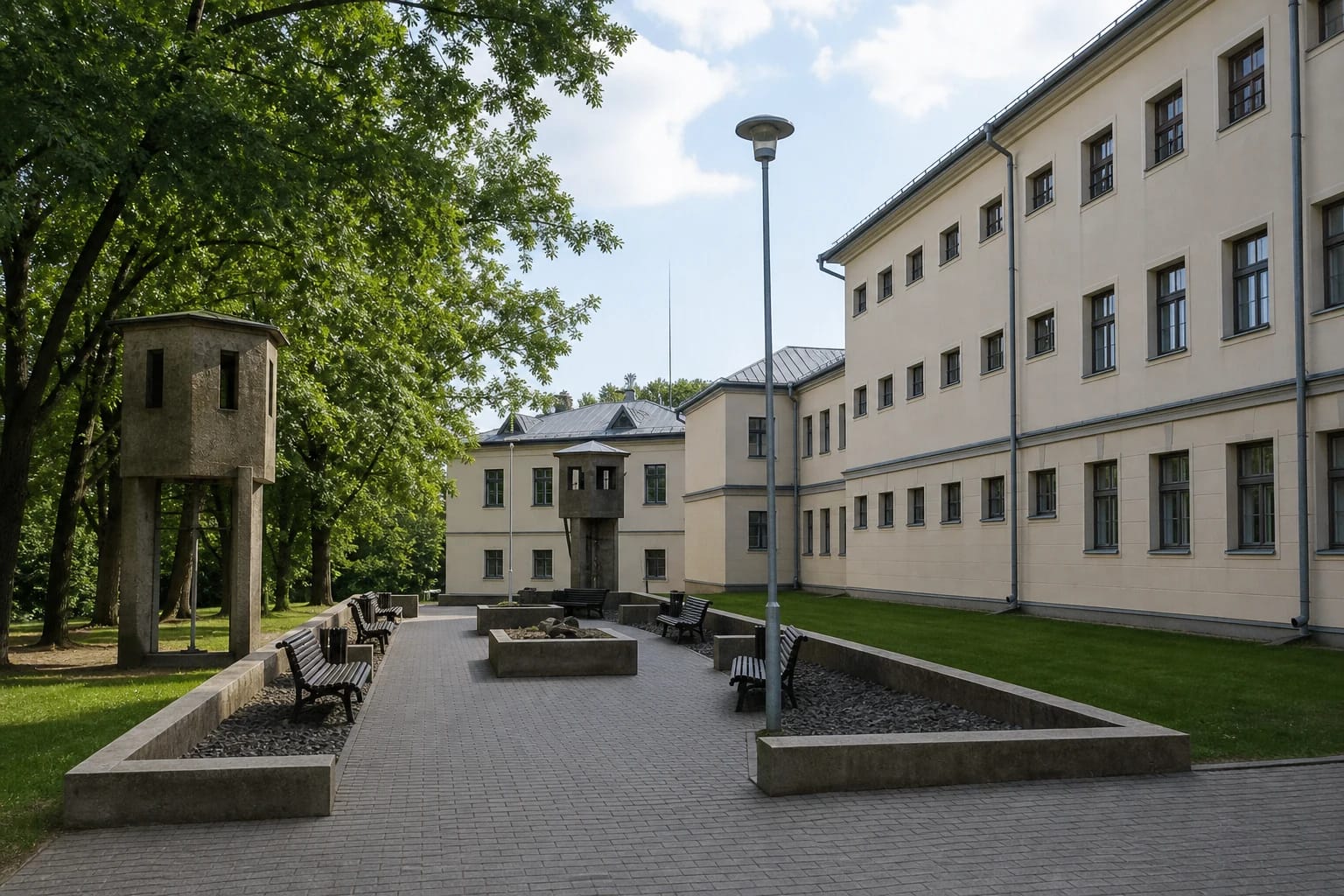
The former-prison narrative combines the scale of a surviving corridor and cells with a sound installation, reconstructed yard, and guard towers. A 2017 project added virtual-reality material, and the official Raseiniai tourism page still describes a journey into the prison period or a partisan bunker. Equipment and session arrangements can change, so confirm that the VR element is operating if it is the reason for a special journey.
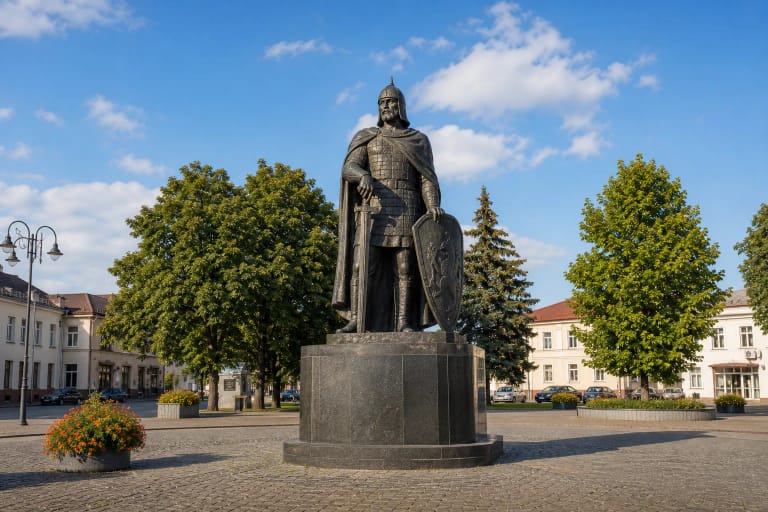
In the town-history display, look beyond a sequence of dates. A 2022 project renewed the long-term Raseiniai Region in the Lithuania of February 16 exhibition and created the Stories Window projection, bringing together images and animated accounts of 15 destroyed or transformed town buildings. They include the Žemaitis monument, Magdė's Well, the bank, post office, gymnasium, and barracks; the project also drew on Jonas Milius's 1929 documentary film of Raseiniai.
Workshops require separate booking and are not guaranteed parts of ordinary admission. The current programme includes prison history, archaeology, heraldry, traditional crafts, and regional heritage. Archaeology sessions use a district map, models of the Ročiškė and Darbutai hillforts, and replica finds. A group should confirm the age range, numbers, duration, fee, and exact building for its chosen activity in advance.
Opening hours, admission, and physical access need checking before arrival
On 18 July 2026, the official visitor page listed opening from 9 am to 6 pm Tuesday-Friday and 11 am to 4 pm Saturday, with no visitors admitted on Monday. It also says the museum opens on the final Sunday of every month but gives no hours. The official Raseiniai tourism page lists 10 am-4 pm for that Sunday. Because the two sources provide different levels of detail and holiday exceptions may apply, confirm a Sunday visit during the same week.
On the same review date, official prices were EUR 1 for a child, pupil, or student, EUR 2 for an adult, and EUR 5 for a museum tour. The public table does not explain every group and service condition, so it is unsafe simply to multiply those figures by the number of participants. Confirm workshops, guiding, concessions, and branch admission separately.
No comprehensive public physical-access audit covering entrance thresholds, a lift, door widths, and an adapted toilet was found during research. A former prison complex has several blocks and storeys, so call +370 663 51100 about a wheelchair, walking aid, hearing, sight, or another individual need. Allow 1-2 hours for the main displays. The Žemaitis monument is the easiest same-day addition in central Raseiniai; branches and the Dubysa landscape are better treated as separate stages.