- Place
- Vilnius City Municipality
- Region
- Vilnius
- Type
- mythology sculpture park
- Address
- Balsiai, Vilnius
- Coordinates
- 54.78400, 25.35300
- Visit duration
- 45 minutes-1.5 hours
- Best time
- in daylight, when the sculptures and the park’s relief are easy to read
Balsiai Mythology Park: a community-created place
Balsiai Mythology Park began in 2007 in the Balsiai neighbourhood of Vilnius, between Balsių-Žalčių and Balsių-Žynių streets. The idea was shaped by the local community, Rimantas Micka, sculptor Rytas Jonas Belevičius, and landscape architect Eduardas Lozoraitis.
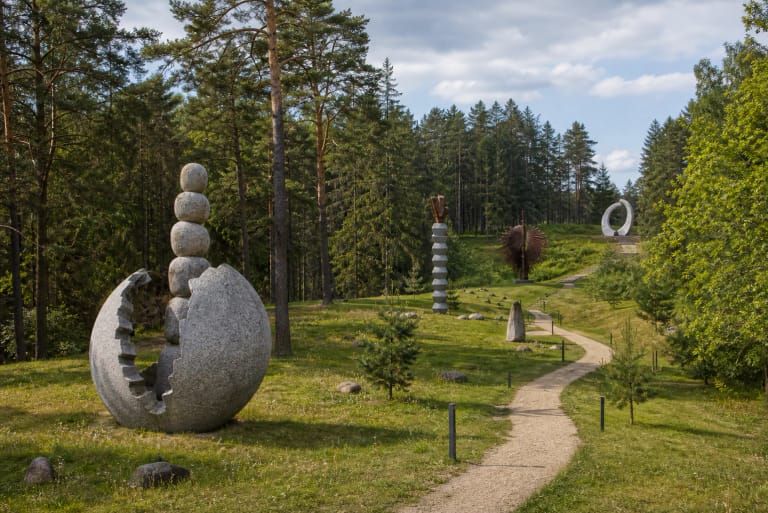
The park covers about two hectares and is not an enclosed exhibition but a living landscape of meadow, trees, paths, and sculpture. Visitors therefore move by choosing their own pace and route, gradually reading the space rather than following a single building-to-building sequence.
Sculpture and Baltic mythology
Works by Lithuanian and international sculptors are connected with Baltic mythology, local street names, and the surrounding nature. Visitors can see Alkas, Žilvinas, Rage, and Žynys, but the character of the park comes from the way the works sit among trees and meadow as much as from their individual titles.
An international granite symposium took place here in 2008, and the park was consecrated through an old Baltic rite led by Jonas Trinkūnas. This context presents the site as contemporary art engaging with mythological memory, rather than as a reconstructed ancient sanctuary.
Paths, a hill, and the park’s relief
The walking structure combines paths, plantings, small open areas, and a hill from which visitors can look across the park. Some routes use concrete pedestrian paving with granite slabs and symbols, so a slower pace rewards visitors who pay attention to textures underfoot as well as to the larger sculptures.
The hill is not a tall observation tower with a distant city panorama, but it gives the park a clear centre of relief. Families may enjoy the play areas, while other visitors can choose a short circuit or a longer wander among the works and woodland edges.
A park that continues to grow
The park continues to evolve, and creative gatherings are also held here. That matters when planning a visit: the display and landscape can gradually change, so an older photograph may not show the current arrangement of paths or works exactly.
The site is also an example of Vilnius community life. Local initiative, contemporary sculpture, and respectful interest in Baltic cultural imagery meet here, yet visitors do not need specialist mythology knowledge to enjoy the woodland calm, changing scale, and open-air setting.
How to visit Balsiai Mythology Park
Allow 45 minutes to 1.5 hours, depending on how many sculptures you want to study and whether you add nearby Balsiai paths. Daylight reveals wood and granite textures best, while rain can leave grass wet and sections of the woodland path slippery.
This is a public outdoor space, so do not plan on a ticket desk or a permanently available guide. Do not climb on sculptures, move stones, leave litter, or disturb the residential community nearby, particularly when arriving with a group or children.