- Place
- Kaunas City Municipality
- Region
- Kaunas
- Type
- towerless rectangular Neo-Renaissance masonry church with a high triangular pediment, three naves and Neo-Gothic altars
- Address
- 7 Vaidoto Street, 45388 Kaunas
- Coordinates
- 54.86806, 23.97365
- Visit duration
- 30-60 minutes; longer if you combine the visit with a Panemunė route
- Best time
- in daylight or before/after the diocesan Mass times, after checking the latest schedule
Kaunas Church of the Holy Name of the Blessed Virgin Mary (Aukštoji Panemunė), Kaunas (Panemunė) Church of the Holy Name of the Blessed Virgin Mary, Aukštoji Panemunė Roman Catholic Church of the Holy Name of the Blessed Virgin Mary
Aukštoji Panemunė church beside the Sėmena mouth
Aukštoji Panemunė Church of the Holy Name of the Blessed Virgin Mary stands at 7 Vaidoto Street, 45388 Kaunas, beside the Sėmena mouth. Number 7 belongs to the church, while 9 Vaidoto Street is the parish office, rectory and parish-house address.
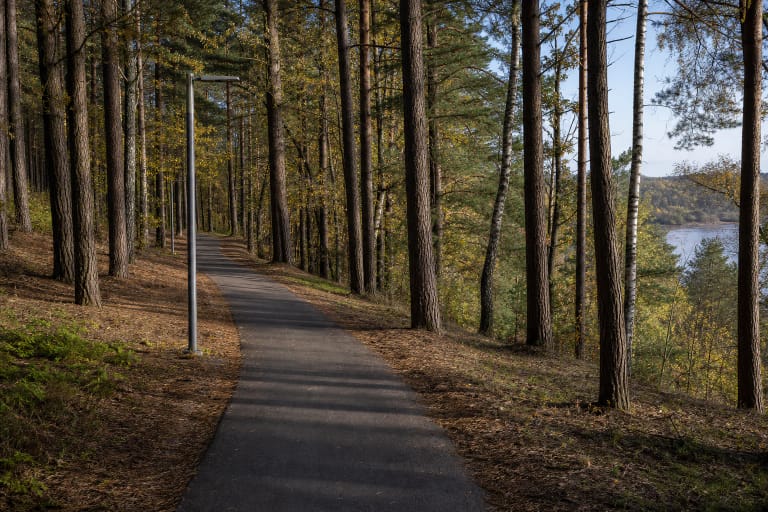
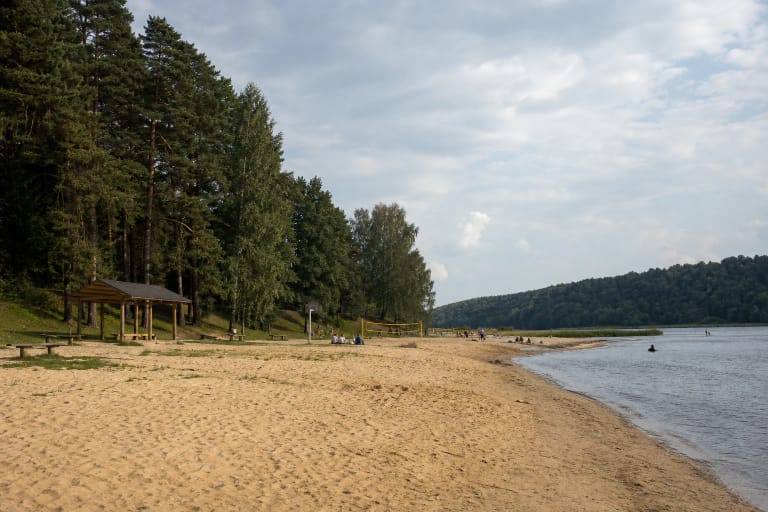
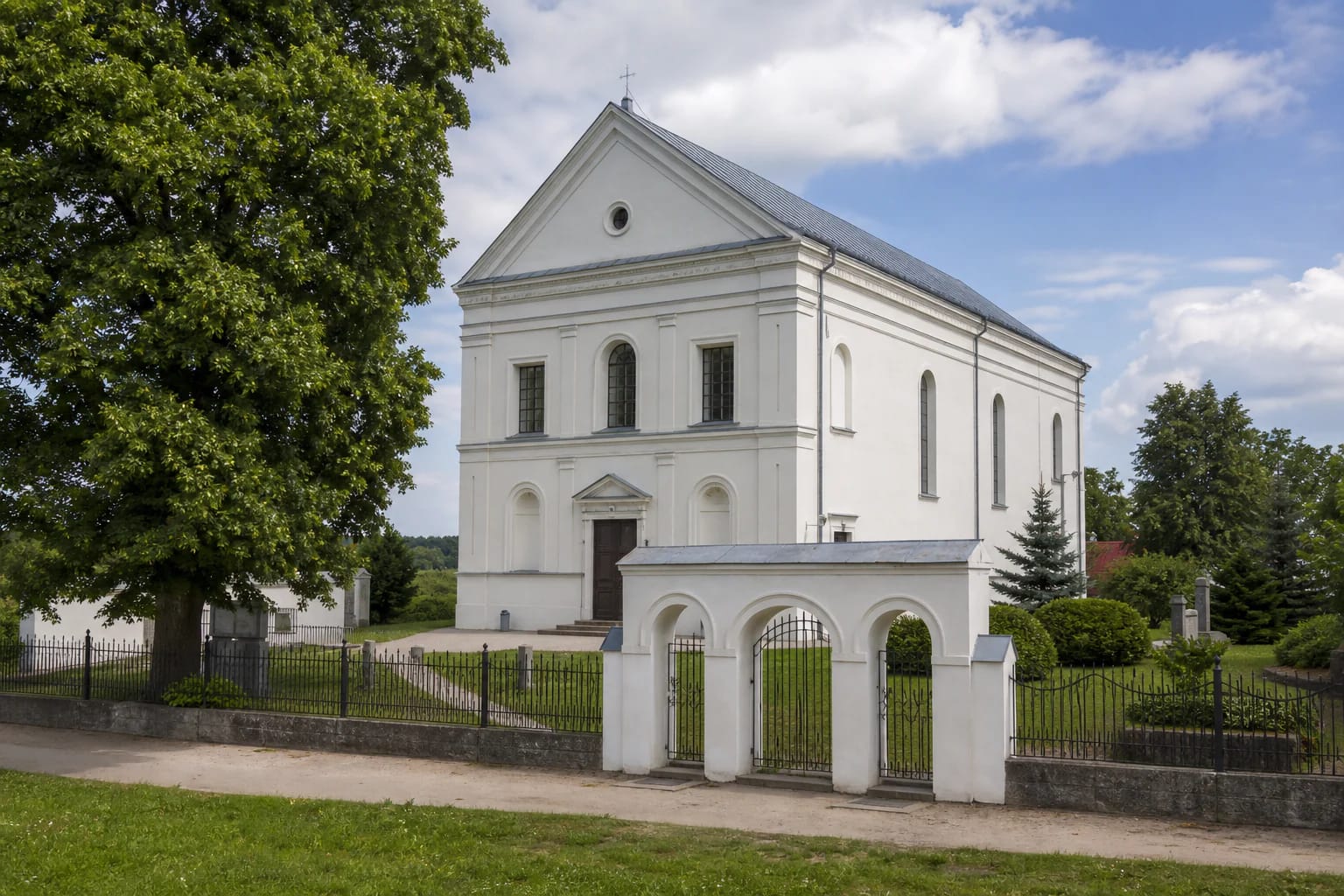
This is a low, pale-plastered towerless church with a high triangular pediment. Its masonry gate with three arched openings and metal fence distinguish it from the more open spaces of Panemunė Forest, beach and castle.
The coordinate 54.8680557, 23.9736533 marks the church site. For navigation, search for the church rather than the parish office at 9 Vaidoto Street.
The present masonry church grew from earlier Panemunė sanctuaries
In 1763 Simonas Sirutis arranged construction of a masonry Church of St Simon and Jude. When poor foundations caused it to deteriorate, a wooden Church of St Charles was built in 1780. These belong to earlier Panemunė stages, not to the current facade.
The present masonry church was built in 1859-1860 through the efforts of priest Rokas Bučionis, also recorded as Bučinevskis. In 1882, priest Jurgis Staugaitis arranged an enlargement and a changed pediment, making today's appearance the result of several stages.
Panemunė is part of Kaunas on the left bank of the Nemunas. The church remains an active parish, so visiting it is not connected with an archive exhibition timetable.
A Neo-Renaissance facade without a tower
The church is Neo-Renaissance, rectangular and towerless, with a high triangular pediment. A horizontal cornice-like sandrik crowns the main doors, a large semicircular window sits above it, and the side facades carry three tall arched windows.
Inside, three naves are separated by columns and an arch separates the presbytery. All three altars are described as Neo-Gothic. The result is a restrained combination of a Neo-Renaissance exterior and Neo-Gothic interior accents, not a towered cathedral.
The churchyard gate has three arched openings, with an arched canopy over the middle one. A metal fence with masonry posts completes the ensemble and makes the churchyard part of the architecture rather than a random backdrop.
The cemetery and family garden hold separate memories
Panemunė Cemetery, established in 1917, contains the burials of President Aleksandras Stulginskis, aviator Jurgis Dobkevičius, book carrier Adomas Grinevičius and others. The cemetery is a separate place to visit, with its own rules.
In 2003 a small family garden began in the grassy area beside the churchyard: small stones carry names, often left by couples married at the church. This community memorial practice adds context but is not a ticketed recreation space.
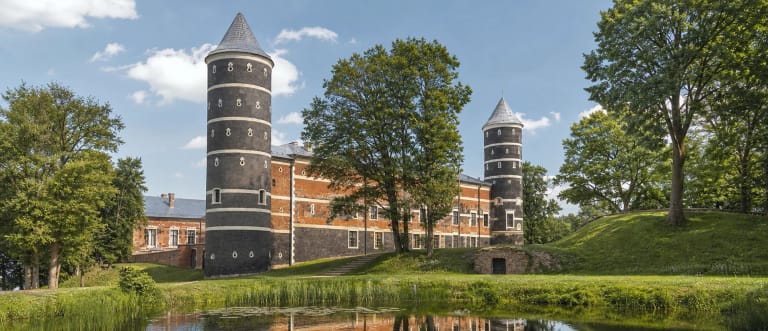
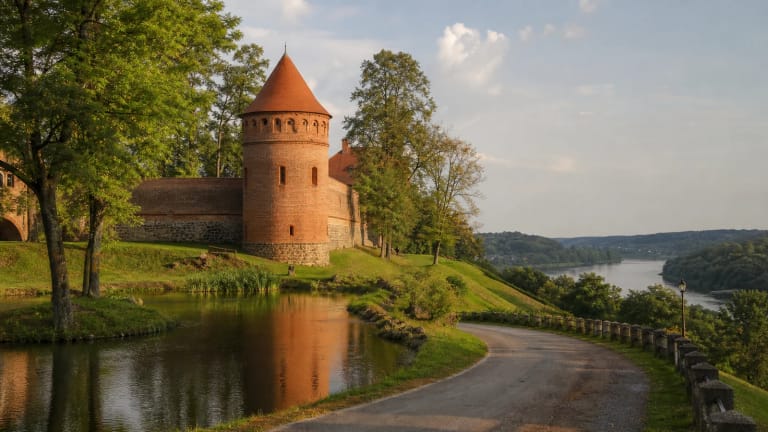
Panemunė Forest, beach, castle, castles route and nearby memorial sites have different purposes. They can form a day itinerary, but remain separate places on the map and as itinerary stops.
Visiting according to parish life
Mass is held at 08:00, 10:00 and 12:00 on Sundays, at 09:00 on weekdays, at 09:00 and 18:00 on Fridays, and at 09:00, 10:00 and 18:00 on Saturdays. Check this schedule before travelling, as parish timetables can change.
There is no single tourist timetable, ticket, or tour-booking system, and parking and accessibility depend on the circumstances. Enter only when access is permitted, avoid interrupting worship and ask the parish before photographing or bringing a large group.
Allow 30-60 minutes for the exterior, gate, churchyard and history. If you want to enter, plan around worship and confirm access with the parish; keep the visit quiet and ask before taking photographs.