- Place
- Jurbarkas and Šakiai District Municipalities
- Region
- Panemunių Regional Park
- Type
- Nemunas valley castles and manors travel route
- Coordinates
- 55.09000, 22.95600
Panemunė Castle Road, Panemunė Road
A Nemunas Valley Line, Not One Castle
The Panemunė Castles Route is not a visit to a single object. It is a Nemunas valley journey in which residential castles, manor parks, hillforts, river terraces, and towns form a continuous cultural landscape. Its axis is Panemunių Regional Park: Saugoma.lt states that the park was established in 1992, covers 10,162 ha, and protects the lower Nemunas valley landscape with slope-erosion complexes and remains of thirteenth- to fifteenth-century defensive sites from the wars with the Teutonic Order.
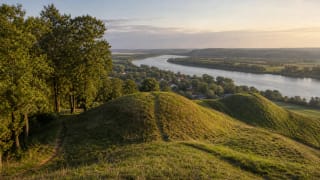
Saugoma.lt presents the park as a territory linking natural ecosystems and cultural-heritage complexes, including Panemunė Castle, Raudonė Castle, Belvederis Manor, the Veliuona Hillfort Complex, Seredžius Hillfort, and Gelgaudiškis Manor. The route is therefore best planned slowly: do not only drive from castle to castle, but stop where the river explains why these places appeared here.
Panemunė Castle: Seventeenth-Century Renaissance Residence
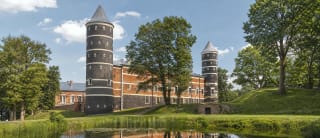
Panemunė Castle is often treated as the main object of the route. VLE states that it was built around 1604-1610 by the Hungarian-born manor owner Jonušas Eperješas, and that the probable architect was Petras Nonhartas; the castle was intended less for defence than for representation. Around the castle, VLE mentions a park of about 16 ha with five ponds and four mills, making Panemunė the clearest place to see the relationship between Renaissance residence and water landscape.
The castle has other names and historical turns worth knowing. VLE notes that it is also called Gelgaudai Castle, because Antanas Gelgaudas of Samogitia bought it in 1759, and Vytėnai Castle, because the surroundings carried a tradition of Vytenis Hill. After the 1830-1831 uprising it was confiscated, later neglected, and since 1982 has been managed by the Vilnius Academy of Arts. After the 2012-2015 reconstruction it contains a museum, hotel, and event spaces, while a 15 ha landscape park has been managed anew since 2020.
Raudonė Castle and Park
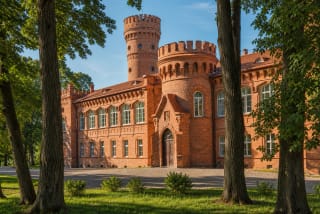
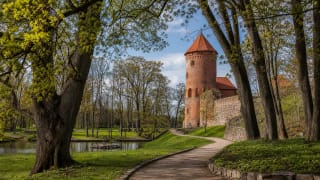
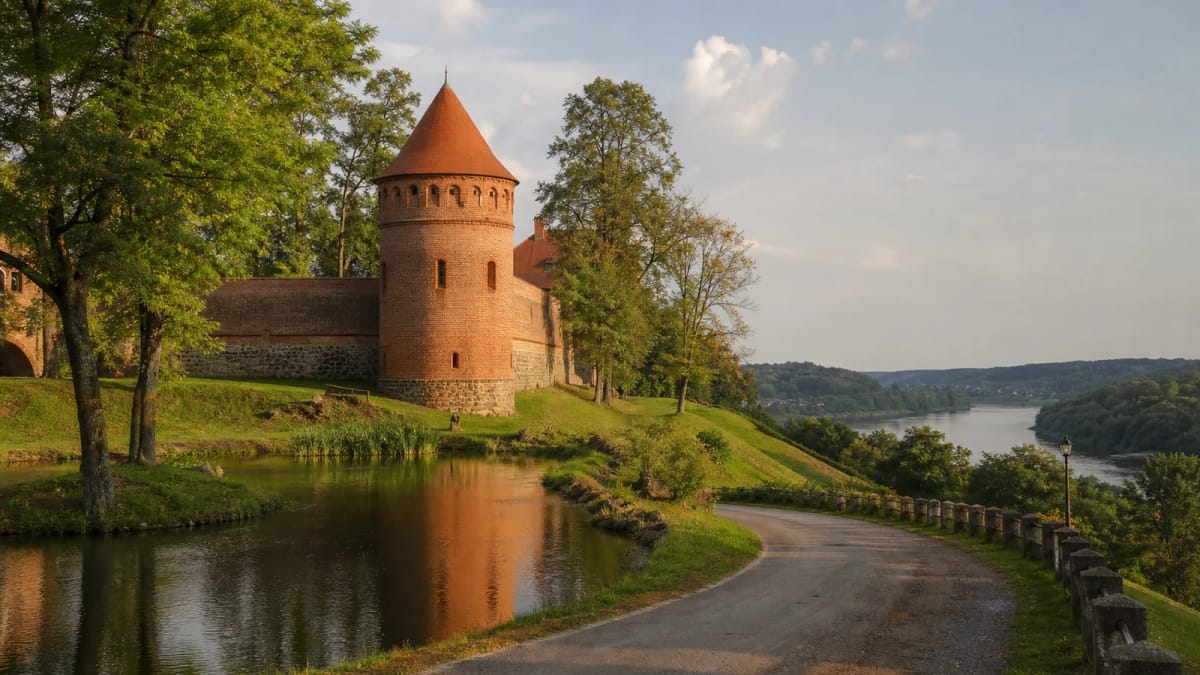
Raudonė is the route's second strong accent. VLE states that the residential castle was built in the late sixteenth century by Krišpinas Kiršenšteinas after he received Raudonė Manor from Grand Duke Sigismund Augustus. The castle has three two-storey wings and six round towers. The tower in the southern wing reaches 33.5 m and is visible within a 10-15 km radius; it contains a viewing platform over the Nemunas valley. The Nazis blew up the tower in 1944, and it was rebuilt in 1968.
Raudonė should be visited with its park. VLE says the castle is surrounded by a park laid out in the sixteenth to eighteenth centuries and that the ensemble had a 25 ha mixed-plan green space with a mill, alleys, ponds, and impressive oaks. The Raudonė Nature Trail reaches protected trees, including Raudonė Lime, Gediminaitis Oak, and Black Poplar, as well as named places such as Šauliai Square and Beždžionkalnis, adding natural and narrative layers to the route.
Belvederis, Veliuona, and Seredžius
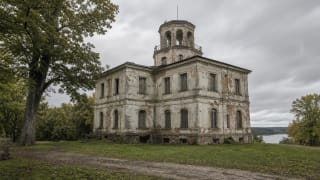
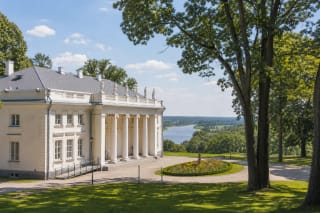
The third layer of the route is formed by manors and hillforts. VLE presents Belvederis Manor as a mid-nineteenth-century Romantic estate with a Tuscan-villa type palace, granary, chapel-mausoleum, and 7 ha park; K. Burba bought it from the Tiškevičiai around 1820 and built the palace with a viewing turret around 1830. Belvederis adds the idea of a manor and viewpoint, fitting the name itself: belvedere means a beautiful view in Italian.
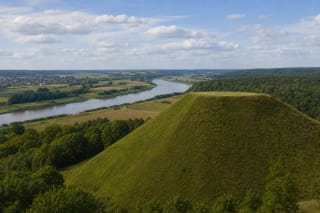
The hillforts of Veliuona and Seredžius recall an earlier defensive Nemunas layer, before the residential castles. VLE states that Veliuona was called Junigeda until 1315 and was one of the most important Lithuanian defence posts along the Nemunas from the thirteenth to fifteenth centuries, repeatedly burned and rebuilt during wars with the Teutonic Order. This context lets the route be read as a continuous history of Nemunas defence and representation, not just as a set of attractive buildings.
Why the Route Follows the Nemunas
The Nemunas is not a background here; it is the route's axis. The river valley determined the location of settlements, castles, manors, roads, and viewpoints, while the high right bank offered both defensive advantage and representative scenery. That is why it is important not only to photograph facades but also to watch slopes, terraces, ponds, park alleys, and river bends: they explain the route's logic.
VLE stresses the residential, not only defensive, character of Panemunė and Raudonė castles, while Saugoma.lt's description of Panemunių Regional Park sets a broader landscape context with thirteenth- to fifteenth-century defensive remains. Together they explain why one day on the route links architecture, nature, and military history.
How to Plan a Panemunė Road Day
With half a day, choose Panemunė Castle, Raudonė, and one additional stop: Belvederis or Veliuona. With a full day, add Seredžius, Jurbarkas, Gelgaudiškis, or sites on the opposite bank, but leave time for parks and viewpoints. Castle interiors, towers, museums, and restaurants can change opening hours, so check each official page before travelling; outdoor parks and viewpoints often become the most reliable layer when interiors are closed.
On the Panemunė road, notice not only the major objects but the spaces between them: alleys, old trees, ponds, mill sites, river slopes, and town squares. Morning or evening is best for photography because side light works well on the castles and valley. With children, combine one museum with one park or hillfort so the day is not only a sequence of buildings.