- Place
- Kaunas City Municipality
- Region
- Kaunas
- Type
- late nineteenth-century Kaunas Fortress fort and protected fortification landscape
- Address
- 11 Rūko Street, Kaunas
- Coordinates
- 54.86122, 24.00100
- Visit duration
- 1.5-2 hours with a guide; less only for permitted above-ground parts of the fort
- Best time
- a dry day in daylight or a pre-booked official tour
Kaunas Fortress Fifth Fort, Fifth Fort, V Fort
Which Site Is Kaunas Fifth Fort?
This page covers the Fifth Fort of Kaunas Fortress at 11 Rūko Street, near Zuikinė and Vaišvydava. It is not a name for the whole Kaunas Fortress or for another numbered structure. The Fifth Fort is not the First Fort at Kazliskiai, the Fourth Fort at Rokai, the Sixth Fort Military Technology Exhibition, the Seventh Fort museum, or the Ninth Fort memorial. It has its own Cultural Heritage Register code, 26353, and the surrounding 20.8-hectare Fifth Fort Architectural Reserve lies within Kaunas Reservoir Regional Park.
The coordinates 54.8612225, 24.0010017 mark the exact Google Maps listing within the fort site, so the pin is classified as a site point rather than a particular doorway. Official tours usually meet by the barrier on the Rūko Street side; that separate meeting point is approximately 54.863020, 24.000200. On 15 July 2026, the listing named Kauno V fortas carried a 4.5/5 rating and place ID ChIJyWyoRc0950YRqB2XHvVSMF8.
An Irregular Hexagon Shaped by Hilly Ground
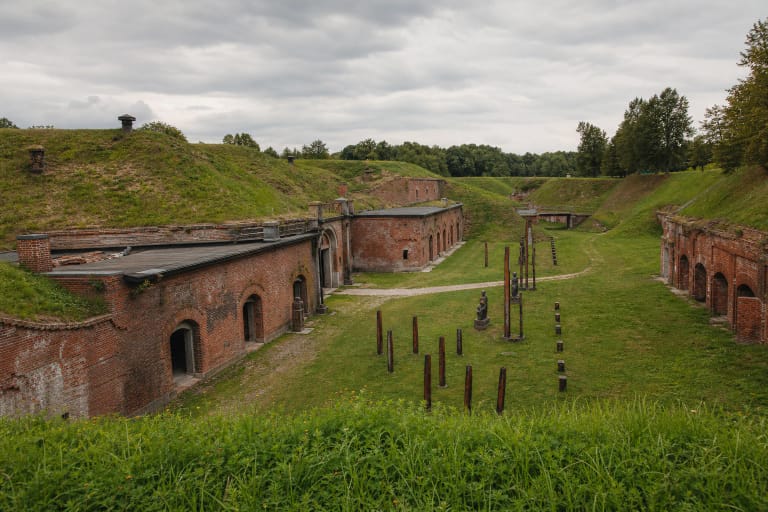
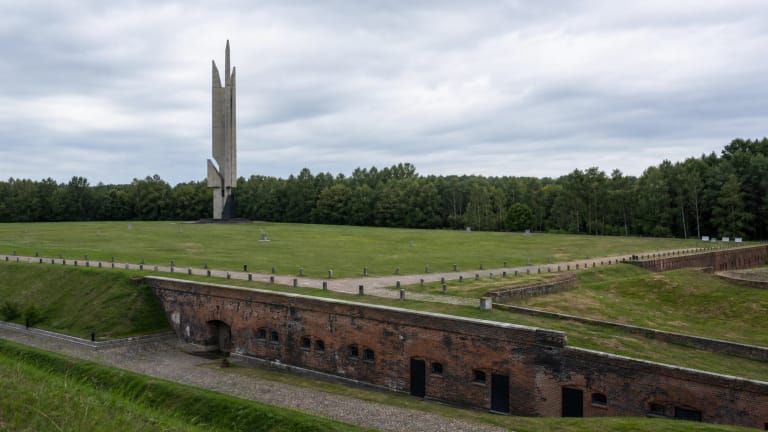
The first seven Kaunas Fortress forts followed a standard Russian imperial design drawn up in 1879, but the Fifth Fort became one of its most complex realizations. The hills required an irregular elongated hexagon, a complicated drainage system, and additional casemates. A separate four-gun battery with its own ammunition store was attached to the right flank, while the historic route into the fort crossed a bridge from the northwest.
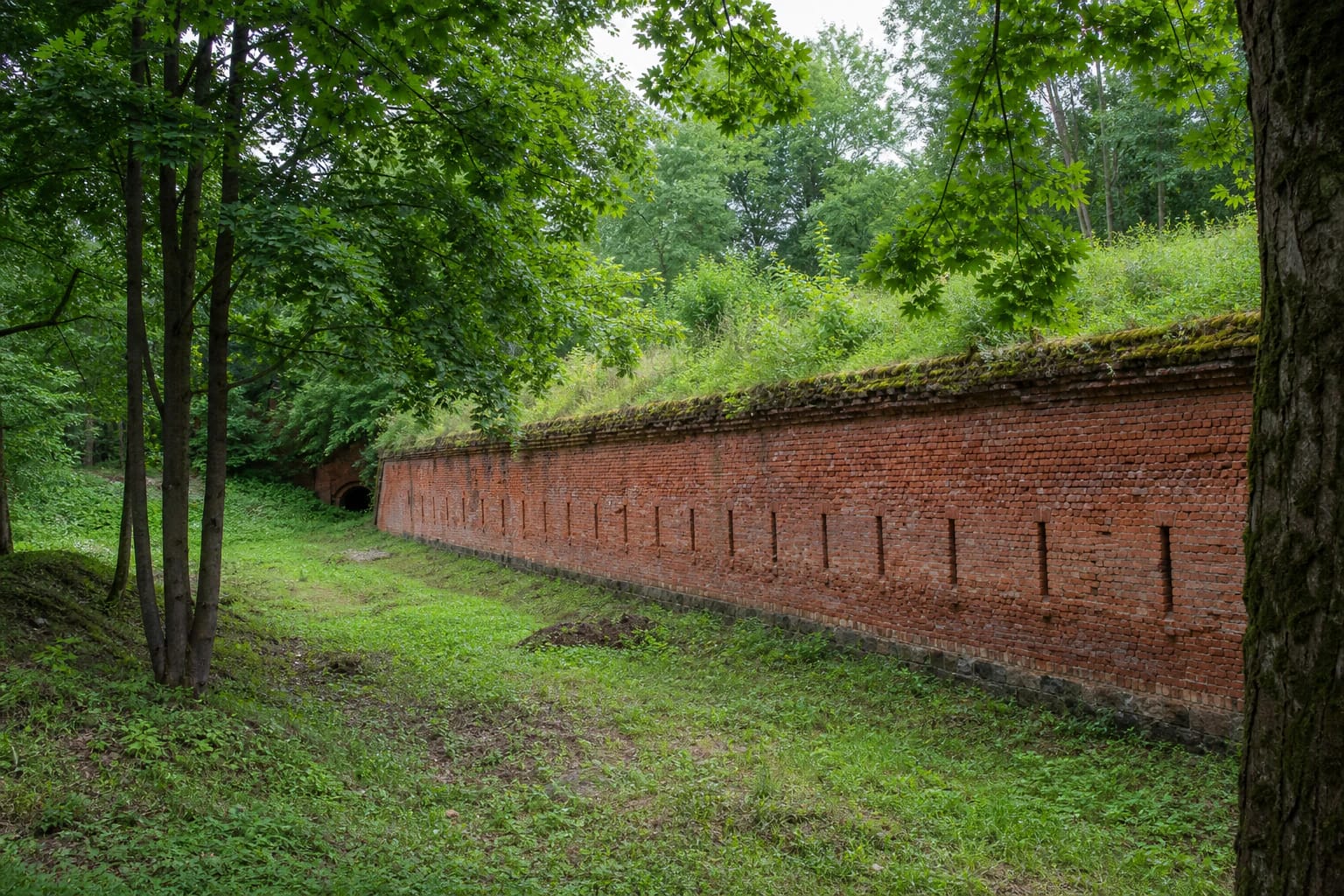
The rear barracks contained nine residential casemates, a central casemate for officers and the commandant, food stores, a kitchen, washrooms, and toilets. Posterns connected combat-supply stores to two caponiers, two half-caponiers, and two artillery casemates at the rear corners that defended the ditch. The long red-brick counterscarp wall and its firing openings remain among the clearest features to read today; the Oschevsky-Kruglik defensive grilles have not survived.
Construction in 1882-1889 and the Unfinished 1908 Modernization
The Fifth Fort was built in 1882-1889. AUTC associates the project with military engineers Nikolai Obruchev, Konstantin Zverev, and Ivan Valberg. Earth ramparts concealed the masonry and carried artillery and infantry positions, while shelters for counter-assault guns were arranged beneath the outer rampart.
As artillery grew more powerful, work began in 1908 to add concrete protection and rebuild selected structures. The modernization was never completed: AUTC records that only one caponier and one ammunition store were concreted. The site therefore reveals the junction between an original red-brick fort and a partial concrete upgrade rather than a single uniform construction phase.
The 1915 Withdrawal, Interwar Workshops, and the Soviet Technical Unit
During the 1915 assault on Kaunas Fortress, the Fifth Fort stood aside from the main German blow and escaped major direct heavy-artillery damage. As the garrison withdrew, it blew up remaining ammunition, part of a powder and ammunition store, and the postern leading there from the barracks. This destruction was caused by the retreating defenders and should not be mistaken for the severe bombardment endured by western forts such as the First or Second.
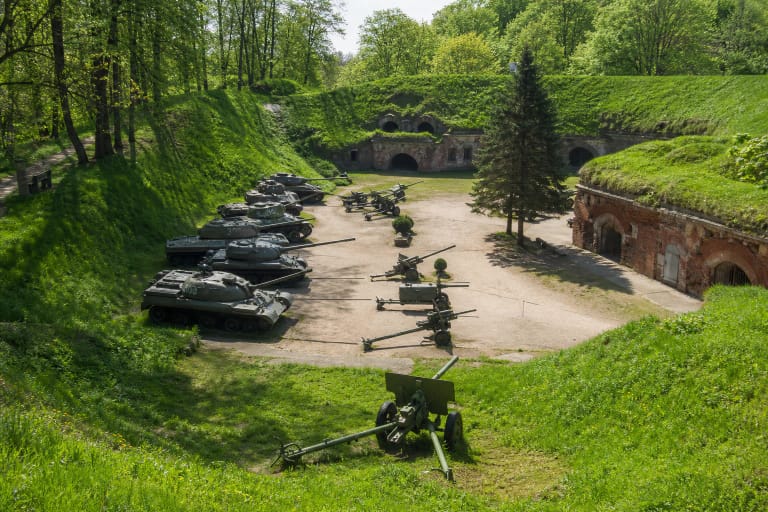
Between the wars, the Lithuanian Army used the fort for weapons workshops and a ballistic range that tested cartridges. From 16 November 1939, the Seventh Camp for interned Polish soldiers operated here briefly. Under Soviet rule, a technical division of an anti-aircraft defence regiment occupied the site: barracks became truck garages, their original facade was destroyed, part of the ditch was filled, concrete slabs covered the yard, and buildings for missiles and fuel infrastructure were added.
Guided Tours, Legal Access, and What Is Safe to See
Kaunas Fortress Park maintains and activates the fort, while a nearby military-sport organization contributes to the fort's volunteer unit and site activities. Tours, events, paintball, or airsoft can occupy parts of the grounds at set times, so barriers and closures must not be bypassed. Independent visitors should limit themselves to clearly permitted above-ground areas and the fortification landscape, never entering dark, flooded, unstable, or closed spaces.
The official services page gives a Fifth Fort tour duration of 1.5-2 hours and requires a group of at least five. At the time of research, published seasonal prices were EUR 9 per adult, EUR 6 for a visitor under 18 or a senior, EUR 7 per person outside the season, and EUR 15 per person for an English-language tour. These are not permanent daily opening hours or guaranteed prices, so check current Kaunas Fortress Park information and reserve before travelling.
Bats may hibernate underground, and park rules impose seasonal and safety restrictions. Underground hibernation spaces must not be entered from October through April; a separately announced surface or guided tour does not open every room. Even in summer, wear sturdy footwear and bring a torch only for a route authorized by the guide, because ditches, slippery slopes, water, holes, and unlit casemates are not universally accessible visitor infrastructure.