- Place
- Vilnius City Municipality
- Region
- Vilnius
- Type
- public outdoor monument and part of a memorial complex
- Address
- Maironio Street, LT-01124 Vilnius
- Coordinates
- 54.68276, 25.29318
- Visit duration
- 20-40 minutes; longer if combined with a Bernardine-quarter route
- Best time
- in daylight, when the granite texture and surrounding Gothic architecture are easiest to see
Adam Mickiewicz Monument of the Memorial Complex
The monument in Maironio Street's historic quarter
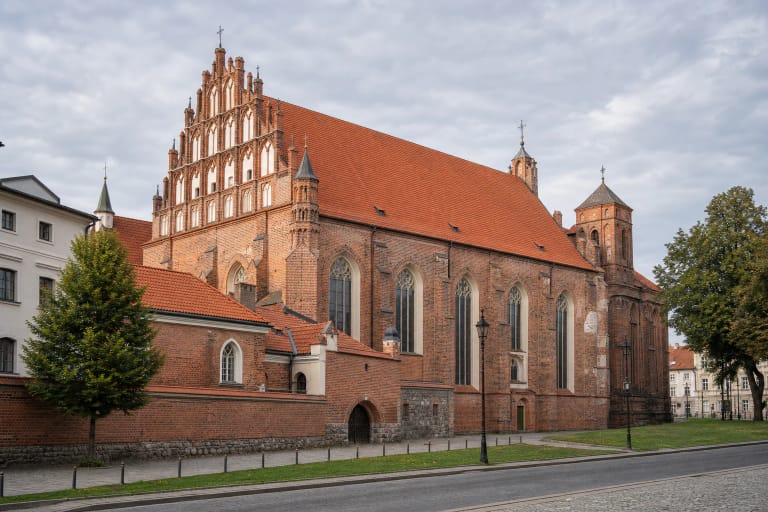
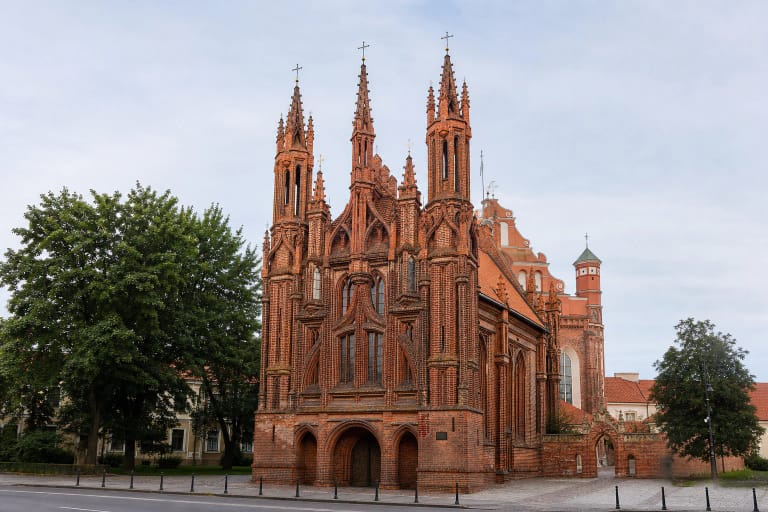
The Adam Mickiewicz Monument stands on Maironio Street beside the red-brick buildings of the Church of St Anne and the Bernardine quarter. The Register records it as part of the Adam Mickiewicz Memorial Complex, but for a visitor it is a distinct public sculpture with its own map point.
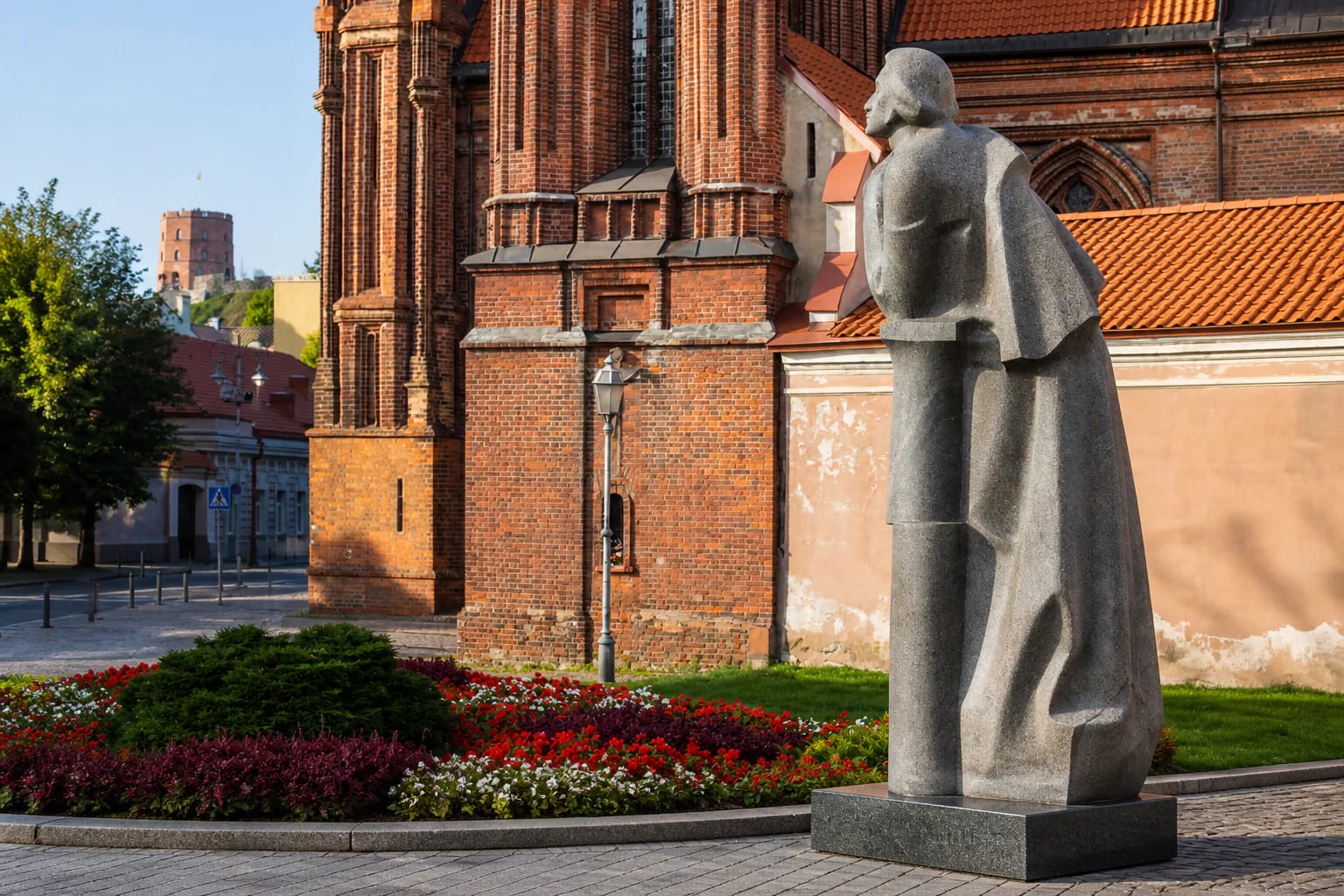
View the sculpture from several sides: from the paving you can see the full-height figure, low pedestal, flowers, and Gothic architecture rising behind it. This point marks the monument, not the Adam Mickiewicz Memorial Museum at 11 Bernardinų Street and not one combined Old Town attraction.
Granite figure and the divided-column composition
The present monument is made of grey granite. The poet is shown standing, pensive, and slightly leaning against a column divided horizontally into sections. Its severe volume, angular folds, and restrained face give the sculpture the attitude of a concentrated person rather than a triumphant speaker.
The museum's official exhibition material interprets the divided support and the figure's pose as visual references to homeland, departure, and Lithuanian-Polish cultural ties. Reliefs behind the statue belong to the monument setting, but are not a separate attraction.
The 1984 unveiling and the monument's creators
The present monument was unveiled on 18 April 1984. Sculptor Gediminas Jokūbonis worked with architects Algimantas Nasvytis and Vytautas Čekanauskas, while stonemason Jonas Valeška carried out the stonework. These creators are identified in the official Adam Mickiewicz Museum material.
The site also has a history of earlier proposals. The Lithuanian National Museum recalls the 1925 and 1931-1932 monument competitions and Henryk Kuna's role. This explains why today's object speaks not only of one sculptor but of a long process of creating a place of memory for the poet in Vilnius.
Reliefs and Vilnius literary memory
Henryk Kuna's reliefs behind the statue were added to the monument setting in 1995. They can be noticed by looking beyond the figure toward the memorial wall behind it. The statue, pedestal, and reliefs should still be understood as one composition.
Adam Mickiewicz is also remembered in Vilnius through a museum, university, churches, and street history. The monument works as the starting point for an outdoor route: it lets visitors read the Old Town's layers, but museum displays and interior admission should not be attributed to this spot.
A short visit to the Adam Mickiewicz Monument
This is a public outdoor monument with no separate ticket or fixed visiting hours. Ordinary exterior viewing needs no reservation, although street works, events, weather, and crowds can affect comfort. The site is not guaranteed to have dedicated toilets, parking, or fully accessible visitor infrastructure.
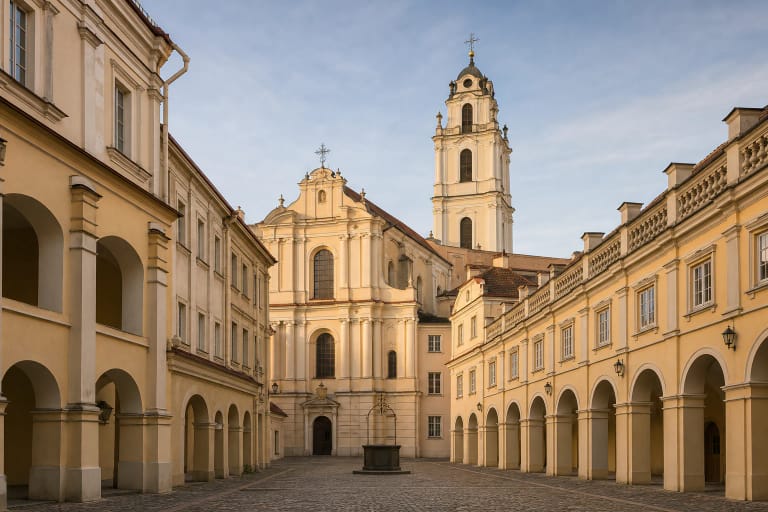
Allow about 20-40 minutes for the composition, or add St Anne's and Bernardine churches, the memorial museum, or the Vilnius University ensemble for a longer route. Do not block the passage, respect nearby religious institutions, and do not lean on the monument's elements when photographing.