- Place
- Vilnius City Municipality
- Region
- Vilnius
- Type
- sacred art and Vilnius Cathedral treasury museum
- Address
- Šv. Mykolo g. 9, Vilnius
- Coordinates
- 54.68340, 25.29110
BPM, Vilnius Cathedral Treasury
A museum in St Michael's and the Bernardine nuns' ensemble
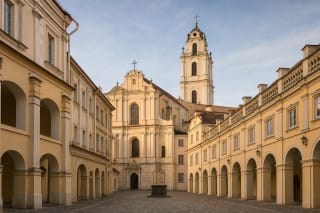
The Church Heritage Museum operates on Šv. Mykolo Street, inside the former Bernardine nuns' monastery and St Michael the Archangel Church. It is not a neutral white-gallery museum: the building itself is part of the exhibition, because sacred art is shown in a space where it naturally speaks with church architecture.
The museum was founded in 2005 by decree of Vilnius Archbishop Audrys Juozas Bačkis and opened to visitors in 2009 with the Vilnius Cathedral treasury exhibition. According to 2019 data, the collections held about 5,500 objects. Its first director was Sigita Maslauskaitė (2009-2022), and since 2022 the museum has been led by Rita Pauliukevičiūtė.
Vilnius Cathedral treasury: 988 liturgical valuables
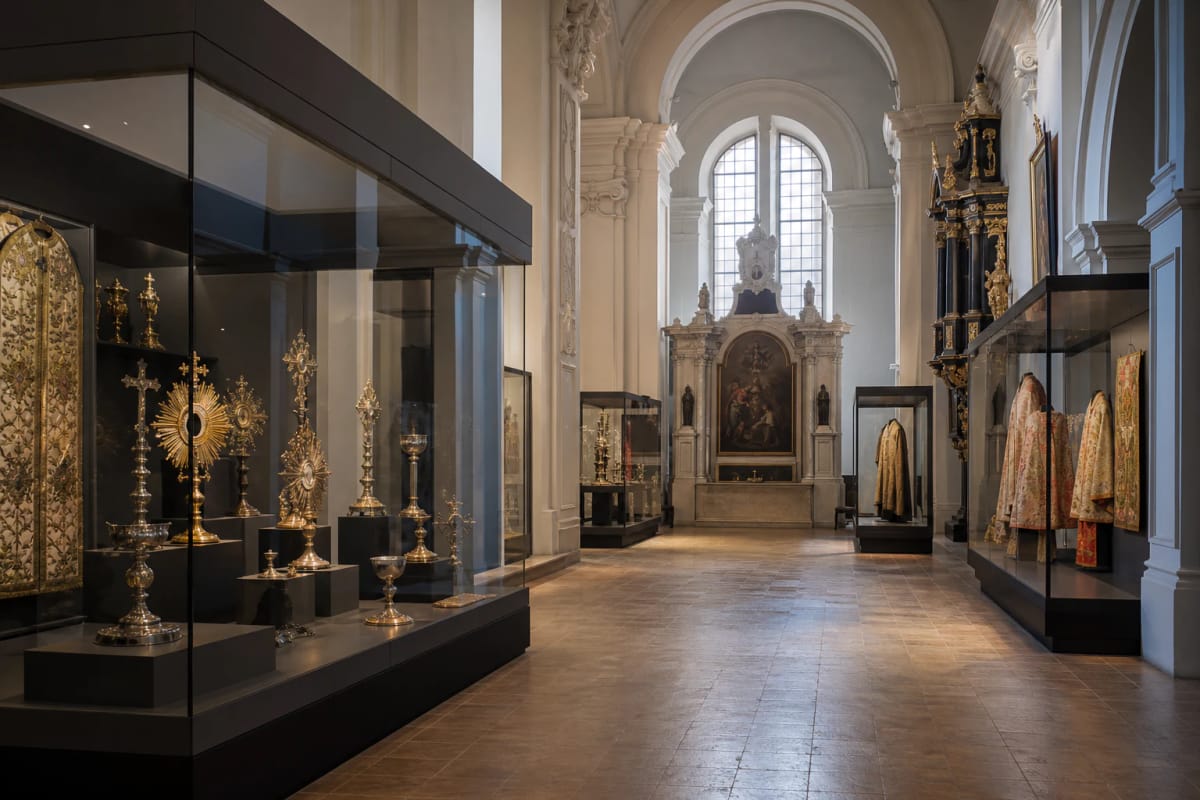
The main axis of the museum is the Vilnius Cathedral treasury, the oldest and richest church treasury of the Grand Duchy of Lithuania. It consists of 988 liturgical valuables: vessels such as chalices, reliquaries, and monstrances, as well as croziers, crosses, censers, candlesticks, images with metal covers, sculptures, books, and textiles.
Part of the treasury was hidden before the Second World War and long considered lost; it was found again only in 1985. That makes the exhibition important not only as a collection of precious metals and craftsmanship, but also as the story of heritage that was concealed, nearly lost, and returned. The objects show Vilnius as a political, ecclesiastical, and artistic centre.
Lithuania's largest liturgical textile collection
The Church Heritage Museum preserves and studies more than the Cathedral treasury objects. VLE states that it holds Lithuania's largest and most valuable collection of liturgical textiles, including church vestments and tapestries, and that textile restoration workshops operate at the museum. The collections also include church paintings, sculptures, and documents that often remain unseen when visiting churches alone.
Because of this variety, the museum is especially useful for visitors who want to understand what church culture is made of. Here you can see the difference between an artwork, a ritual object, and a historical relic.
The historical layer of St Michael's Church
The facade of St Michael's Church carries the date 1625, and after the collapse of the vaults the building was reconstructed and consecrated in 1629. The church is connected with the Sapieha foundation, so noble-family memory is also part of the museum space.
During a visit, move slowly through the interior and pay attention to the church's mausoleum character and to the way exhibition objects sit inside a seventeenth-century sacred architectural space.
Museum branches: cathedral crypts and bell tower
Two important Vilnius Cathedral sites also belong to the Church Heritage Museum. The cathedral crypts were opened to visitors in 2012, with new underground routes installed in 2019, and the restored cathedral bell tower opened in 2014. This means the museum's subject can continue directly in Cathedral Square.
These branches operate separately from the Treasury exhibition on Šv. Mykolo Street, often with separate tickets and guided-tour times. When planning a visit, check in advance which sites are open that day and whether booking is required.
Opening hours and tickets
At the time of research, the official museum page stated that the Treasury exhibition was open Tuesday to Saturday from 11:00 to 18:00, and closed on Sunday, Monday, and public holidays. Opening hours may be shorter before holidays.
At the time of research, the Treasury ticket cost 10 EUR, the reduced ticket 5 EUR, and the special ticket 2.50 EUR. Because prices and schedules change, check the official Church Heritage Museum page before travelling.